Science · 6 min read
Busy Month? Here's The Least You Can Lift And Keep Your Muscle
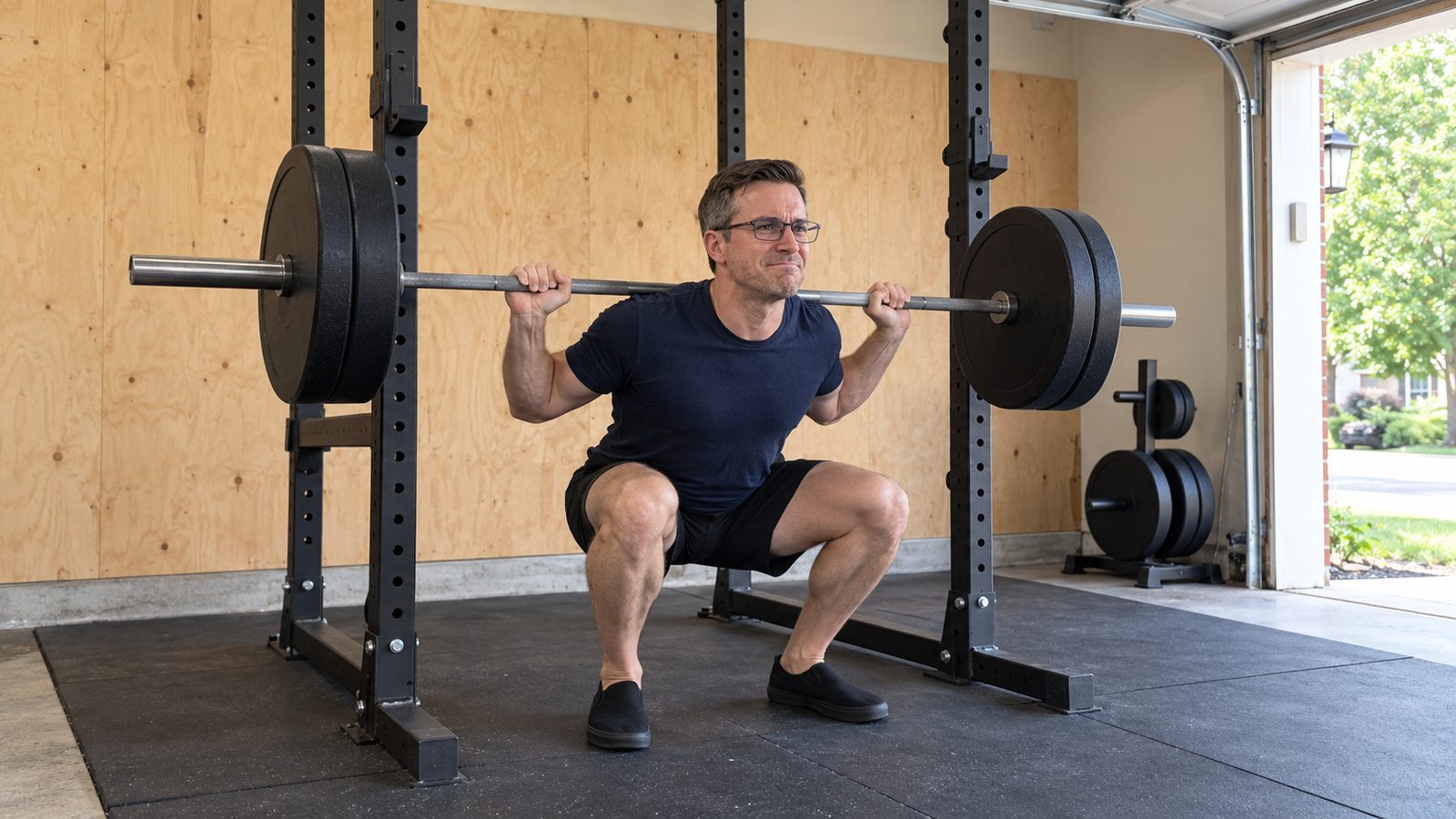
Cut your weekly sets to a third, keep the weights heavy, and you keep most of the muscle you built. In one 48-week study, adults under 35 who did exactly that held on to 96% of their new thigh muscle.

The Month Everything Gets In The Way
Everyone who lifts hits one. A big deadline. Two weeks on the road. An elbow that hates pull-ups. The program that built your muscle wants four or five days a week, and this month you have one.
The fear: every missed session is muscle walking out the door. So you either cram a full program into a week that can't hold it, or you stop until life calms down.
The better plan: keep lifting, just a lot less. For younger lifters the research is clear. Keeping muscle takes about a third of the work it took to build it, as long as the weights stay heavy.

A Third Of The Work, Almost All Of The Muscle
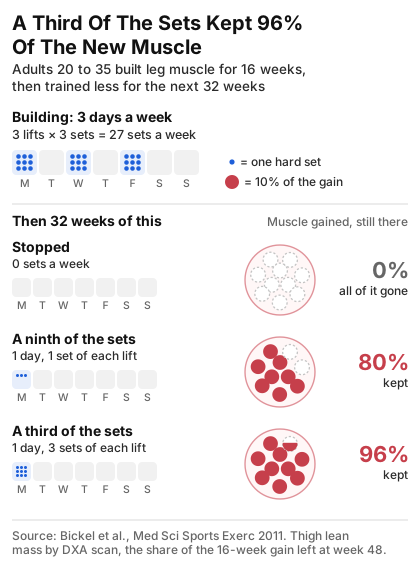
The study: researchers at the University of Alabama at Birmingham put 70 adults through 16 weeks of leg training.[1] Three days a week they did knee extensions, leg presses and squats, 3 sets of 8 to 12 hard reps each. That adds up to 27 sets a week.
Then they split people into three groups for the next 32 weeks. One group stopped. One trained one day a week with all 3 sets of each lift, a third of the old work. The last group trained one day a week with 1 set of each lift, a ninth of the old work. The weights stayed just as heavy.
By the numbers: in the adults aged 20 to 35, the third-of-the-sets group still had 96% of the thigh muscle they had built when the 32 weeks were up. The ninth-of-the-sets group still had 80%. The group that stopped had lost all of it.
Their muscle fibers told the same story. Small samples taken from the thigh showed the younger lifters kept the bigger fibers they had grown on both small doses. On a third of the sets, their fibers even kept growing for a while.
Strength held, too. Both small doses finished the 32 weeks 7% to 8% stronger on the knee extension than they were on the day the full program ended. The groups were small, 7 to 11 younger adults each, but strength, thigh muscle and fiber size all pointed the same way.
Stopping Is What Costs You
The gap between doing a little and doing nothing is big, and it opens fast.
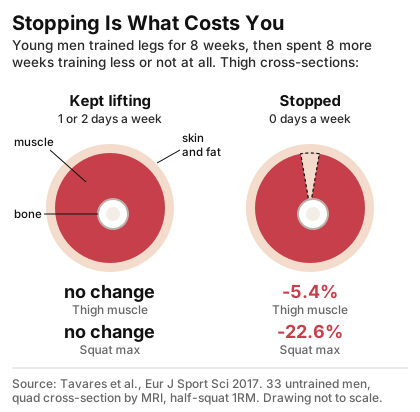
In a 2017 study, 33 young men who had never lifted trained their legs for 8 weeks.[2] Then some kept lifting one or two days a week, at about half their old workload. The rest stopped.
The men who kept lifting held their squat max and their thigh muscle for all 8 weeks. The men who stopped lost 22.6% of their squat max and 5.4% of their thigh muscle in the same 8 weeks.
An older study saw the same thing with strength. Adults who stopped lifting for 12 weeks lost 68% of the strength they had gained.[3] And a review of 103 studies found that the longer the break, the more strength you lose, with bigger losses after age 65.[4]
Fewer Sets, Not Lighter Weights
The catch: every one of these studies cut the number of sets. None of them cut the weight on the bar.
The Alabama lifters kept loads they could only move 8 to 12 times. The men in the 2017 study kept loads they could move 6 to 12 times. A group of older men in a third study kept lifting 80% of their max.[5]
A 2021 review of this research says intensity, meaning how heavy and hard each set is, “seems to be the key” to keeping what you built.[6] So the sets you keep should look like your old sets. Same weights. Same effort. Just fewer of them.
Over 60? Keep A Second Day
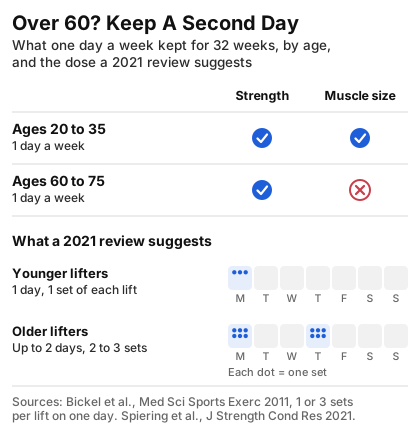
Age changes the dose. In the Alabama study, adults aged 60 to 75 kept their strength on one day a week. Their muscle was another story. By 16 weeks into the light phase, the bigger fibers they had grown had shrunk back to where they started, on both small doses.[1]
The results in older adults are mixed. In a smaller study, five men around 75 did keep their muscle and strength for 6 months on one day a week, with 3 sets of 10 at 80% of their max.[5]
The 2021 review lands in the middle. Younger people can keep strength and size for up to 32 weeks on as little as one session a week and one set per exercise. Older people may need up to two sessions a week, with two or three sets per exercise.[6]
What It Looks Like In Practice
Here is how to turn a busy month into a maintenance month instead of a lost one.
- Count your weekly sets for each muscle. Say you do 15 hard sets a week for your chest. Not sure of your number? Our guide to how many sets per week builds it.
- Divide by three. 15 becomes 5. That is a third of your sets, the same cut as the group that held on to 96% of its new muscle.
- Fit them into one or two days. One session a week was enough for adults under 35 in the studies above. Over 60, make it two.
- Keep the weight on the bar. Use the loads you used before, and take each set close to the point where you can't do another rep.
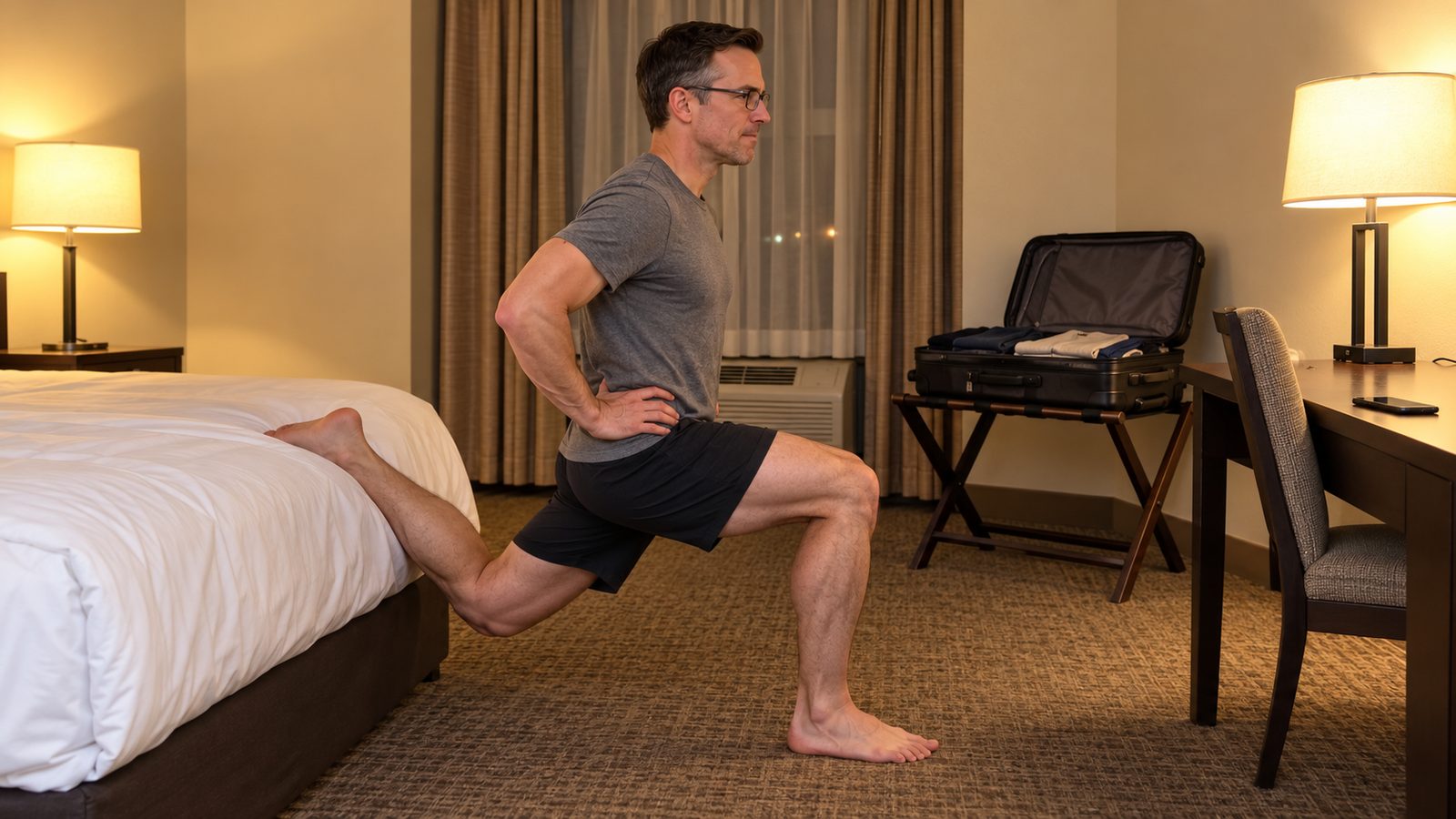
- No gym? Make the sets hard anyway. For building muscle, a review of 21 studies found light loads taken to failure grew about as much muscle as heavy loads. Heavy loads still built more max strength.[7] In a hotel room, push-ups and split squats count if the last reps are a fight. More on that in our piece on light weights.
The bottom line: when life gets busy, don't stop. Cut the sets, keep the weights, and go back to your full program when things calm down. If some size does slip, our muscle memory explainer covers how fast it comes back.