Push-Ups • 8 min read
Floor Push-Ups Are Free. My Wrists Paid For Every One For 15 Years. Two Wooden Blocks Fixed It.
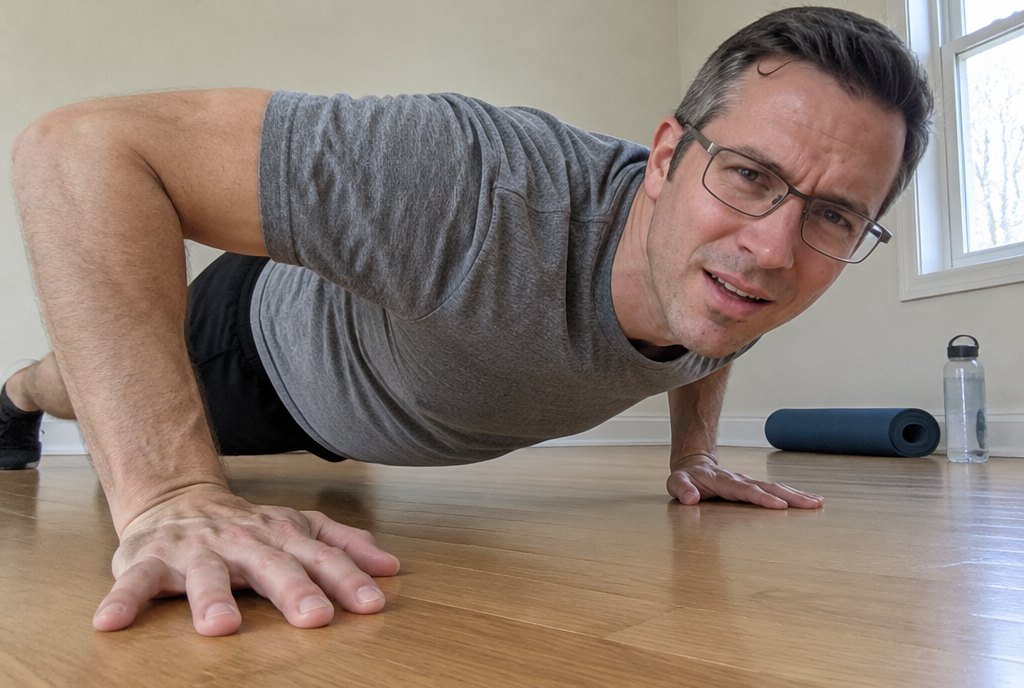
I did push-ups on the floor from my twenties into my forties and treated the ache at the back of each wrist as the price of a free exercise. Over those years I bought wrist wraps, a foam wedge, rotating handles and a pair of steel bars, $179 in all, and the thing that finally worked cost $39, weighs 400 grams and fits in a coat pocket.

The Free Exercise With A Running Bill
A push-up costs nothing, which is why I kept doing it the way I first learned it: palms flat, fingers forward, floor. At 25 that was fine. By 35 the last five reps of every set ended with my hands rocking onto the heel of the palm to take the pressure off the back of the wrist. By 40 I was shaking my hands out between sets and opening jars with the other hand the next morning.
I never counted the reps. I did count the money, because the one thing a free exercise lets you do is buy things to make it hurt less. This is the list, with the prices checked on 12 October 2026 and the shop named in the sources at the bottom.
Every one of those is a decent product. Each one also won exactly one thing and missed the actual problem, which I did not understand until I read what the problem was.
Why Every Fix I Bought Fixed The Wrong Thing
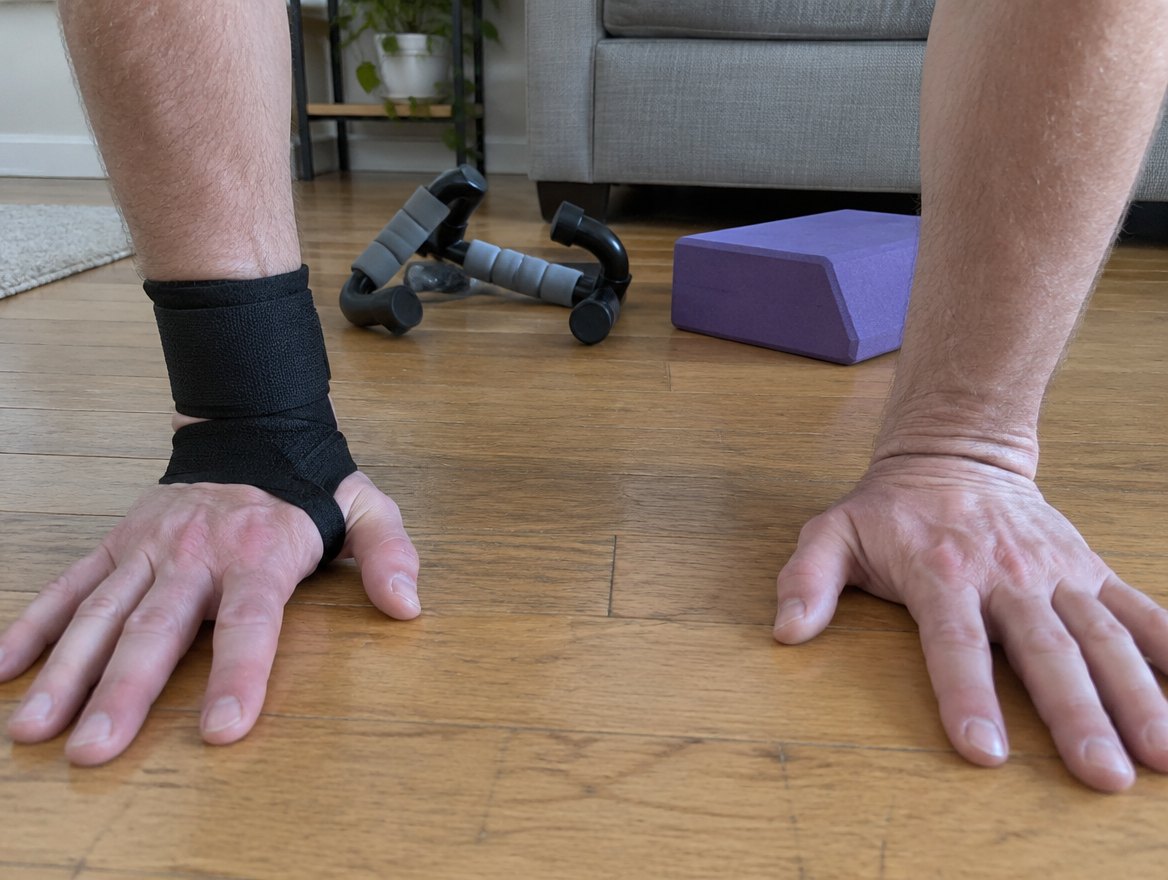
Wrist wraps, $29.50. Wraps win at one job: squeezing the joint so it does not fold under a loaded barbell. On a push-up they change nothing about the angle. My wrist was still bent back to the limit, now with a strap holding it there.
A foam wedge, $14.98. The wedge lifts the heel of the palm so the hand sits on a slope instead of a flat floor. For a yoga class with long holds in downward dog, it is the correct tool and it costs almost nothing. For push-ups it compresses on every rep, it creeps across the floor, and a two-inch wedge takes maybe 15 degrees out of a 90 degree problem.
Rotating handles, $39.99. This was the first thing that put my wrist straight, and it deserves credit for that. The Perfect Pushup Elite wins on one thing nobody else offers: the handle turns as you press, which some people like for the chest. I did not. The base is a wide plastic disc, the pair takes up most of a gym bag, and a handle that is free to rotate also rotates when your hand is tired and you want it to stay put.
Steel parallettes, $95. The Rogue Formed Parallette Set is the most stable thing on this page. It is 14 pounds of bent 14-gauge tube and it does not move. That is also why mine lives next to the water heater. They are built for L-sits and handstand push-ups, the hand sits high enough that a push-up turns into a dip with a different shoulder angle, and 14 pounds of steel does not come on a work trip.
So I had four fixes for four different problems and the wrist was still bent. What I had never done was look at why a bent wrist hurts in the first place.
What A Flat Hand Asks Of A Wrist
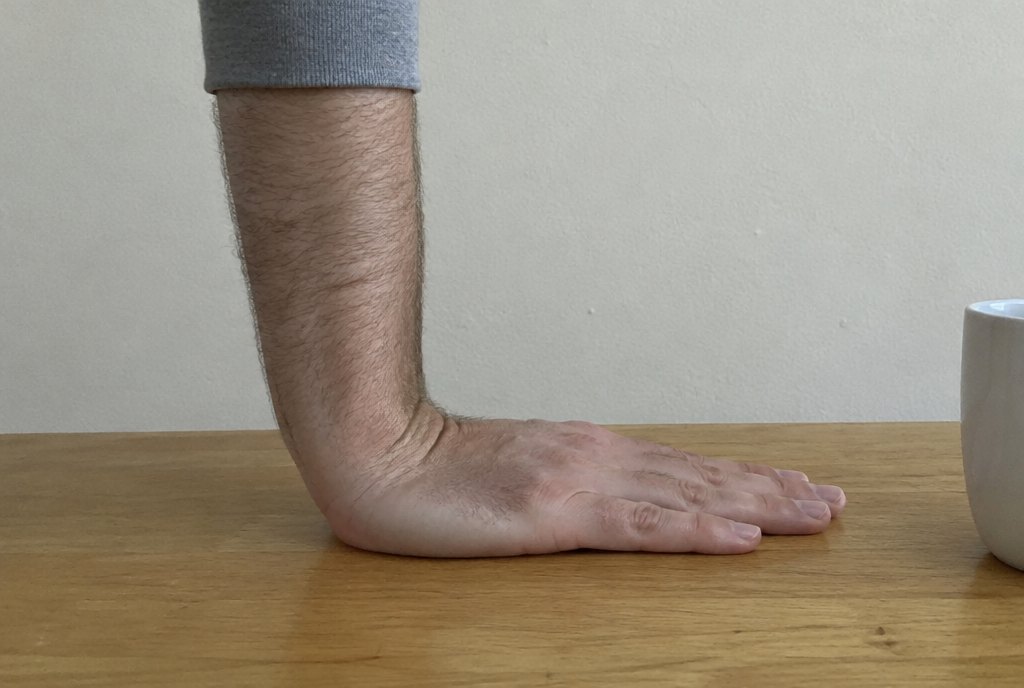
Put your hand flat on a table and stand your forearm straight up from it. That is the bottom of a push-up: the wrist is bent back about 90 degrees with your bodyweight pressing down through it. Now check how far your wrist actually goes. In a goniometer study of 120 healthy adults aged 20 to 49, the average active wrist extension was 65.9 degrees. A flat-floor push-up asks the joint for more than most people have, and then loads it there.
Carpal canal pressure in healthy wrists was 2.5 mmHg in a neutral position and rose to 30 mmHg at 90 degrees of extension. In people already diagnosed with carpal tunnel syndrome it went from 32 mmHg to 110 mmHg.
Gelberman and colleagues, Journal of Bone and Joint Surgery, 1981, wick catheter measurements in 12 controls and 15 patients.
That is a twelvefold rise in pressure inside the wrist from nothing but the angle, before you add a body on top. The one study that measured push-ups directly put 14 volunteers on force plates with motion capture and compared a hyperextended wrist with a neutral one. With the wrist neutral, the vertical force stayed more even through the rep. With the wrist bent back, the force shifted toward the back and the little-finger side of the joint, and the authors wrote that the neutral version is likely the safer one because the bent position loads the ligaments. The study was small and it measured force, not pain.
The sport that loads bent wrists for a living is artistic gymnastics. A 2026 systematic review pooled nine studies and found wrist pain in 53 percent of adolescent gymnasts, with every included study rated low certainty. I was doing a slow, low-rep version of the same thing for 15 years.
None of this says a floor push-up will injure you. It says that the position asks for a range most adults do not have and raises pressure inside the joint while it does, and that the fix is not compression, a slope or a taller bar. It is a grip.
The Four Things A Push-Up Handle Has To Get Right
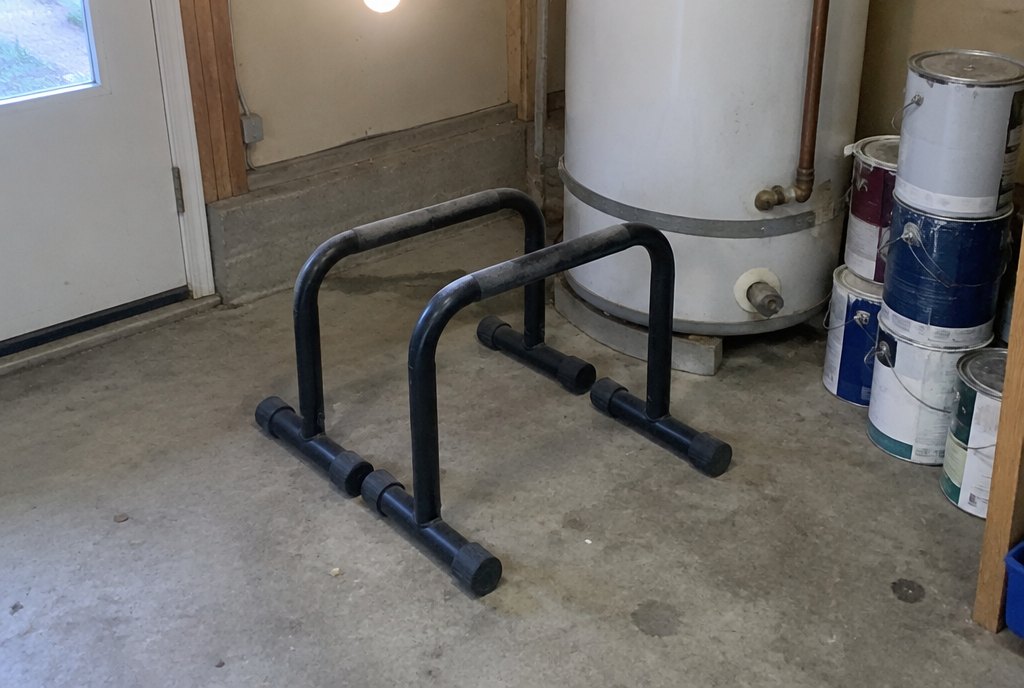
Once the problem was the angle, the shopping list wrote itself. Everything I had bought failed at least one of these, and the steel pair in the garage failed two.
- A grip you hold, not a surface you lean on. Knuckles forward, fingers wrapped, wrist in a straight line with the forearm. A wrap, a wedge or a flat handle leaves the hand on its palm, so the angle stays. Only a bar does this.
- Low. Between 5 and 10 centimetres off the floor. High enough that your knuckles do not scrape and the chest can drop below the hands. Low enough that the push-up is still a push-up and not a dip. The steel pair failed here.
- Planted. A foot wider than the bar, rubber under it, and enough mass or grip that the handle does not skate on wood or tile when you are tired. The rotating handles and the foam wedge both moved.
- It leaves the house. If it does not fit in a bag it becomes a garage ornament, and a push-up tool you do not have with you is a flat floor. Fourteen pounds of steel failed here, and so did the plastic discs.
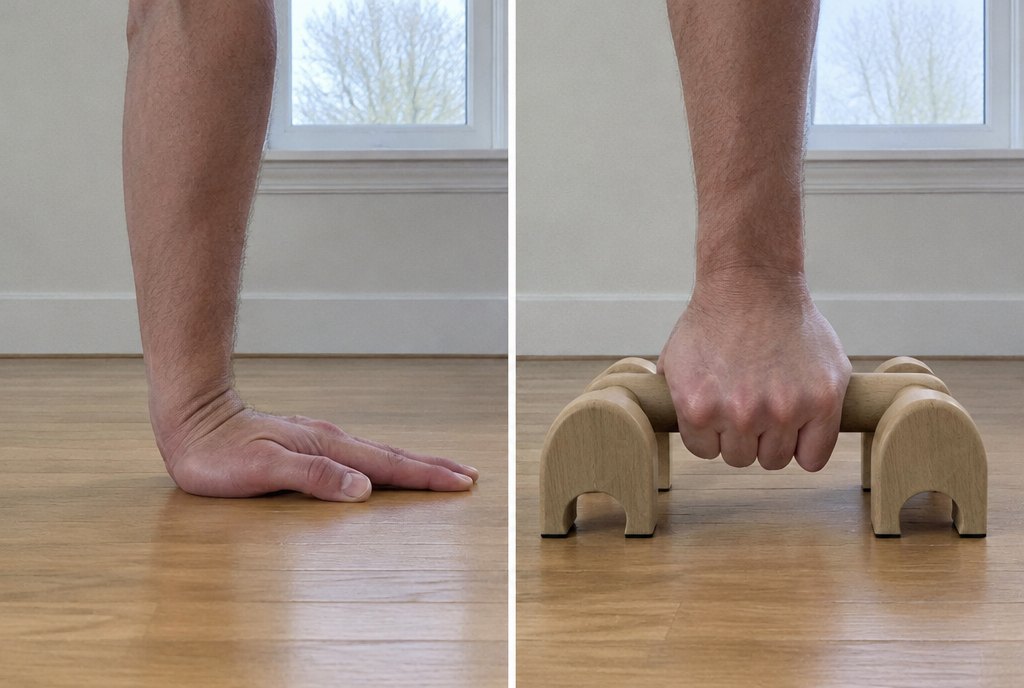
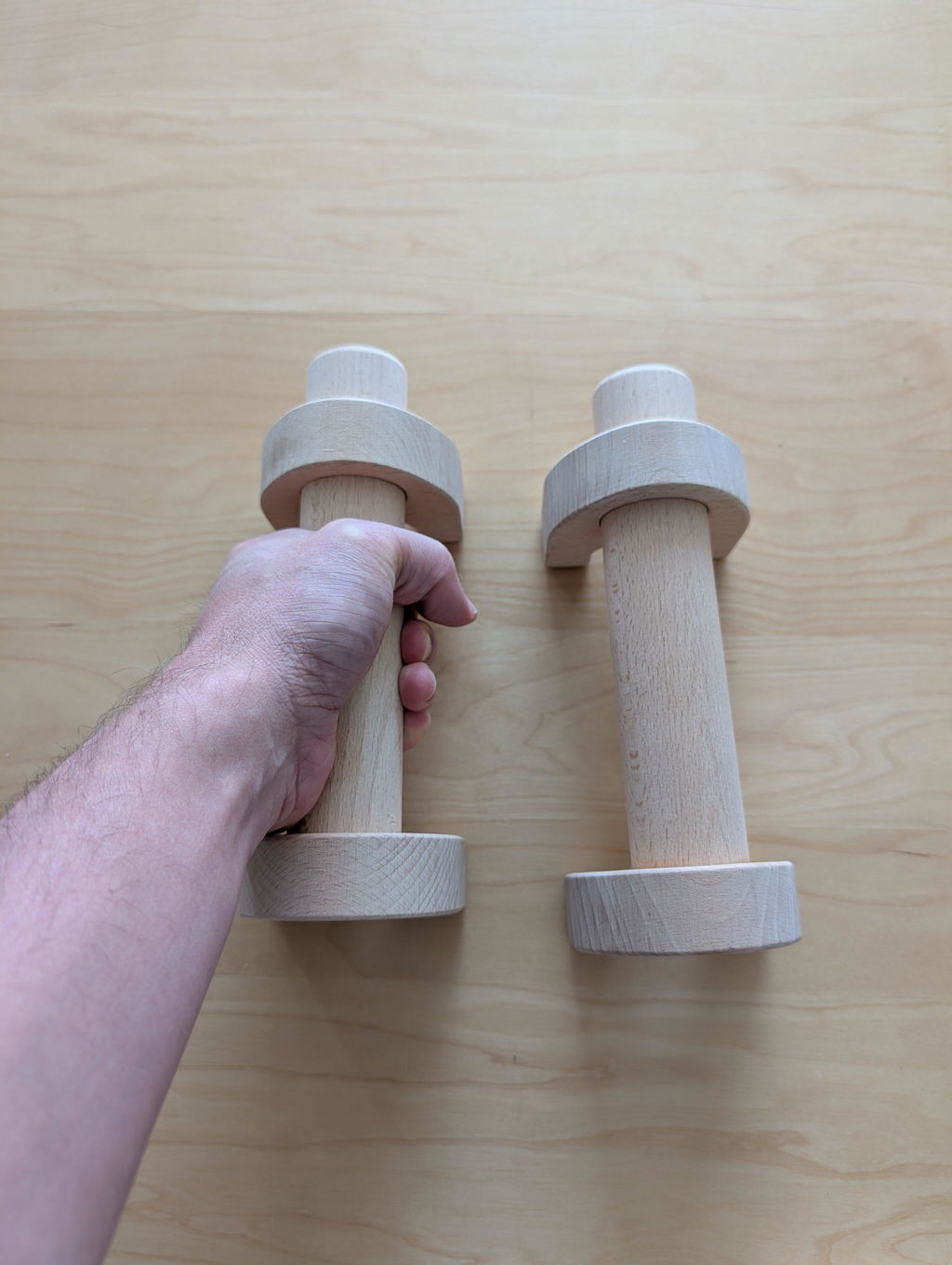
That picture is the whole argument. Left, the hand I used for 15 years. Right, the same hand on a bar 7 centimetres off the floor, the wrist in line with the forearm, the pressure on the palm where it belongs. Everything after this is about which bar.
Two Wooden Blocks: The Kensui YinYang PRO
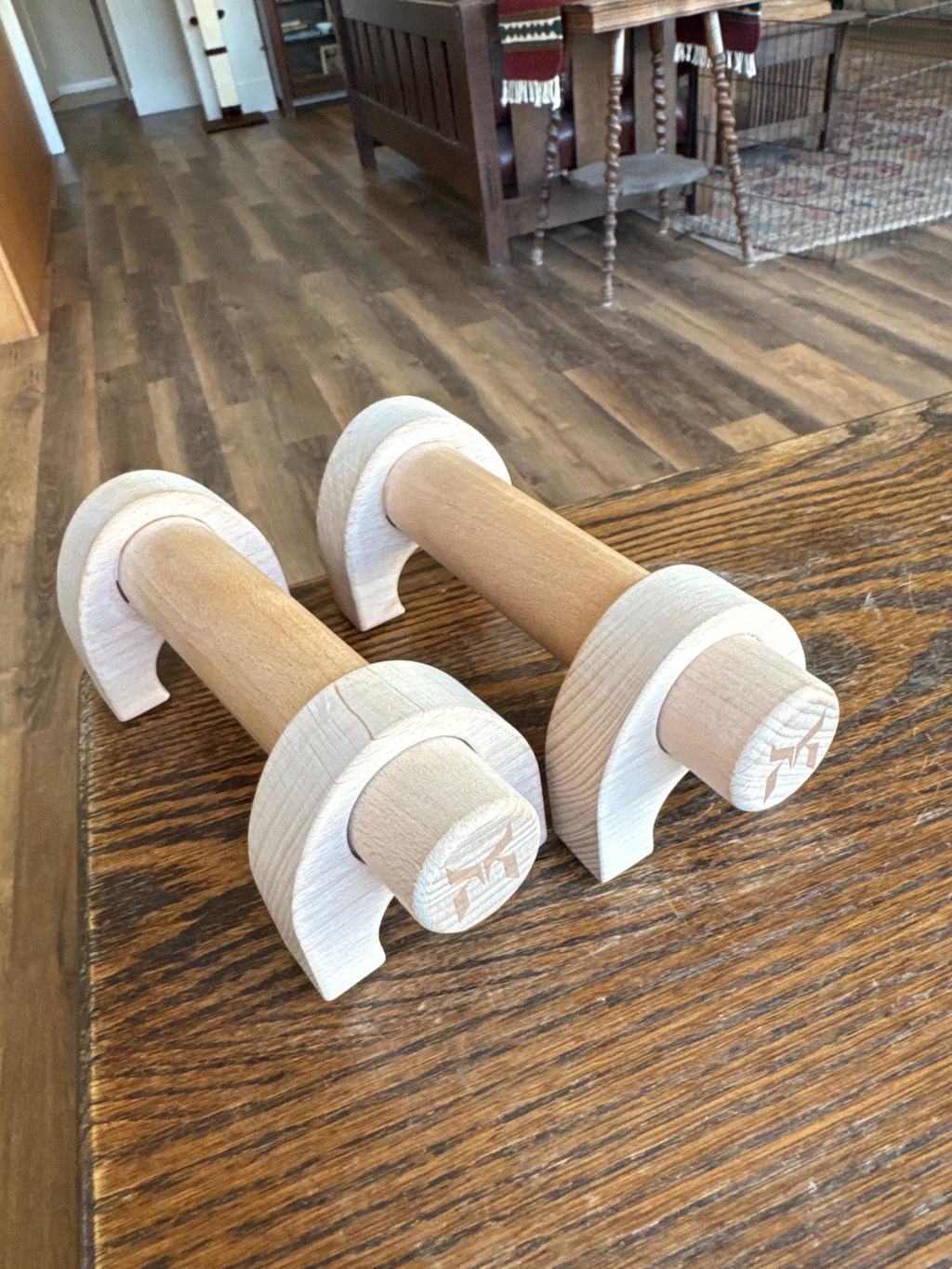
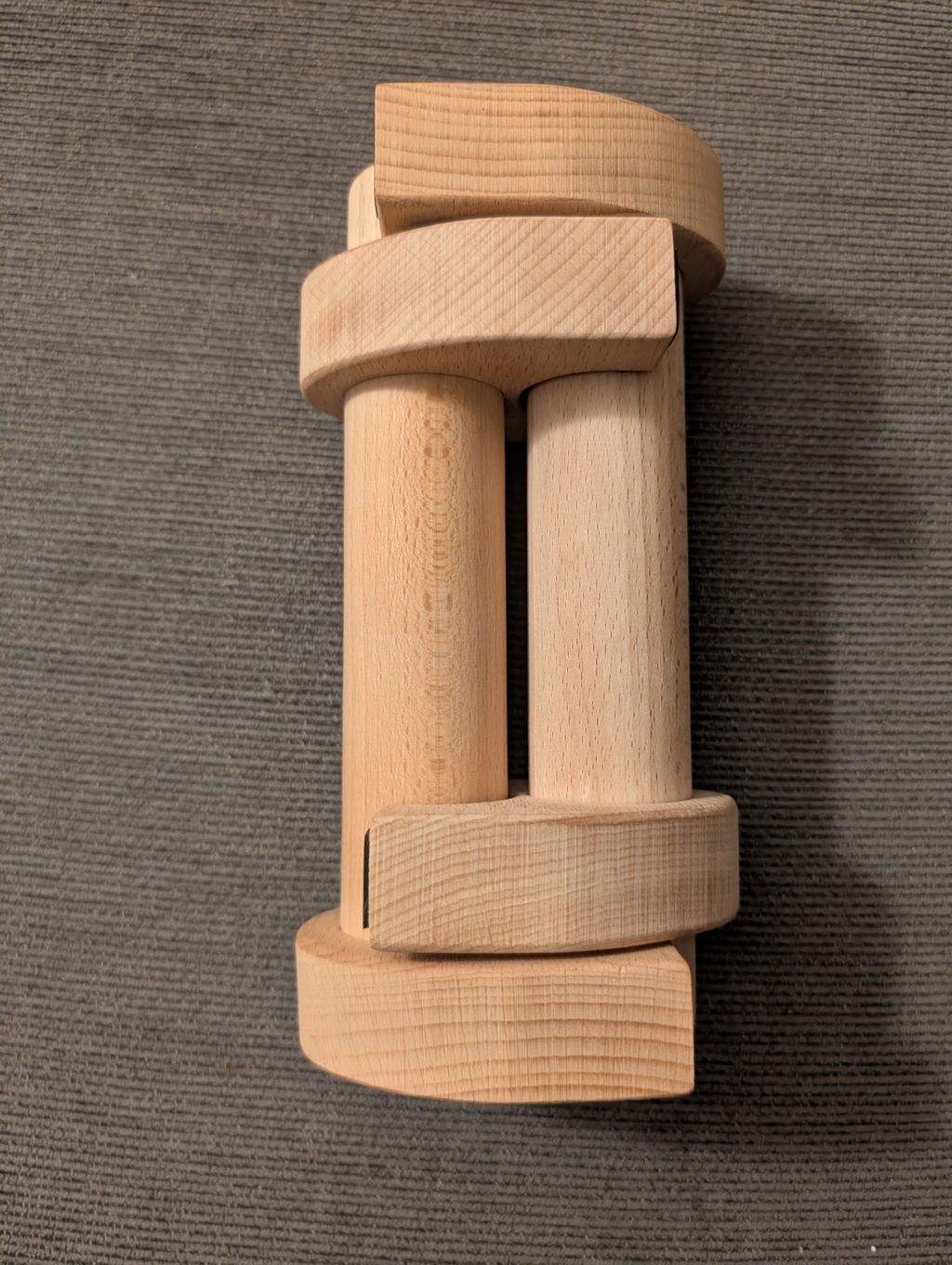
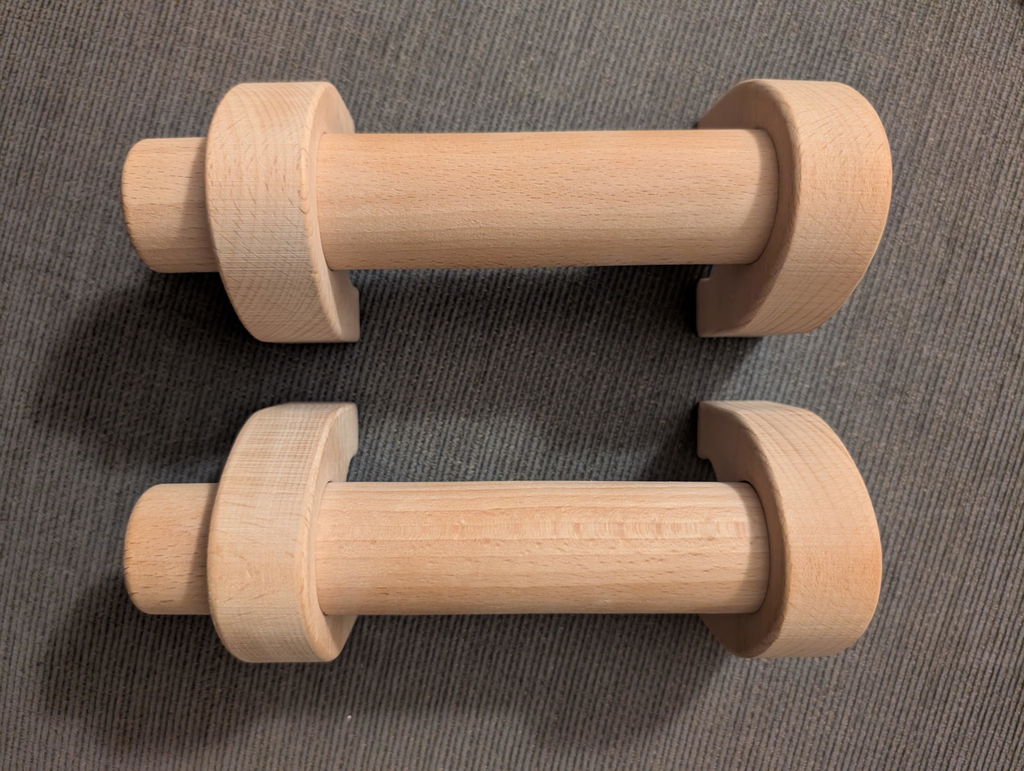
The thing that cleared all four is a pair of beech wood parallettes made by Kensui, the small company behind the plate-loaded weight vest. The PRO is the smallest of four sizes and the one I use: a round beech bar on two arched feet, 93 millimetres wide, 70 millimetres tall and 150 millimetres long, 400 grams for the pair. The grip is wood, so sweat goes into it instead of sitting on it, and the feet carry natural rubber pads.
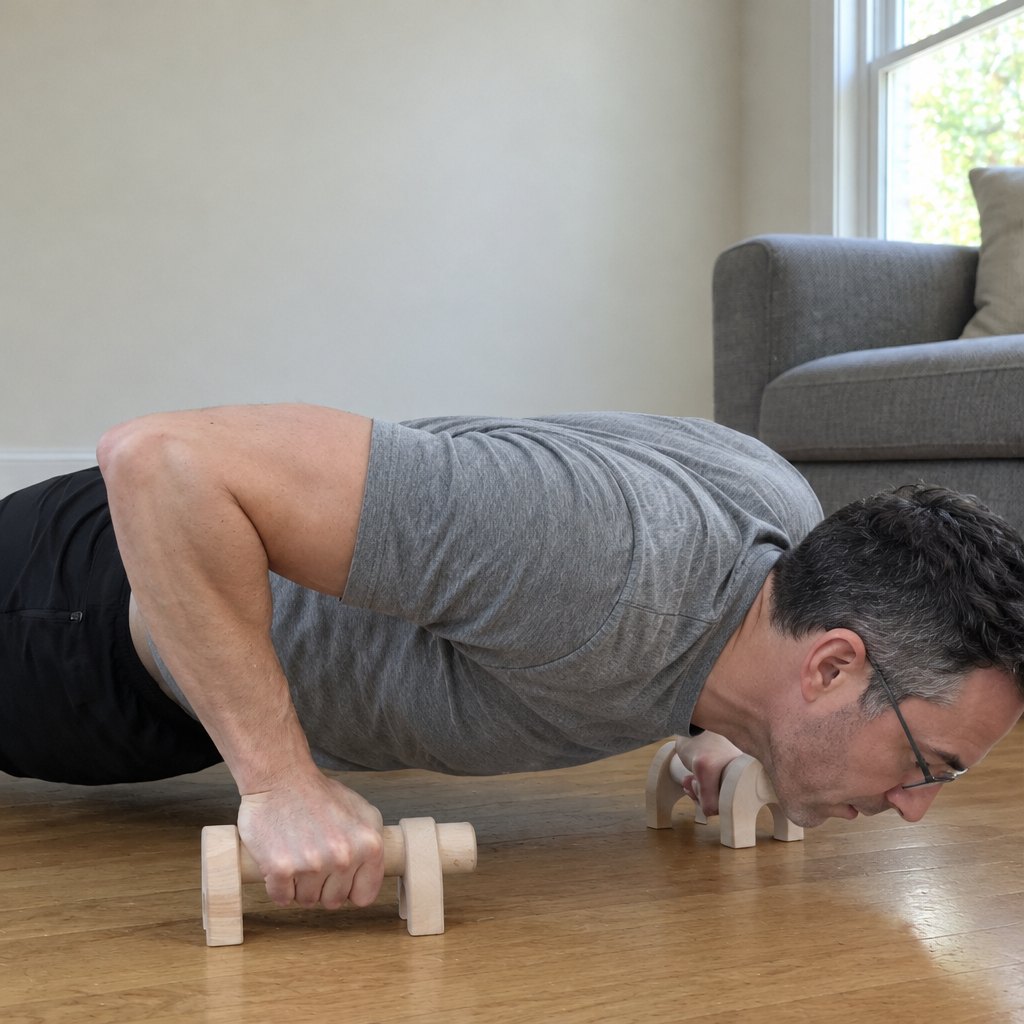
Seventy millimetres is the number that matters. It is tall enough that my knuckles clear the floor and my chest drops past my hands, and short enough that the movement is still a push-up. The steel set put my hands roughly twice as high and changed the exercise. These put my wrist straight and changed nothing else.
Kensui YinYang PRO Parallettes
- A round beech grip that puts the wrist in line with the forearm, which none of the $179 of fixes above did.
- 70 mm tall: knuckles clear, chest drops past the hands, the push-up stays a push-up.
- 400 g for the pair, and the two bars snap into one block with magnets, so they go in a backpack, a desk drawer or a carry-on.
What 23 Owners Said About Their Wrists
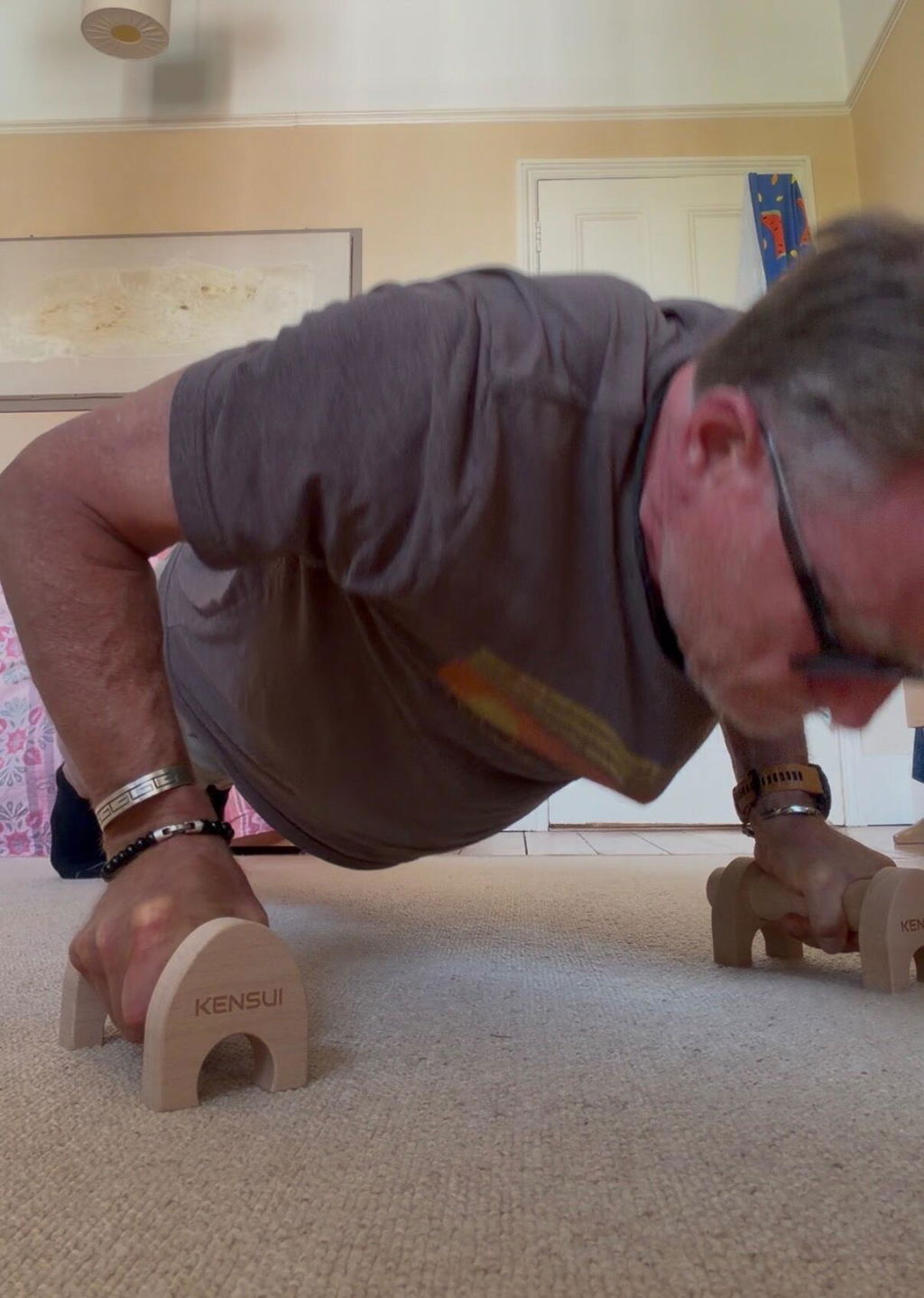
I read every review on the product page before I wrote this, 362 of them at the time. Twenty-three mention wrists or arthritis without being asked, which is the kind of unprompted pattern you only get when a product solves the thing people actually bought it for. A trainer uses them for clients with wrist problems. One pair was a gift bought on a chiropractor's advice. Several people simply say the floor hurt and this does not.
"Makes doing push ups so nice now, solid and clean no more swore wrists and weird pressure points on them. Just the fact you can rotate 90 degrees, you feel different chest muscles working and you can alternate between so easily."
Sébastian W., owner review
"The shape of the grip keeps my wrist in a neutral position and there's plenty of room underneath for my hands not scrape on the ground."
Ed C., owner review
"Due to a wrist injury this makes it much more comfortable to do pushups and certain yoga moves. They are very stable and comfortably fit my grip."
Curtis B., owner review
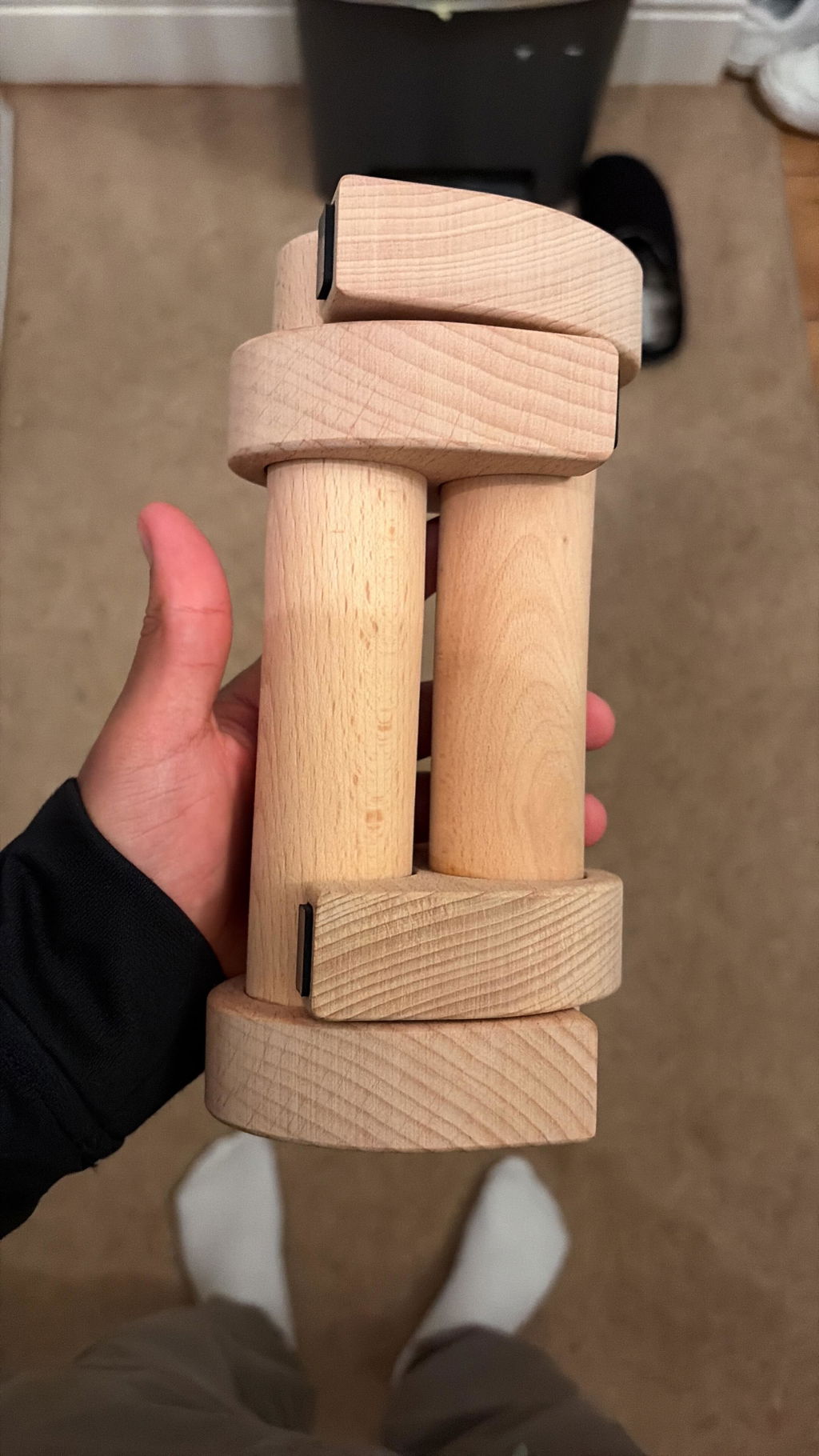
The snap-together trick is the reason mine have been used every week for a year instead of joining the steel set by the water heater. Each bar carries neodymium magnets in the feet. Bring the two together and they lock into one block the size of a water bottle, which is what goes in the bag. Pull them apart and you have two bars.
Here is the honest trade. Seventy millimetres is a push-up height, not an L-sit height. Try a straight-leg L-sit on the PRO and your heels touch the floor. Kensui's answer to that is the MAX at $69, 105 millimetres tall with an oval grip cut to the gymnastics federation's bar profile, and if your training is L-sits and planche work that is the one to buy. Mine is push-ups, planks and burpees in hotel rooms, so the small one is the right one. The other thing to know is that a 400 gram bar relies on its rubber feet rather than its mass. On a rug or wood it does not move. On a wet tile floor I would not trust anything this light, steel included.
What It Costs, And Which Size To Buy
The table is every product on this page plus the German wooden set that comes up in every search, priced the same day. Where a maker does not publish the weight of a pair, the cell says so rather than guessing.
| Model | Kensui YinYang PRO | Rogue Formed Parallette Set | REP Parallette Bars | Perfect Pushup Elite | GORNATION Wooden Parallettes |
|---|---|---|---|---|---|
| Price | $39 | $95 | $99.99 | $39.99 | €59.90 |
| Grip | Round beech bar | Steel tube | Steel tube, 40 mm | Rotating plastic handle | Beech bar |
| Weight a pair | 400 g | 14 lb | not published | not published | not published |
| Fits a backpack | Yes, as one block | No | No | Barely | Yes, two pieces |
| Stores as one piece | Yes, magnets | No | No | No | No |
| Wins outright at | Wrist angle in a bag | Stability | Load rating and weld warranty | Rotation for the chest | Bar length |
| Learn More |
Prices read from each maker's own store on 12 October 2026. GORNATION sells in euros from Germany. Rogue and REP block automated price checks, so those two prices are from the makers' own product pages as indexed on the same day.
Which size, and the only question left
- PRO or MAX?
- PRO at $39 for push-ups, planks, burpees and travel. MAX at $69 if you want L-sits and an oval gymnastics grip. The two XL versions at $79 and $129 are the same bars at 500 millimetres long, for wide hands and wide stances.
- What if my wrists still hurt on a bar?
- Then the angle was not your problem and you should see someone about it. Kensui gives you 100 days to find that out and send them back for a refund, which is longer than any of the four fixes I bought gave me.
Fifteen years is a long time to pay for a free exercise. The bill, in the end, was $39.
Put Your Wrist In A Straight Line For $39
Two beech bars, 70 millimetres tall, 400 grams for the pair, magnets that snap them into one block for the bag. In stock and shipped within 24 hours, with 100 days to send them back.
Get the YinYang Parallettes$39 a pair • 4.71 stars from 363 reviews • 100-day money-back trial
Sources
- Gelberman RH, Hergenroeder PT, Hargens AR, Lundborg GN, Akeson WH. The carpal tunnel syndrome: a study of carpal canal pressures. J Bone Joint Surg Am, 1981, 63(3), 380-383. PMID 7204435.
- Polovinets O, Wolf A, Wollstein R. Force transmission through the wrist during performance of push-ups on a hyperextended and a neutral wrist. J Hand Ther, 2018, 31(3), 322-330. doi:10.1016/j.jht.2017.04.005.
- Chung WK, Park DC, Chi KS. Range of active motion and axial angles of the wrist joint in normal adult Koreans. J Korean Orthop Assoc, 1986, 21(6), 993-1002.
- DiLeo SDF, Noori A, Day E, Burkhart TA, Paul RA, Chan AHW. Epidemiology and risk factors of wrist pain and injury in adolescent artistic gymnasts: a systematic review and meta-analysis. Orthop J Sports Med. 2026. doi:10.1177/23259671251395329. PMID 41552624.
- Competitor prices read on 12 October 2026: Rogue Wraps $29.50 and the Rogue Formed Parallette Set $95 at roguefitness.com, Perfect Pushup Elite $39.99 at walmart.com, the Gaiam yoga wedge $14.98 at reach.dog, REP Parallette Bars $99.99 at repfitness.com, GORNATION Wooden Parallettes €59.90 at gornation.com. The parallettes' own price, rating and review count come from the maker's product page and its Judge.me widget the same day.
