Calisthenics · 8 min read
How I Turned My Old Plates Into A Modern Calisthenics Setup
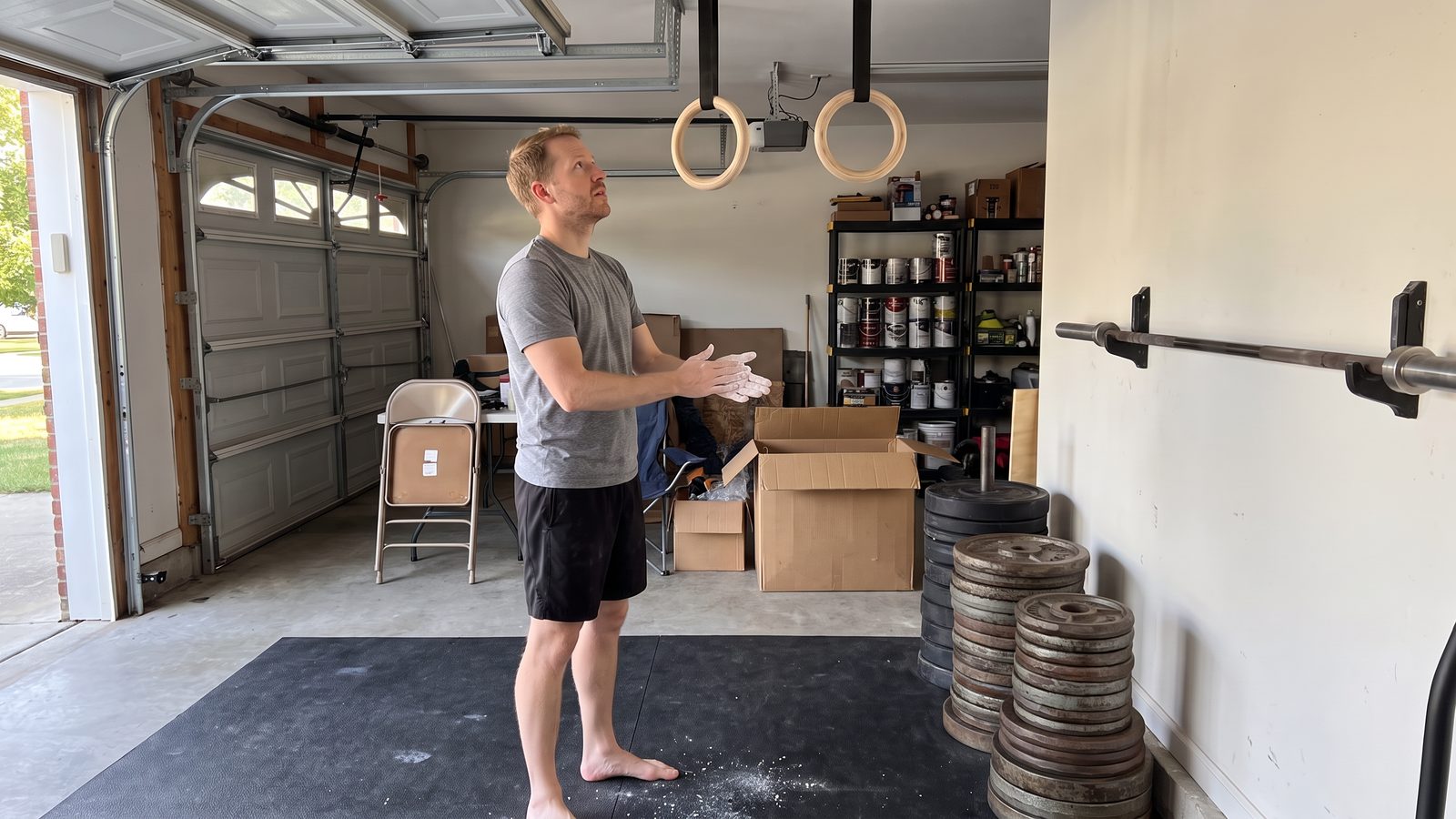
Three years into bodyweight training, a set of 40 push-ups had stopped building anything, and 195 pounds of my old iron plates sat against the garage wall. I priced every way to add weight to pull-ups, dips and push-ups, from a $39.99 dip belt to $589.90 of fixed vests. The one that stuck was a $99 vest that loads the plates I already owned.

Bodyweight Stopped Being Hard
I quit the barbell three years ago. My shoulders were tired of bench day, and I wanted training I could finish in the garage between work and dinner. The bar went up on two wall hooks. The plates went into a stack by the door: a pair of 45s, a pair of 25s, four 10s, a pair of 5s and a pair of 2.5s.
That is 195 pounds of old iron, and none of it moved for three years. A pair of wooden rings went up on a ceiling joist instead, next to a pull-up bar bolted to the wall. For two years that was all I needed. Rows, dips, pull-ups and push-ups, three days a week, and every month I could do a few more.
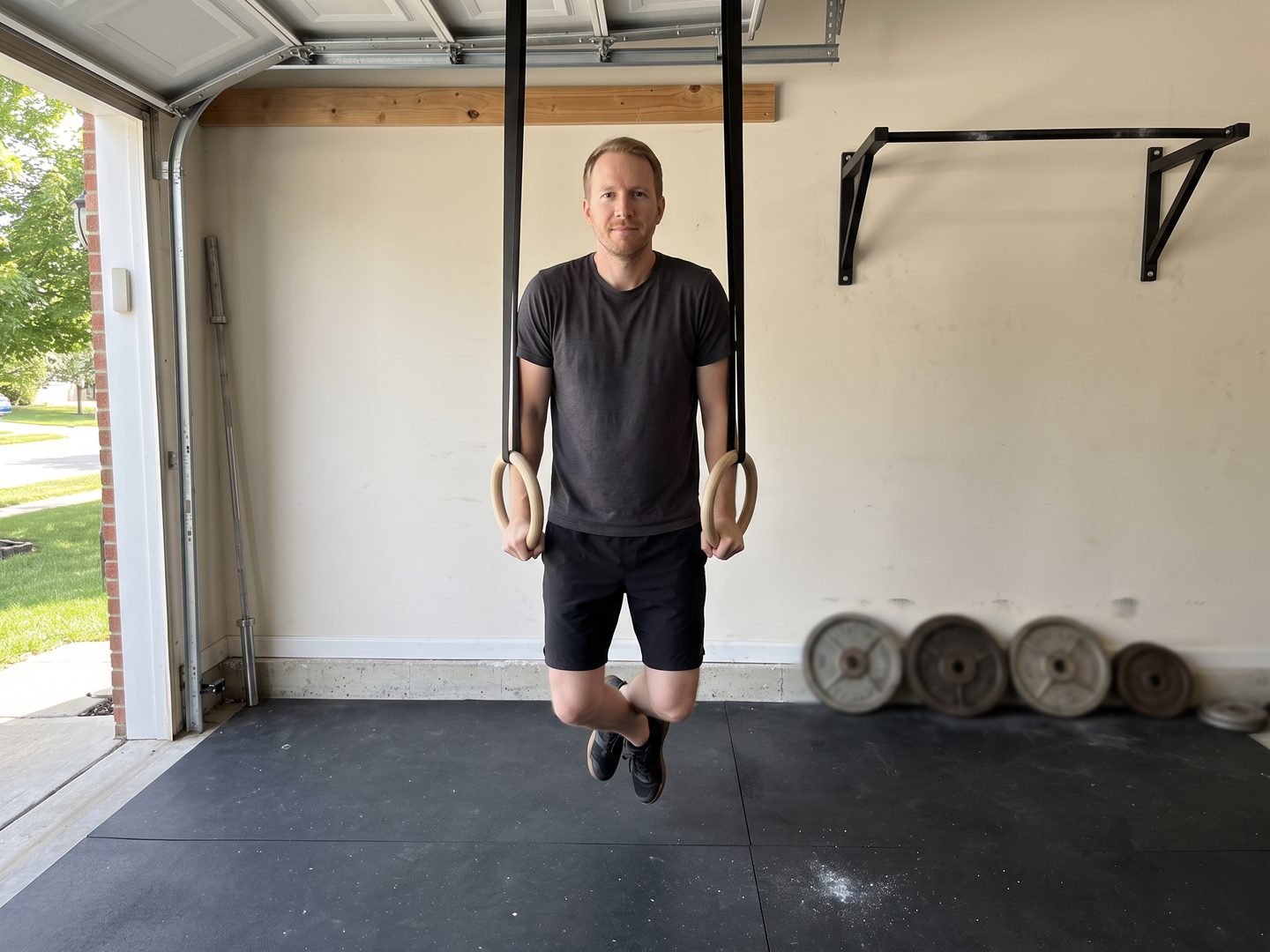
Then the numbers stopped moving. I could do 15 strict pull-ups, 20 ring dips and 40 push-ups, and a set of 40 push-ups felt like cardio. From there you either learn harder skills or add weight. I tried the usual tricks first: slower reps, a pause at the bottom, archer push-ups. They bought me a few months, and then those got easy too. Skills are slow. I have been chasing a one-arm push-up for a year. Weight is fast, and I had 195 pounds of it sitting three feet away.
The problem was getting that weight onto my body. So I priced the obvious ways to do it, each on the seller's own site.
What adding weight was going to cost me
- Two fixed vests, 20 lb then 40 lb (TRX)$589.90
- Steel shot vest filled to its 30 lb limit (Hyperwear, large)$439.75
- A year of the cheapest gym plan (Planet Fitness)$229
- Plate carrier with one 30 lb plate (GORUCK)$204
- Sand vest that stops at 40 lb (CAP Barbell)$69.99
- Dip belt with a chain (Harbinger)$39.99
Every Way I Priced To Add Weight
I started with the free fix. For a month I did push-ups with a 25 pound plate balanced between my shoulder blades.
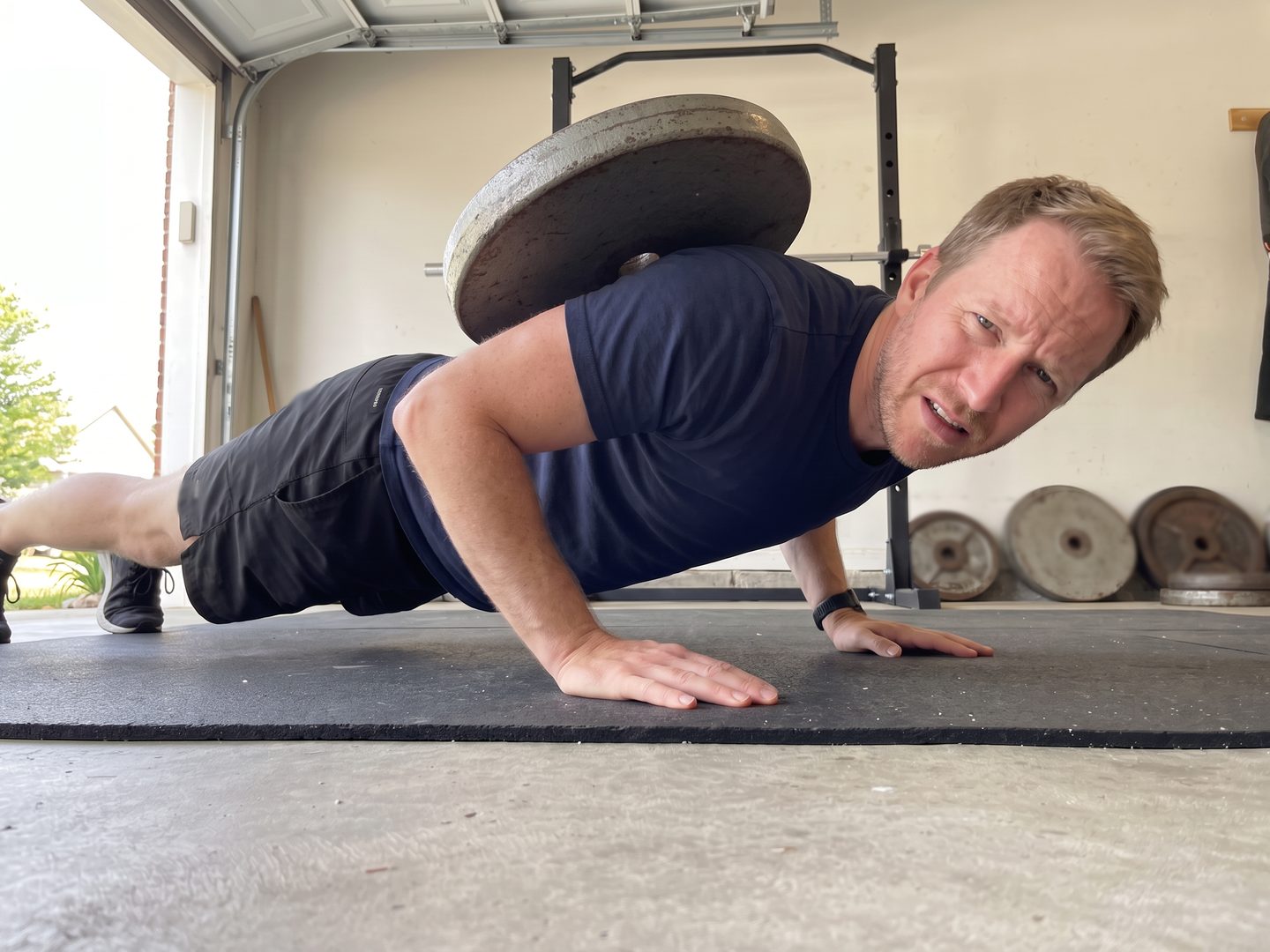
It works until the plate creeps toward one shoulder, which happens every few reps. Past 25 pounds you need a second person to set it on you and catch it when it slides. It also does nothing for pull-ups or dips. A backpack with two 10s in it was worse: the straps cut into my shoulders and the bag bounced on every dip. So I went shopping, and every option below wins at something. I will say what.
Fixed vests, $64.99 to $319.95
A fixed vest has its weight sewn in. Sunny Health & Fitness sells a 20 pound one for $64.99, and its line stops at 30 pounds ($89.99). TRX makes the best finished one I found, the HexGrip, in two versions: 20 pounds for $269.95 and 40 pounds for $319.95. TRX sells no extra weight for either. So the fixed route to 40 pounds is buying both, $589.90, and after that there is nowhere to go. Where they win: nothing to load, nothing to lose, and the cheap ones are great for walks.
Adjustable vests, from $69.99
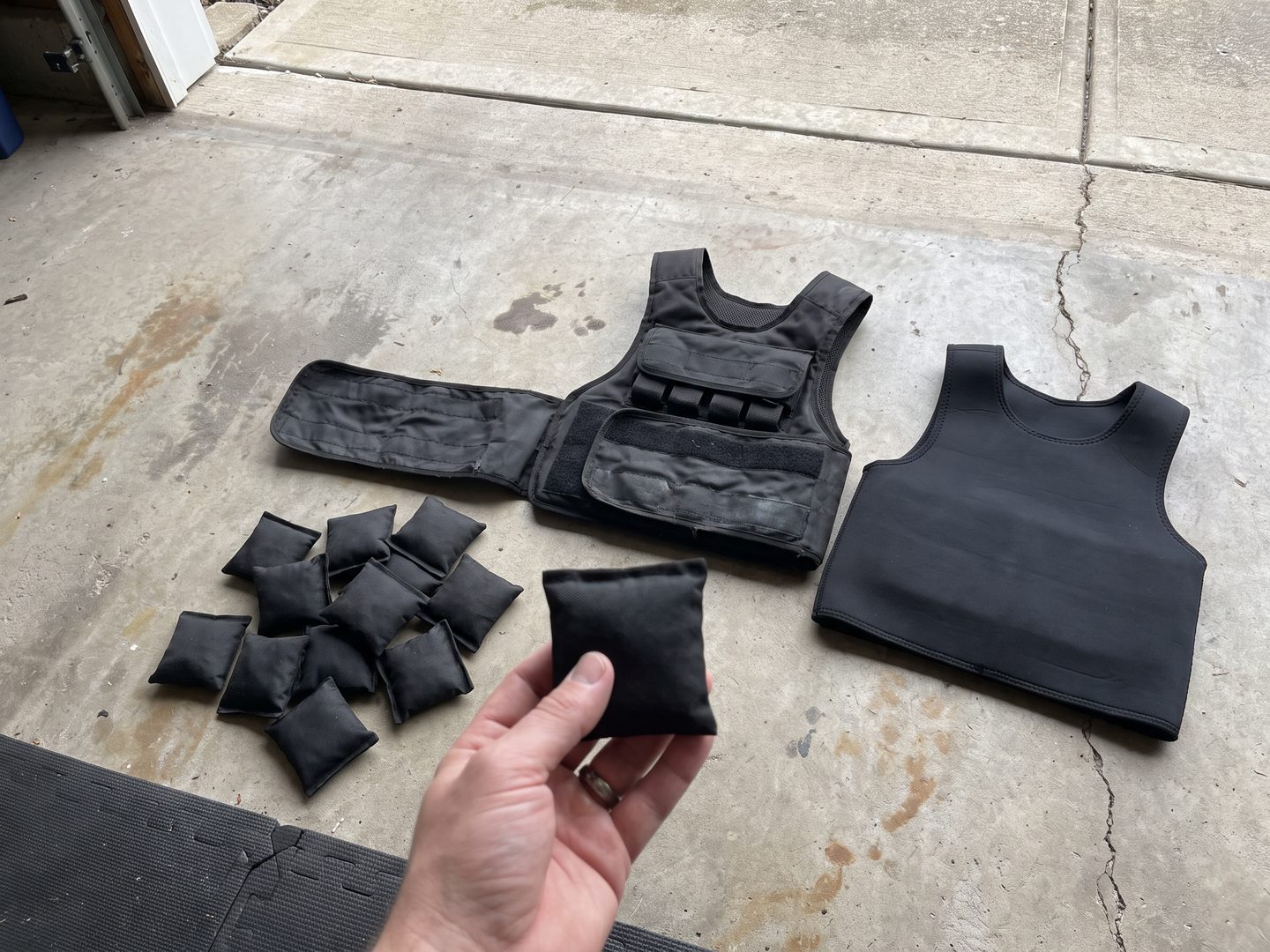
Adjustable vests sell you the weight in small pieces. CAP Barbell's sand vest is the cheapest route to 40 pounds I found, at $69.99, and 40 is where that vest ends. Their 60 pound version is a different vest at $121.99. Hyperwear's Hyper Vest PRO ships with 10 pounds of small steel weights for $239.95, more weight costs $49.95 per 5 pounds, and a large tops out at 30 pounds. Filled to that limit it costs $439.75. Where they win: the Hyperwear's weights are a quarter inch thick, so it is the best of these to run in.
A plate carrier, $204 for 30 pounds
GORUCK's Ruck Plate Carrier costs $115 and holds one GORUCK plate. Their 30 pound plate is $89, so $204 buys 30 pounds on your back. More than that means the long carrier ($135) and the 45 pound long plate ($125). Where it wins: it is built for rucking, and for long walks it beats everything here. For pull-ups and dips, though, all of it hangs off your back.
A dip belt, $39.99
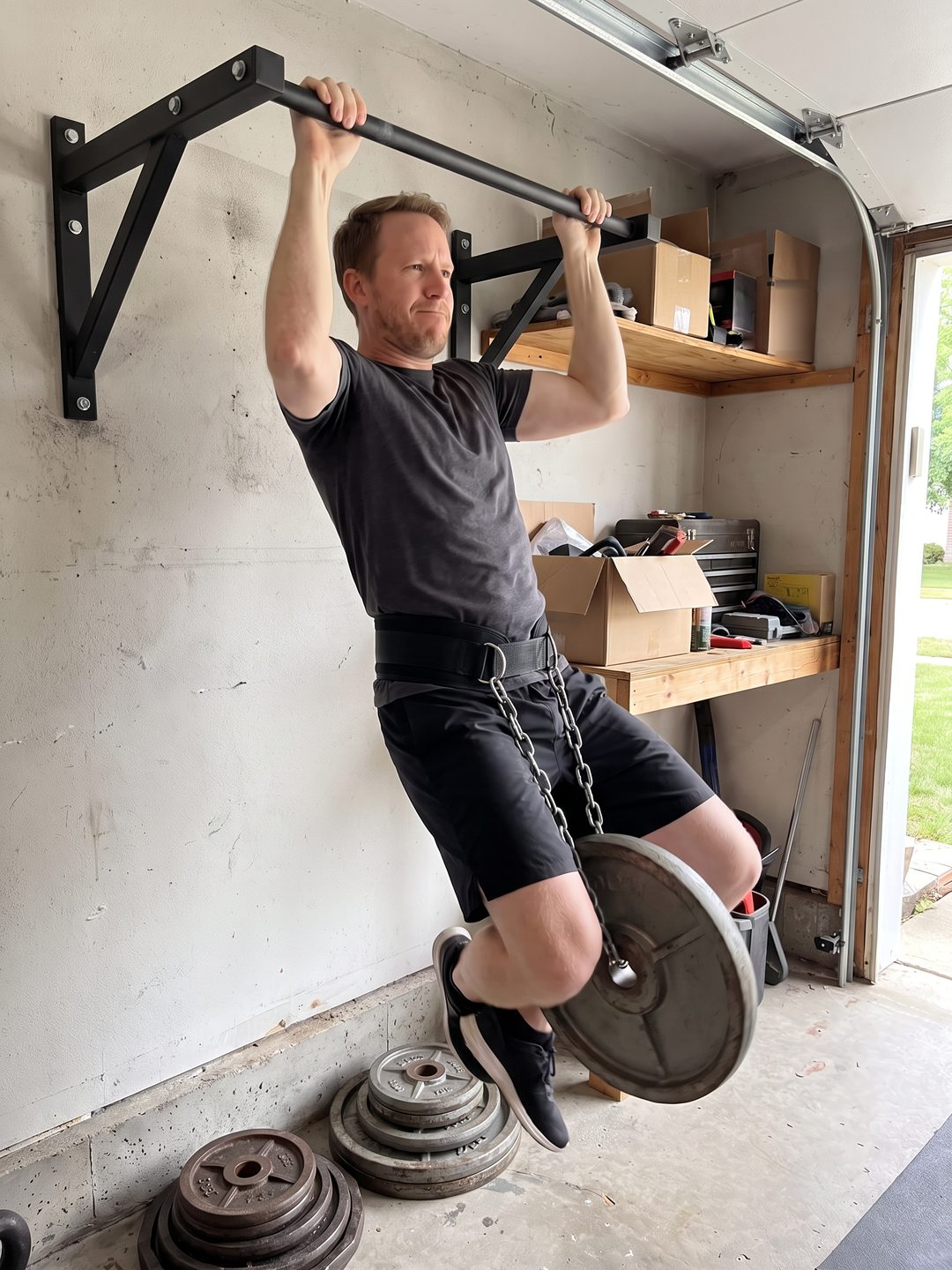
Harbinger's dip belt comes with a 34 inch chain for $39.99, and it takes the plates you already own. For dips and pull-ups alone it is the cheapest answer on this page, and I will say so again later. It cannot load a push-up at all, though. On pull-ups my plate swung into a knee every other rep until I learned to keep my legs still.
A gym, $229 a year
The cheapest Planet Fitness plan is $15 a month plus a $49 yearly fee, so $229 a year before the sign-up fee, and prices vary by club. A gym wins on everything except the reason I train at home. My whole workout takes less time than the drive.
What A Calisthenics Load Has To Do
After a month of this I stopped comparing prices and wrote down what the thing actually had to do. Four rules, written on the whiteboard next to the rings, where I still see them every session. Use them on anything you are about to buy.
- It stays tight through a pull-up and a dip. No swing, no bounce, nothing sliding off halfway up.
- It loads my own plates in small steps. I own 2.5s. I should be able to use them.
- It leaves my arms free on push-ups. Whatever sits on my chest has to clear my forearms and the floor.
- It has room to grow. Buying a heavier version of the same thing in six months is the trap I was trying to avoid.
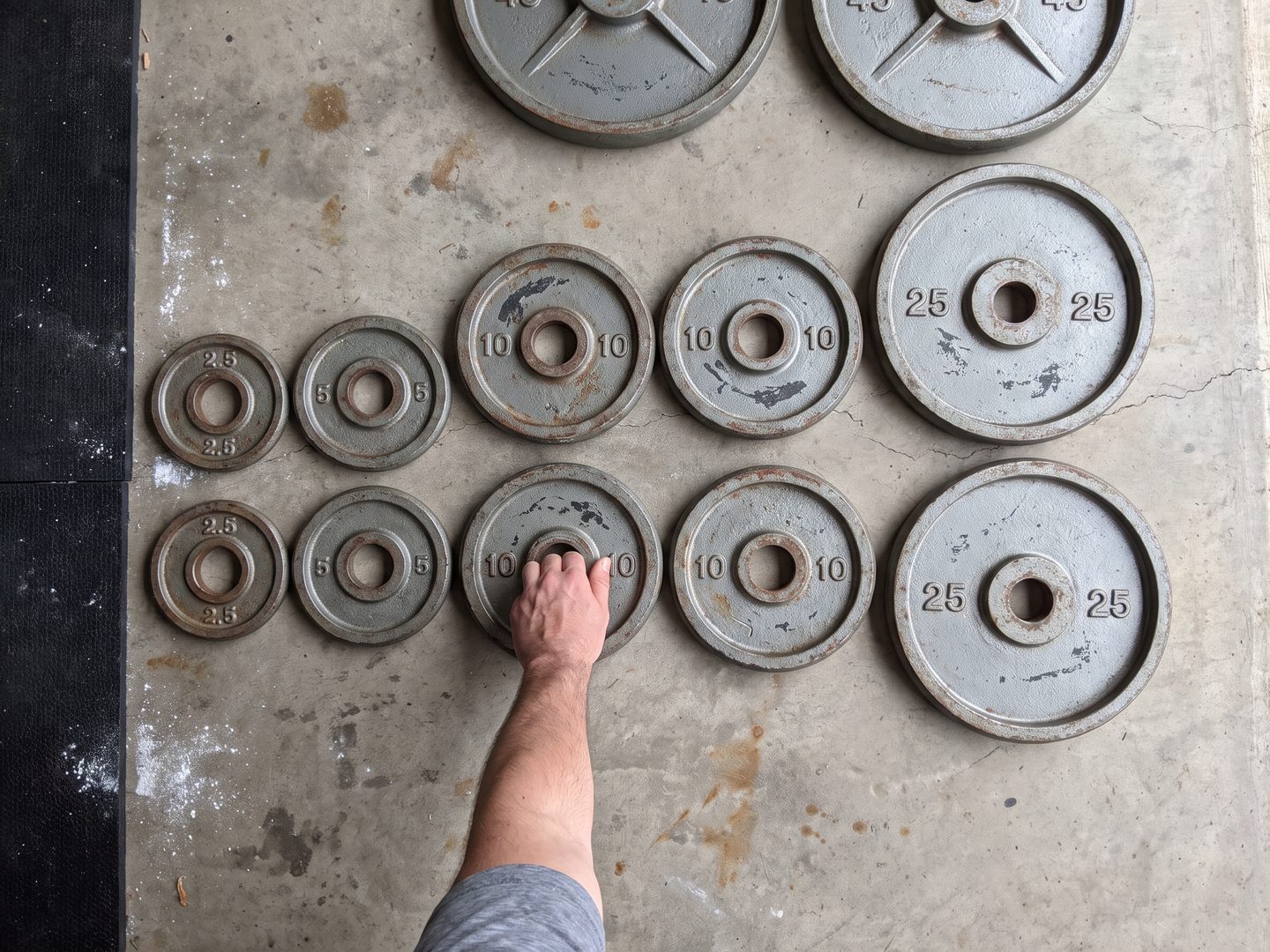
Scored that way, my list fell apart. Every vest I priced failed rule 2 or rule 4, because you buy their weight and then you outgrow it. The plate carrier failed both, because it takes only its own plates, one at a time. The dip belt passed both and failed rule 3. The one thing that passed all four was the last thing I found, because I had been searching for weight vests and this one comes with no weight at all.
The Vest That Loads The Plates I Already Had
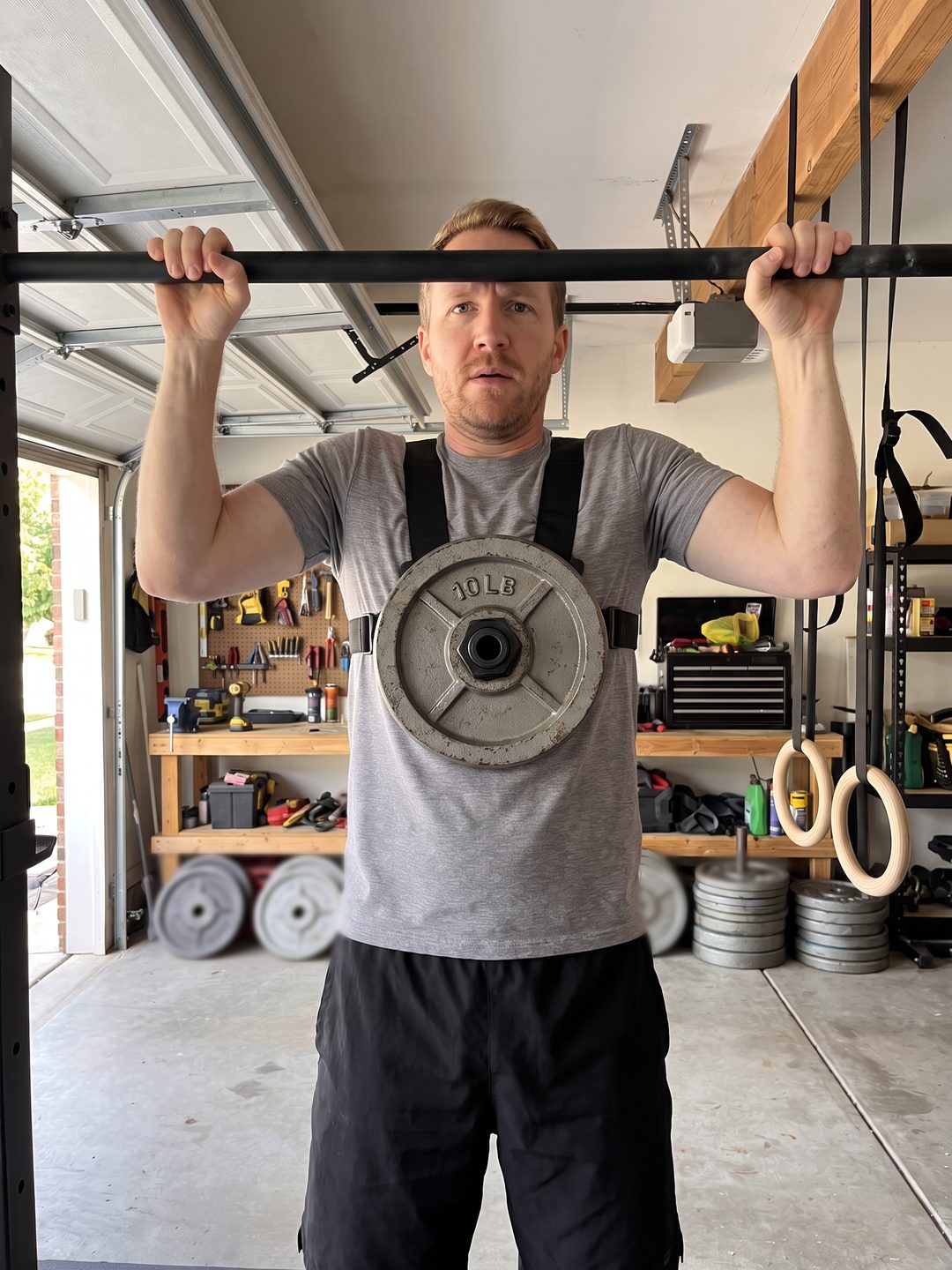
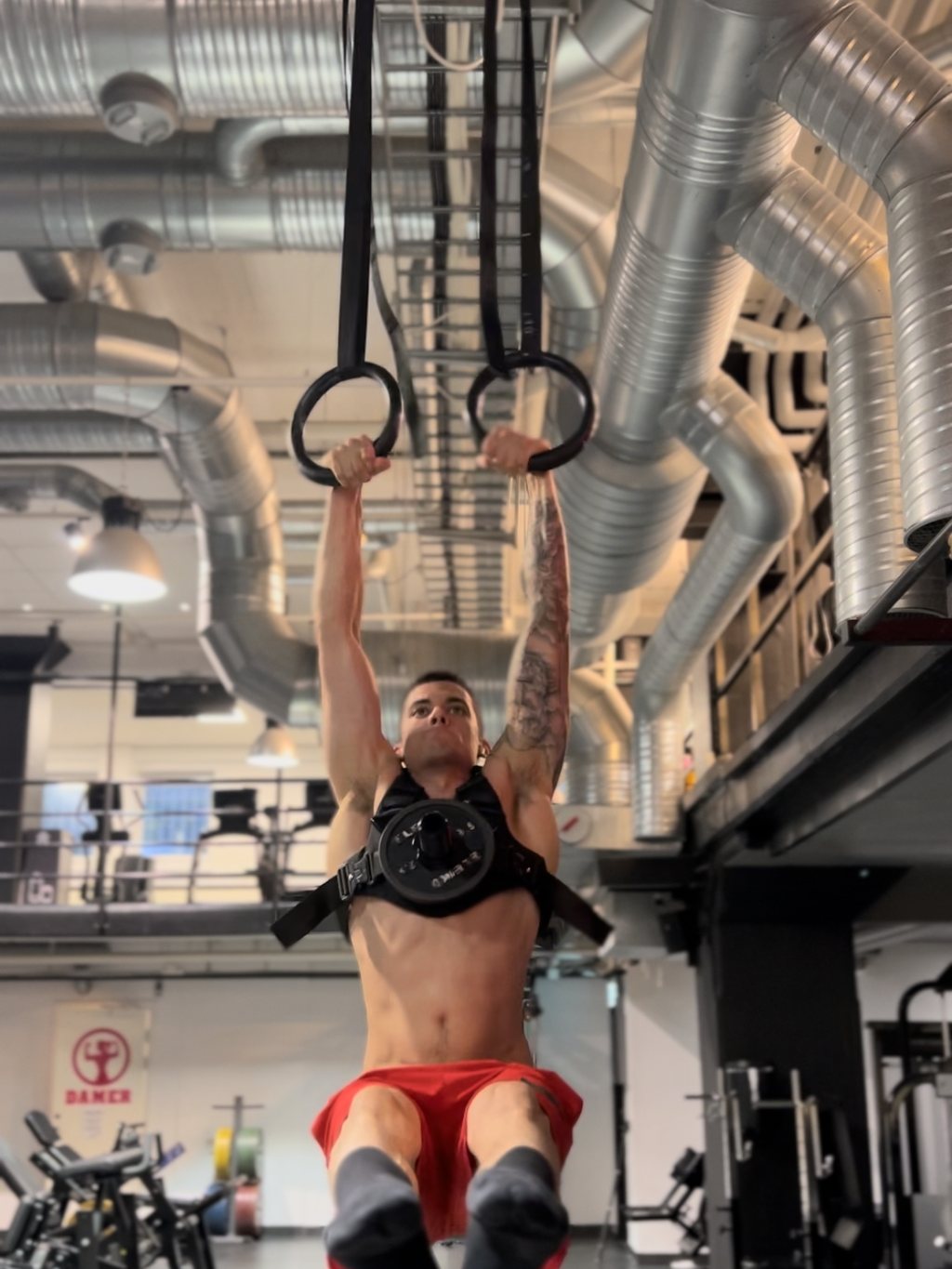
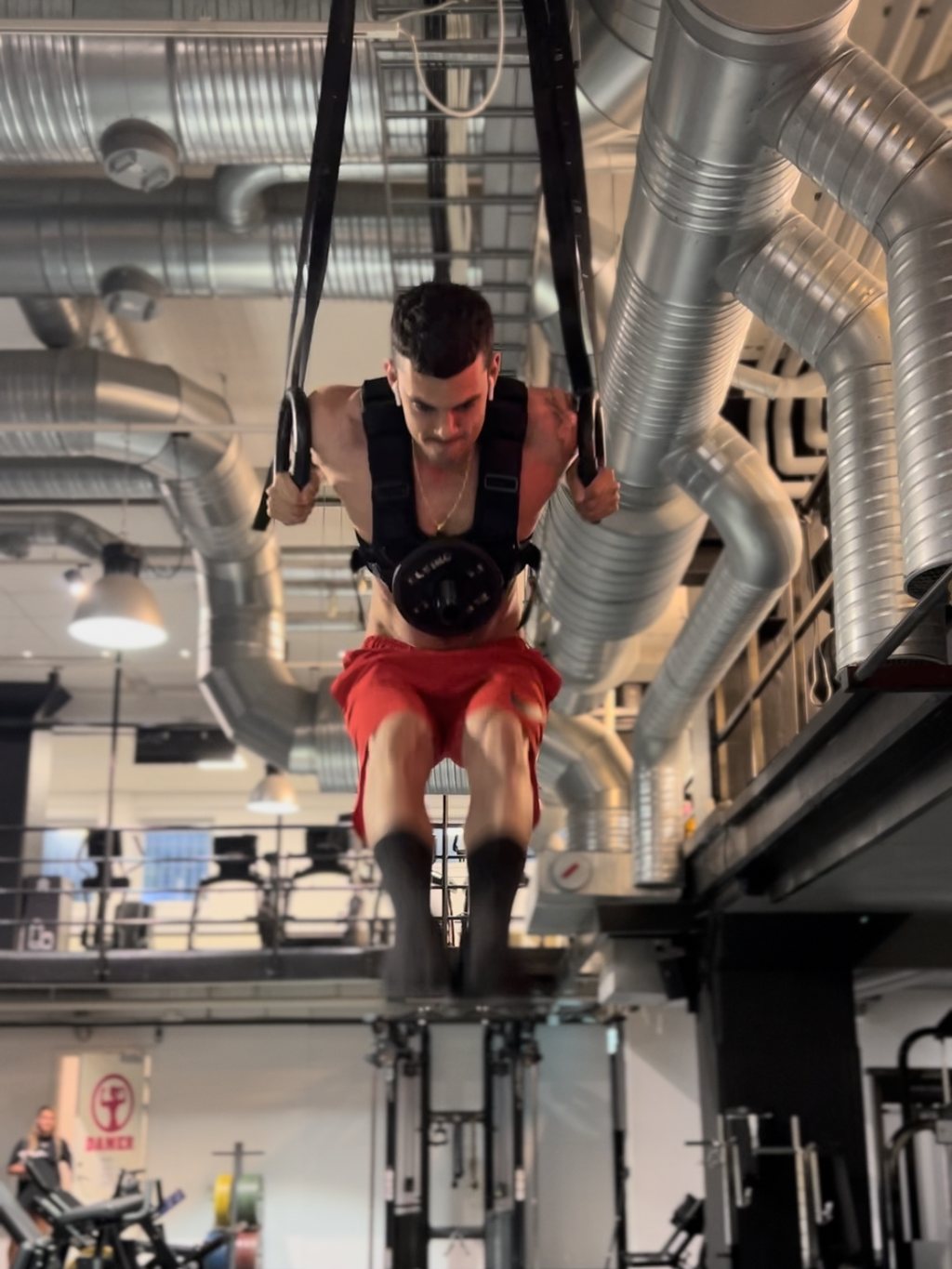
The one I kept is a set of black straps and two flat shields, with a short threaded post at the center of the chest and another between the shoulder blades. You slide on standard Olympic plates and spin a collar on to lock them. My old 10s went on the first night, and the 25s the week after. For the first time in three years, the stack by the door was getting smaller.
It is the Kensui EZ-VEST, and the Lite version I use costs $99 and takes up to 80 pounds of plates.
It passes all four rules. The plates sit flat against my chest and back, so nothing swings on a pull-up. It loads in steps as small as my smallest plates, 2.5 pounds. It holds more than twice what I use today. Rule 3 is the honest one, and it gets its own part below.
The verdict
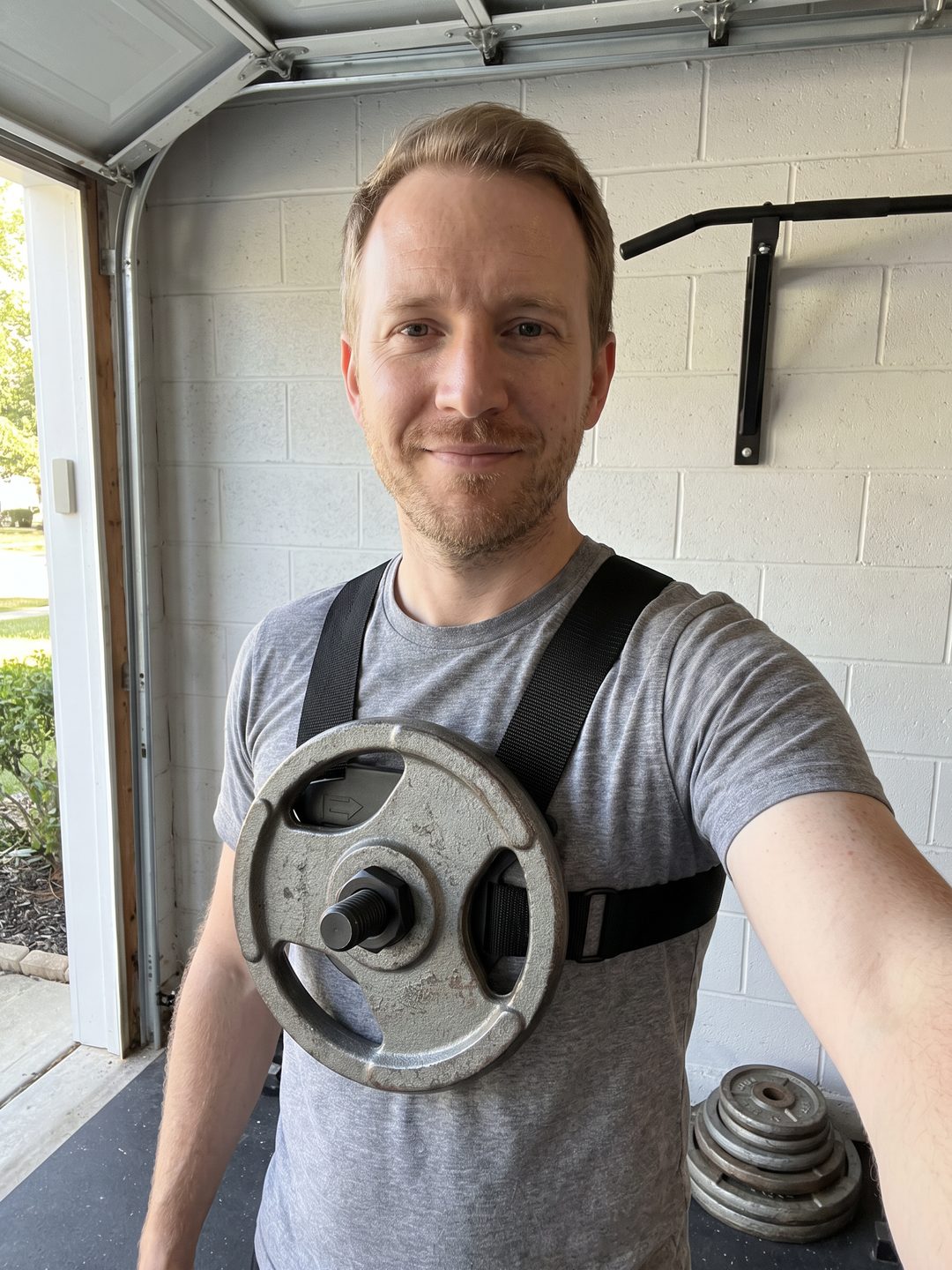
Kensui EZ-VEST V2 Lite
$99Loads up to 80 lb of your own plates
- Takes the 2 inch Olympic plates you already own, on the chest and the upper back
- Steps as small as your smallest plate, and the collars are included
- 100-day money-back trial, in stock and shipping in 24 hours
Planning to go heavier? The Pro is $179 for 150 lb and adds 6 mm padding. The Max is $299 for 300 lb.
Plenty of owners train in it the same way, rings included.
Lite $99 · 100-day money-back trial
Six Weeks In: Where It Wins And Where It Loses
I have trained in it three days a week for six weeks. Pull-ups started with a 10 on each post and now carry 35 pounds. Ring dips are at 30. Push-ups get a 25 on the back and a 10 on the front, and that combination took some working out.
The win I did not expect is how still it sits. A plate on a chain swings, and a plate on your back slides. This does neither, which is what one amateur powerlifter wrote in a review:
“What I have noticed is that chain belts tend to shift and pinch during reps and attempting to balance a plate, or more on your back is always a challenge. With this vest I am able to hit full range of motion with no pinching or the chain shifting unexpectedly during a rep.”Nicholas C., five stars
Now the three places it loses, because you should know them before you spend anything.
1. Big plates get in the way of push-ups.
A 10 on the chest clears everything. A 25 on the chest is another story. At the bottom of a floor push-up the post touches down before my chest does, and on close grip the plate brushes my forearms. 12 of the 560 owner reviews I read say something similar about push-ups. Their fixes are the ones that worked for me: put your hands on parallettes, use two small plates instead of one big one, or buy the shorter XT sleeves, which Kensui sells separately for $29.
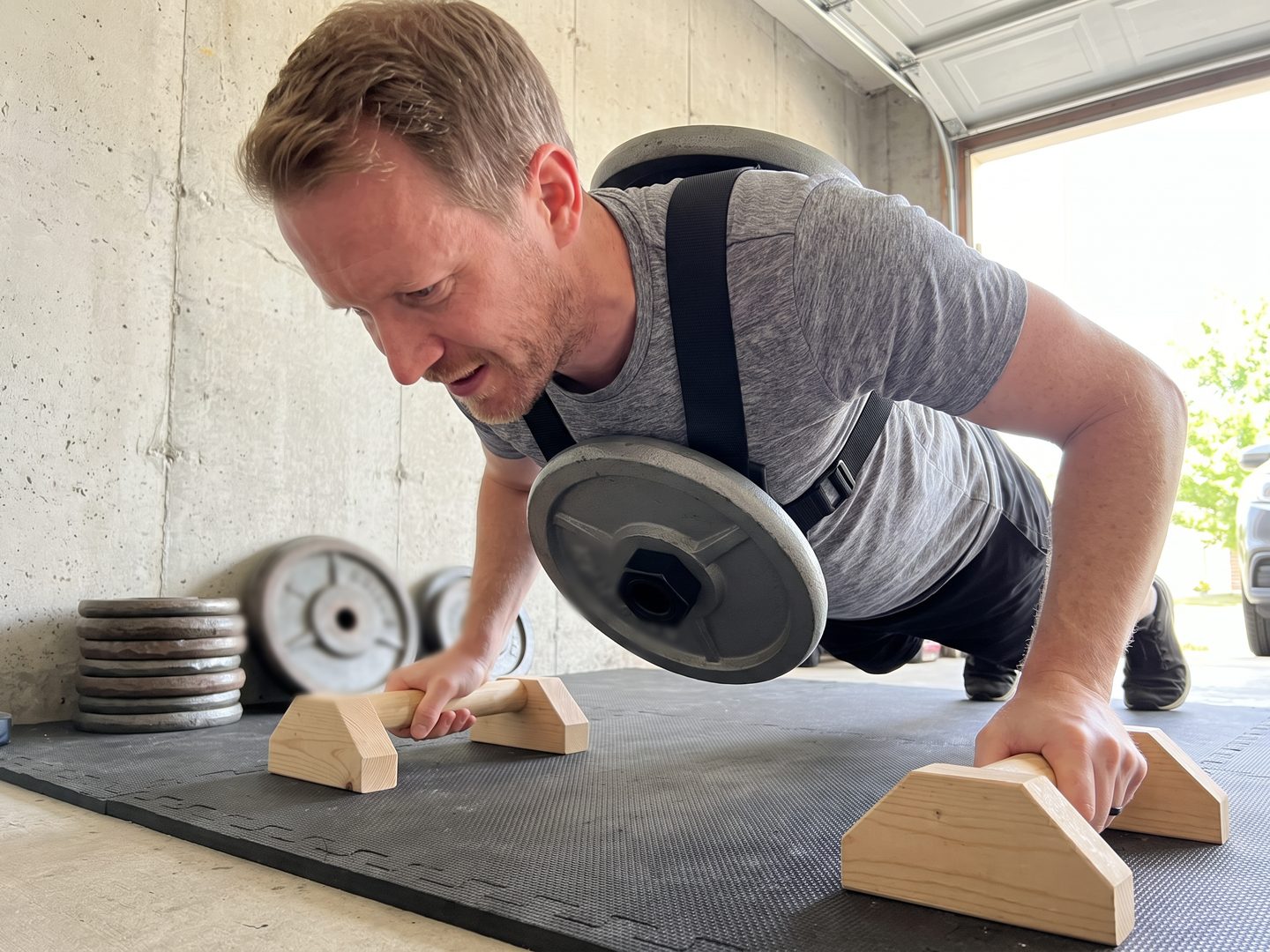
“The only thing is you must be realistic about weight plate thickness and diameter…in some things this will become an obstruction. It’s just a basic fact of the vest.”Evan L., four stars
2. A dip belt is cheaper for dips and pull-ups alone.
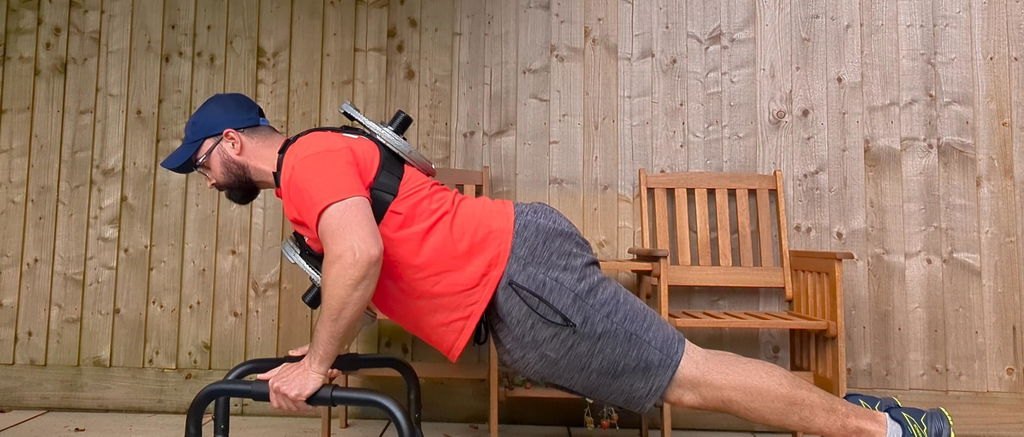
If weighted dips and pull-ups are all you want, buy the $39.99 belt. Twelve owners bring up a dip belt in their reviews, and four of them say the belt is still the easier tool for pull-ups or dips, mostly because it goes on and off faster between sets. I kept the vest for the push-ups, which a belt cannot load. One owner did the same:
“I bought this vest to do weighted pushups and it works great. I've also been using it for weighted pullups and chinups, even though I have a dip belt that I was previously using for that purpose.”Keith M., five stars
3. The load sits on your shoulders.
All of the weight hangs from two straps across your traps, and the Lite has no padding at all. At 35 pounds I feel it by the end of a session. 11 of those 560 owners bring up padding, mostly people who wear it heavy or for hours at a time. If that is your plan, the Pro's padding is the reason to spend more.
The Rest Of My Setup
The vest is the only thing on this page I would call essential. Two other pieces make it work in a garage.
Rings. I do my dips and rows on wooden rings that hang from a ceiling joist, and ring push-ups with a loaded vest are the hardest push-ups I know. If you need a pair, the DUO-Rings cost $49. Each ring has two grip sizes, 28 mm and 32 mm, and the straps are numbered so both sides hang level. Get the DUO-Rings
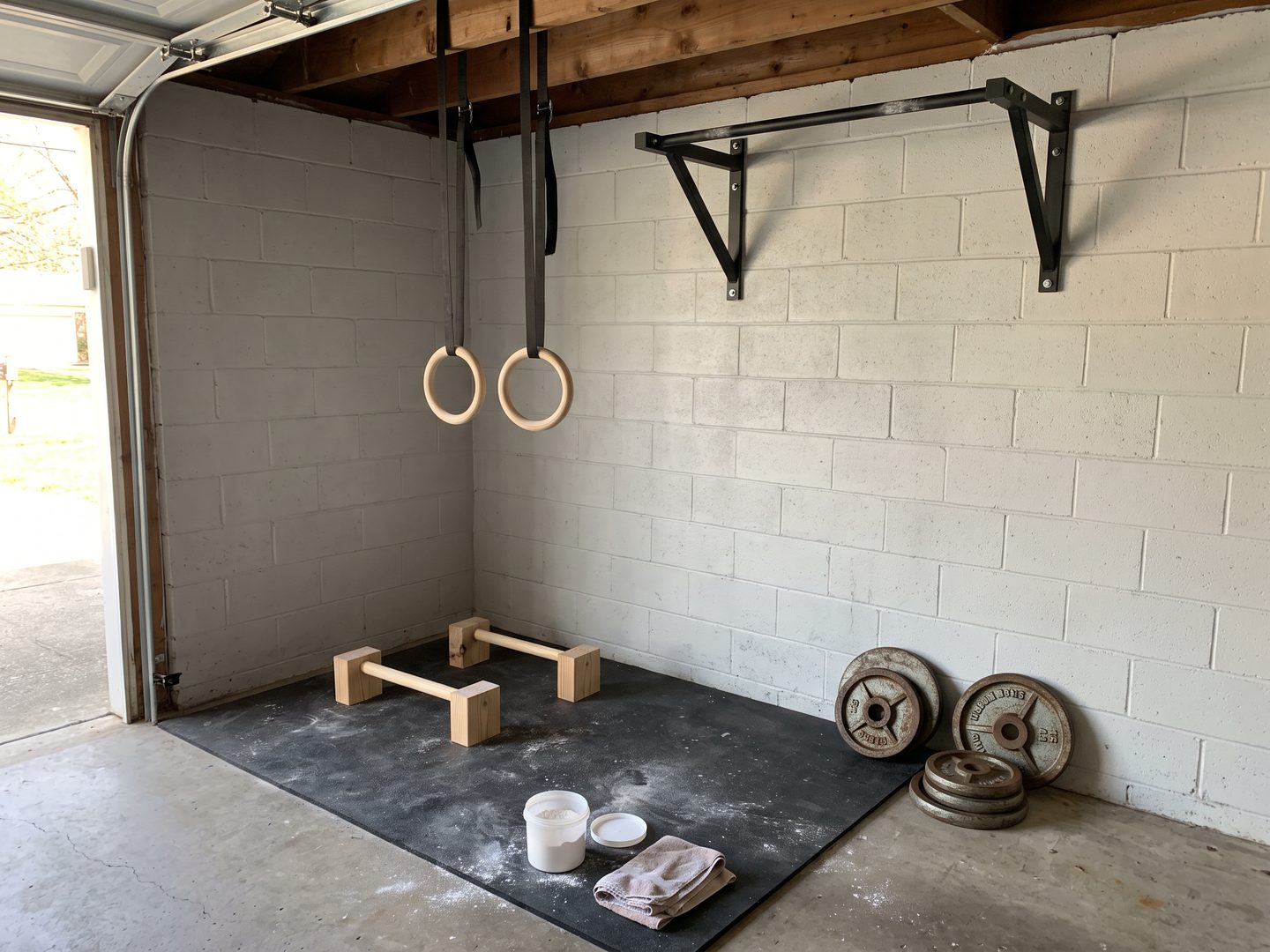
Parallettes. They lift your hands a few inches, which is the cleanest fix for a big plate on your chest. Mine are a homemade pair. If you are buying, the YinYang PRO pair is $39 in beech wood. Get the YinYang Parallettes
The options side by side
| EZ-VEST Lite | TRX 40 lb vest | GORUCK carrier and 30 lb plate | Harbinger dip belt | |
|---|---|---|---|---|
| Price | $99 | $319.95 | $204 | $39.99 |
| Uses plates you own | Yes | No | No | Yes |
| Most it holds | 80 lb | 40 lb, fixed | 30 lb | Your plates |
| Smallest step | 2.5 lb | None | 10 lb | 2.5 lb |
| Push-ups | Yes | Yes | Yes | No |
| Learn More |
Before You Buy
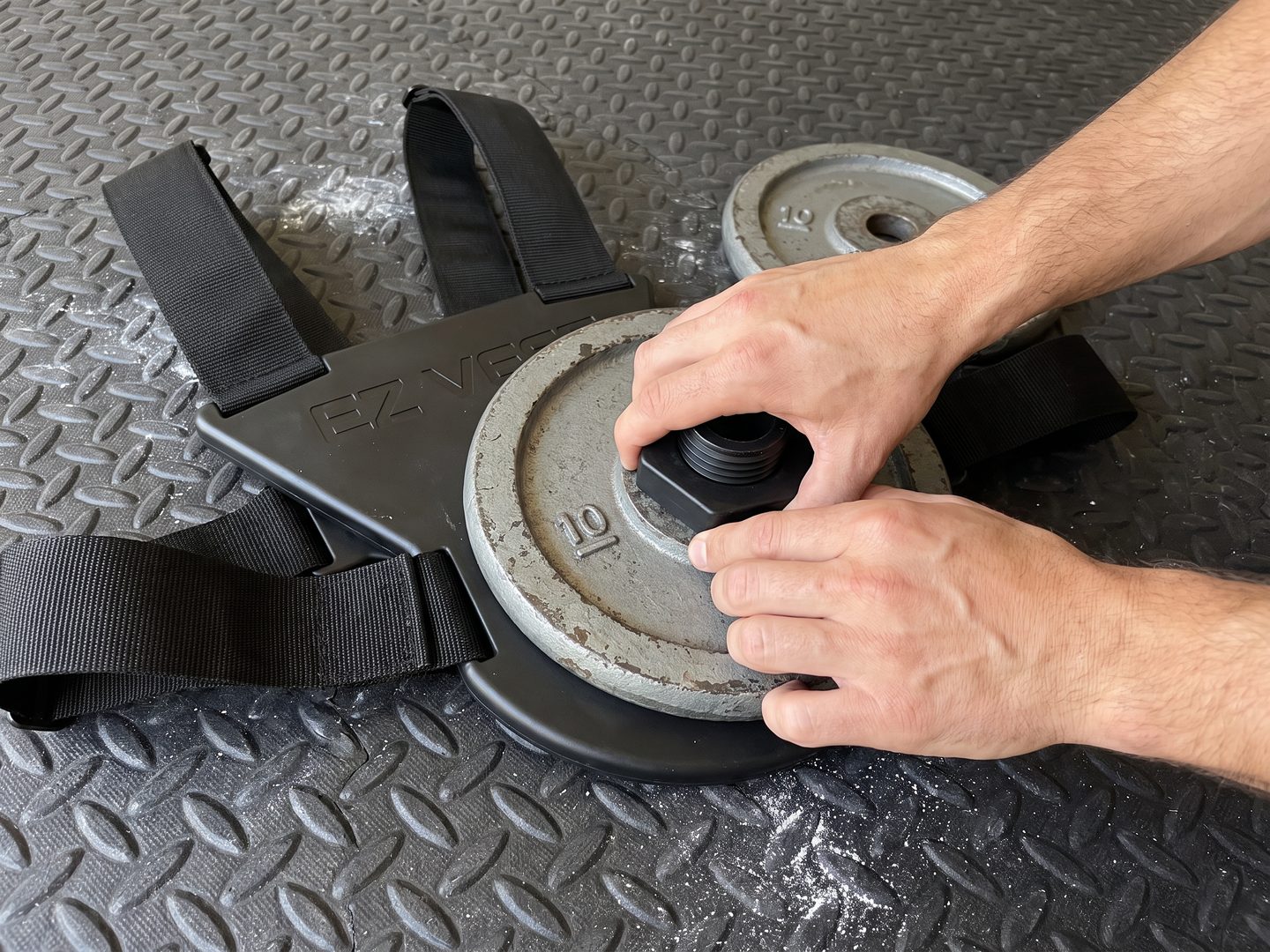
- Do my plates fit?
- Any Olympic plate with a 2 inch hole fits. Plates with the old 1 inch hole need an adapter, which Kensui sells separately for $27 a pair.
- Which version?
- The Lite is enough for most weighted calisthenics. Pick the Pro if you want padding or plan to go past 80 pounds.
- Are plates included?
- No. That is the whole point.
It comes with a 100-day money-back trial. If it does not fit the way you train, send it back for a full refund, no questions asked.
My vest cost $99. The fixed route to 40 pounds was $589.90, and my plates were paid for years ago.
Get the EZ-VEST