Pickleball • 9 min read
My Wife Beats Me At Pickleball Every Sunday. Her Secret Is A $49 Club.
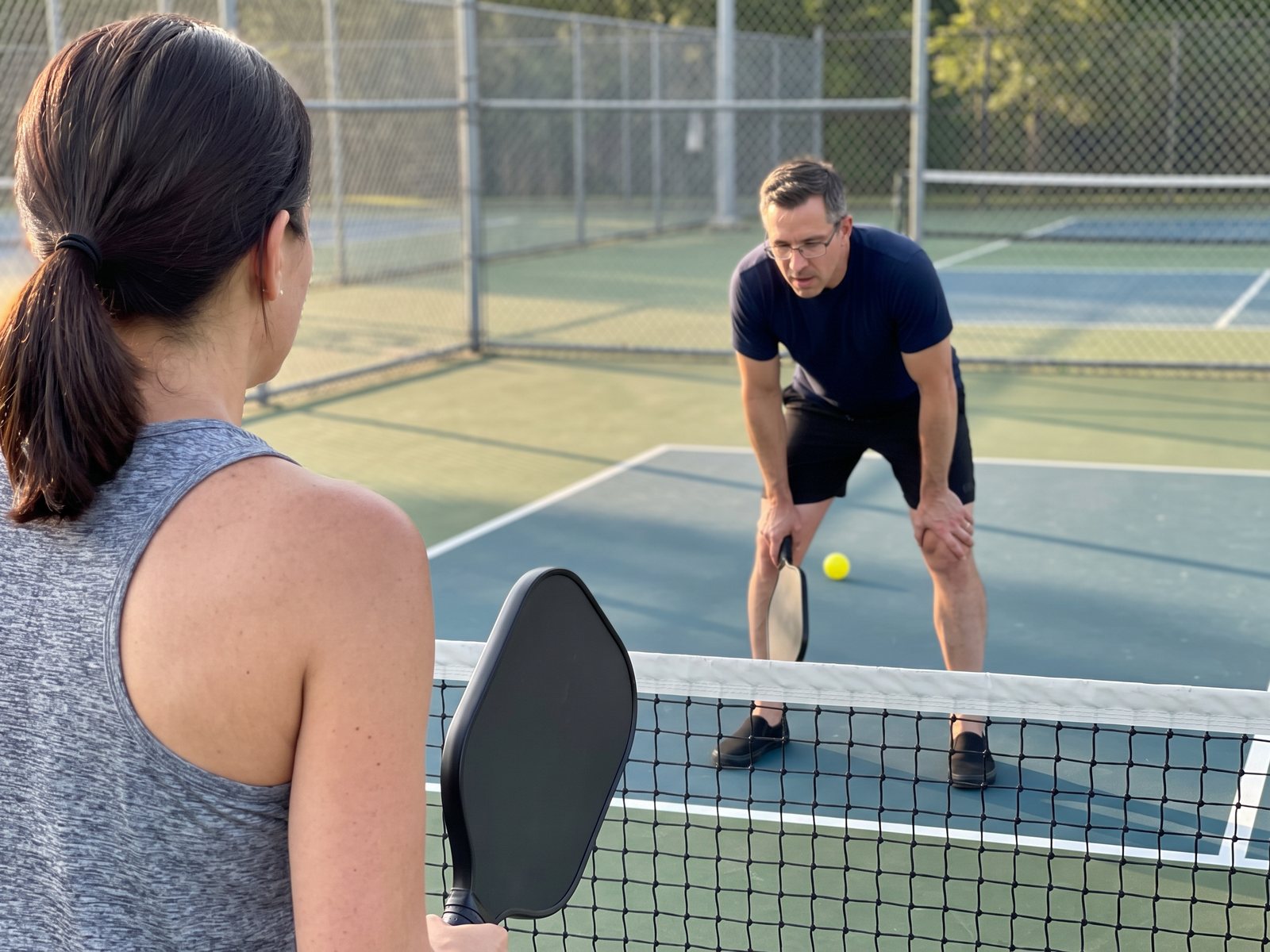
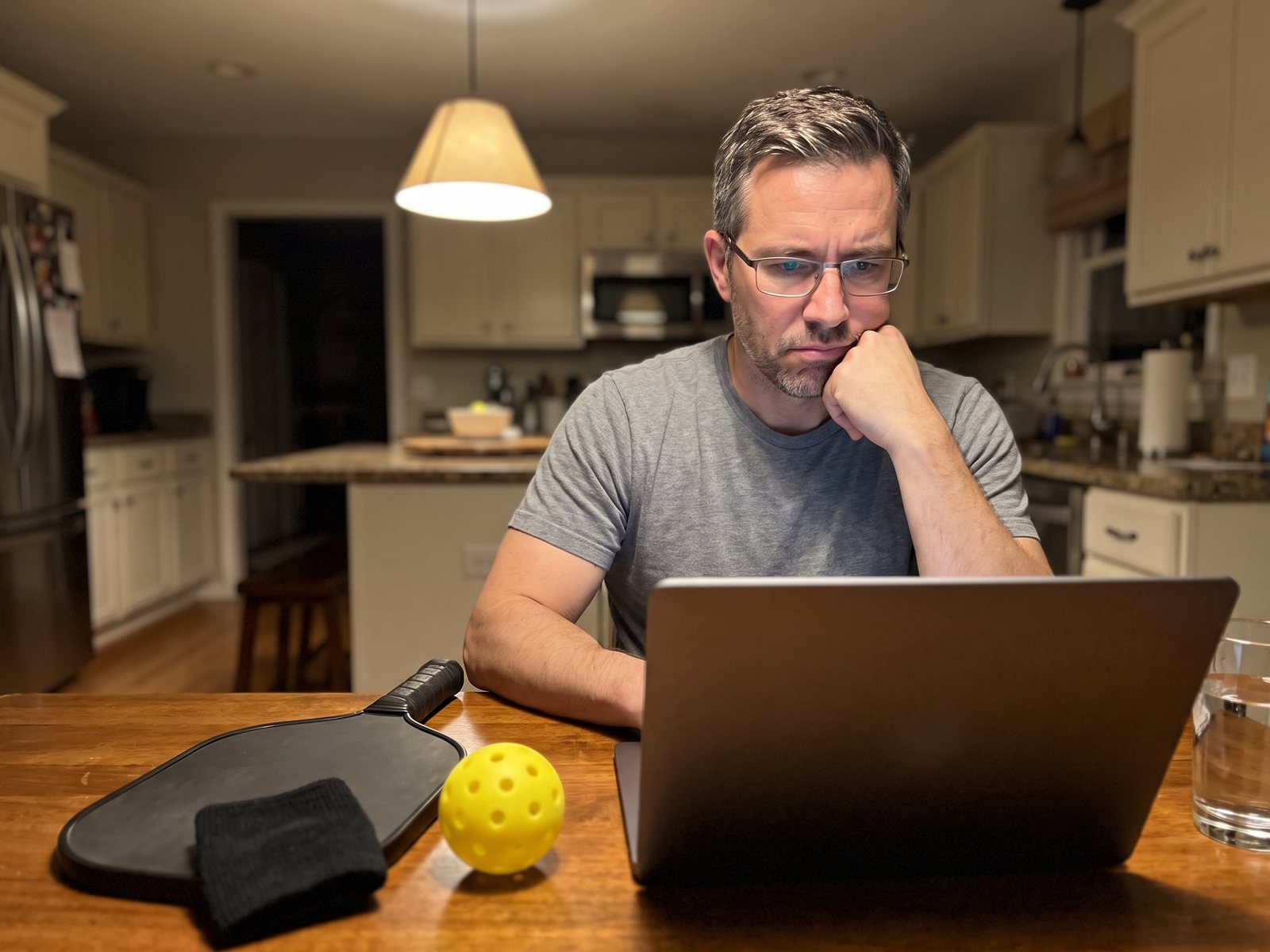
Since April my wife has beaten me on 21 of our 26 Sundays, and I spent $476.84 trying to catch up. Her edge was never a paddle. It was ten minutes in our garage before we leave, with a short wooden Indian club and one small weight plate on the end of it.

The Sunday I Keep Losing
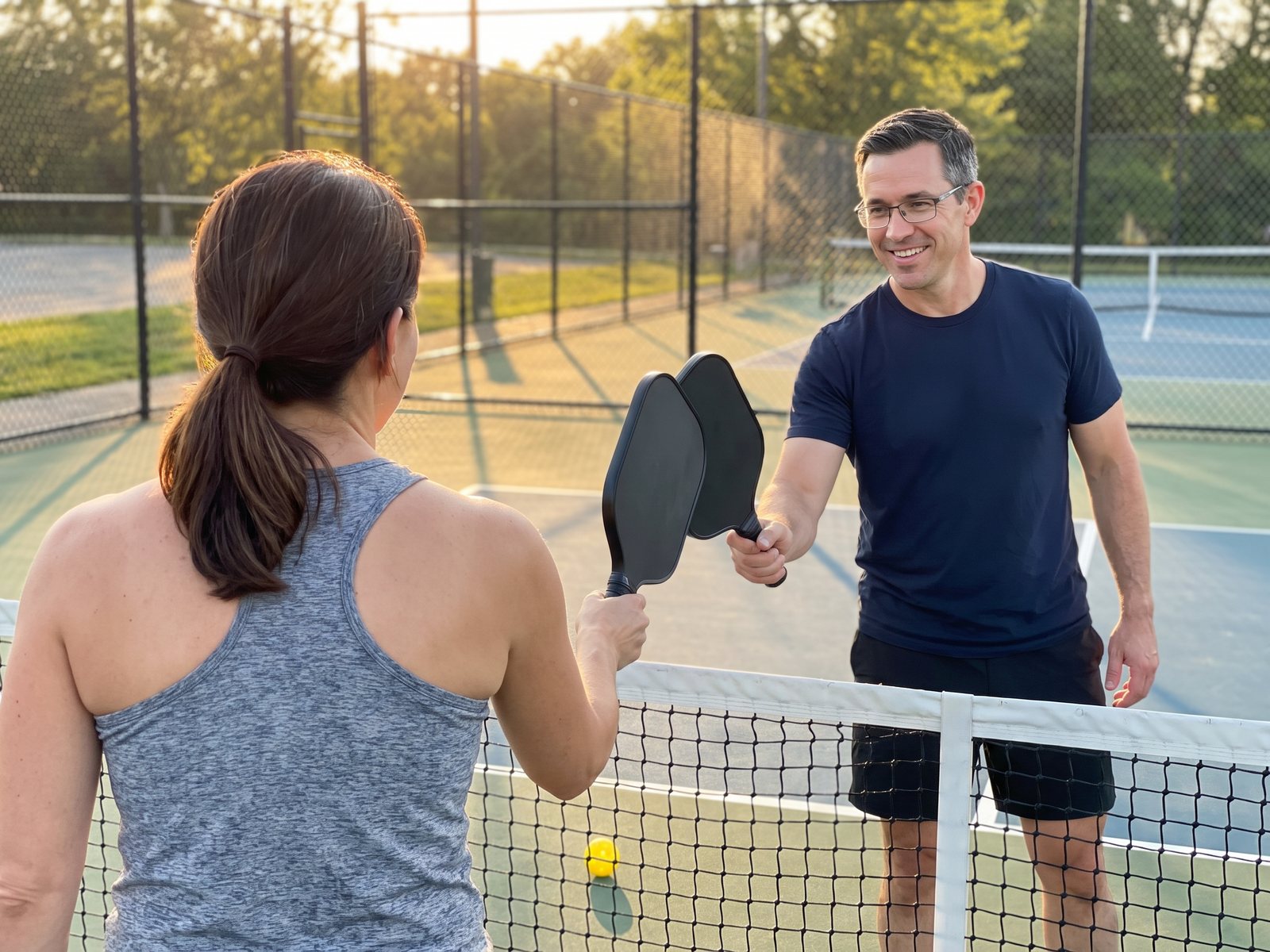
We took up pickleball in April. The park courts are four minutes from our driveway, and every Sunday afternoon we play best of three games to 11. It started as a way to get out of the garage together.
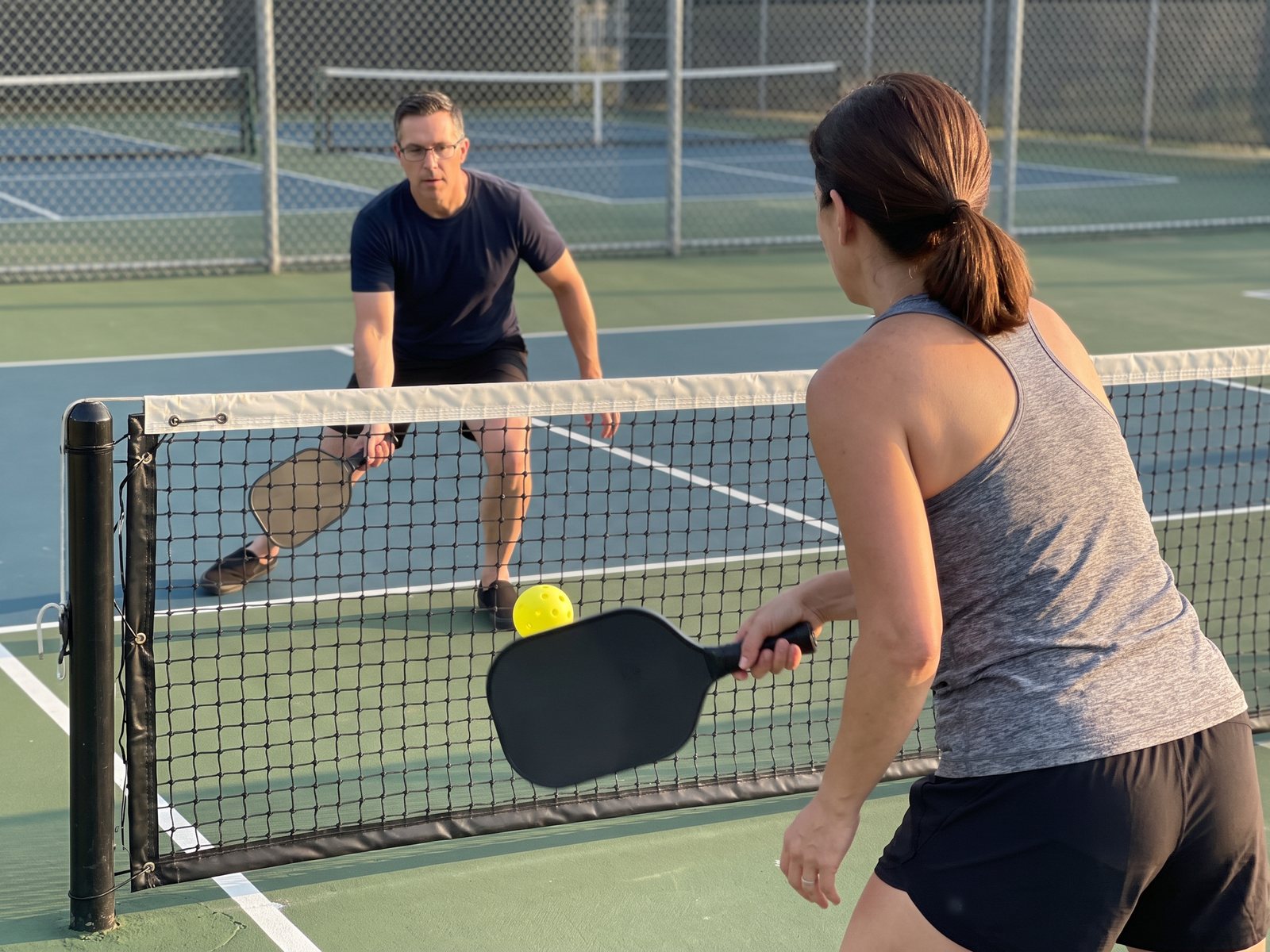
I keep a tally in the notes app on my phone. Over 26 Sundays she has won 21. I usually take game one. Game two runs past ten all. Game three is not close.
On paper I should be winning. We lift in the same 8 by 10 corner of our garage, where she curls 15s and I press 65s. I ran 5Ks for years. None of it shows up at six all in game three, when my third shot drops start floating long and her backhand starts dipping at my feet.
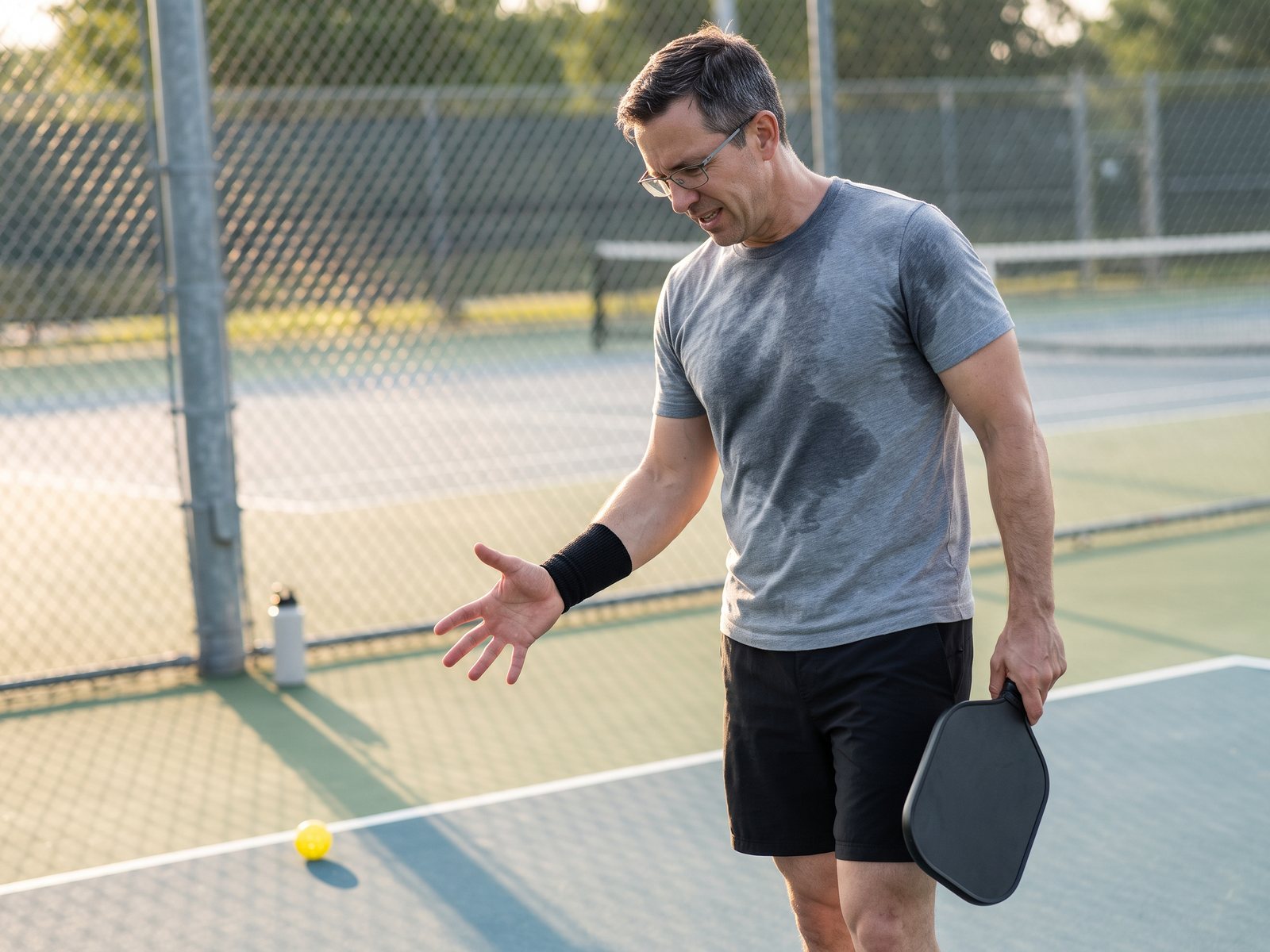
By the third game I am shaking my hand out between points like it fell asleep. She is not. That gap, my arm against hers at the end of a long afternoon, is the whole story. I spent four months looking for it in the wrong places.
Everything I Bought To Catch Up
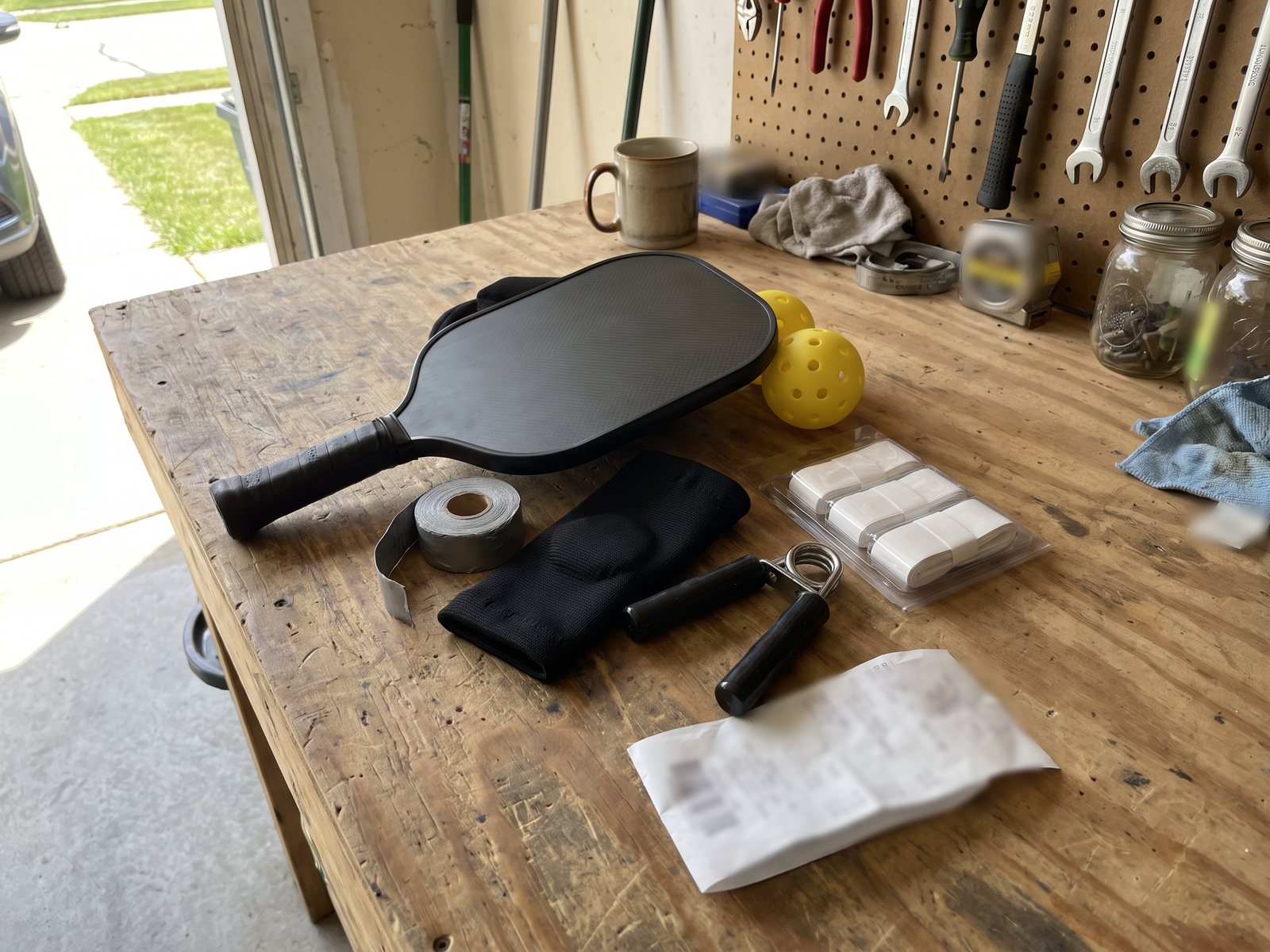
My first thought was the paddle. My second thought was also the paddle. Here is everything I bought between May and August, at what each one sells for today.
What four months of losing cost
- New paddle, JOOLA Perseus 3S$199.95
- Overgrips, JOOLA, pack of four$11.95
- Lead strips for the paddle head, Six Zero$10.00
- Three private lessons$180.00
- Wrist strap, Bauerfeind Sports$39.99
- Hand gripper, Captains of Crush Sport$34.95
Total$476.84
The paddle. The JOOLA beats my old paddle in every way I can measure, and my first game got cleaner. My third game did not change at all.
WinsThe first game, outright.
The lead strips. Two 3 gram strips across the top of the paddle put more weight out where the ball hits. My drives got heavier for about a game and a half. Then my forearm gave out sooner than before, because I had made the thing I swing heavier without making the arm that swings it any stronger. Remember that one.
WinsPace, for as long as your arm holds it.
The lessons. Three hours with a coach at the park, at $60 an hour, rebuilt my third shot drop. In drills it lands in the kitchen nine times out of ten. At six all in game three, it still floats.
WinsTechnique, outright.
The wrist strap. It felt good and changed nothing I could see on the court.
WinsComfort.
The hand gripper. The 80 pound gripper made my squeeze stronger. A paddle is not held with one hard squeeze, though. It is held lightly and then tipped, turned and braced a few hundred times an afternoon.
WinsA stronger closed fist.
Every one of these made game one better. None of them touched game three.
What She Does That I Don't
So I started watching her instead of the ball. Her drops in game three land where they landed in game one. She rolls her backhand, turning her forearm over the top of the ball so it dips, and she still does it at nine all. And she never shakes her hand out between points.
The only thing she does differently happens before we leave the house. For about ten minutes she stands in our garage corner with a short wooden club, roughly the length of her forearm and hand, with one small weight plate on the end. She tips it, turns it and lets it drop behind her shoulder, one arm at a time. I had walked past it all summer and filed it under warm up.
She had tried my old 10 pound steel mace once, back in May, and handed it back after one swing. Too long, two hands, and the weight a yard away. A paddle is one hand, she said, so the tool should be too.
Why train her wrists at all, I asked. She said she had read that women who play pickleball hurt their wrists more than men do. That sounded like something from a group chat, so I looked it up.
It is real, and it comes from emergency rooms. A University of Cincinnati team pulled ten years of national injury data and found that pickleball injuries seen in US emergency departments rose from an estimated 1,313 in 2014 to 24,461 in 2023. Most of the injured players, 73.8 percent, were 60 to 79 years old, and about half of all the injuries came from falls. Among the women in that data, the odds that an injury was to the hand or wrist were 3.22 times the men's.
A 2026 review from Rush University names wrist fractures, rotator cuff tears and ankle sprains as the common ones, and its authors list inadequate conditioning as a risk factor. That is their finding, and they mean conditioning in general. A 2025 survey of 253 recreational players found no difference in arm injuries between players who did strength work and players who did not, so nobody can honestly promise you a club changes those odds. My wife does not claim it does. Her reason is simpler. The sport hands one wrist, one forearm and one shoulder a few hundred reps every Sunday, and she would rather they had done some of that work in the garage first.
What A Paddle Arm Actually Needs
Once I stopped thinking about the paddle and started thinking about the arm holding it, the list wrote itself. Anything I trained with had to pass six tests.
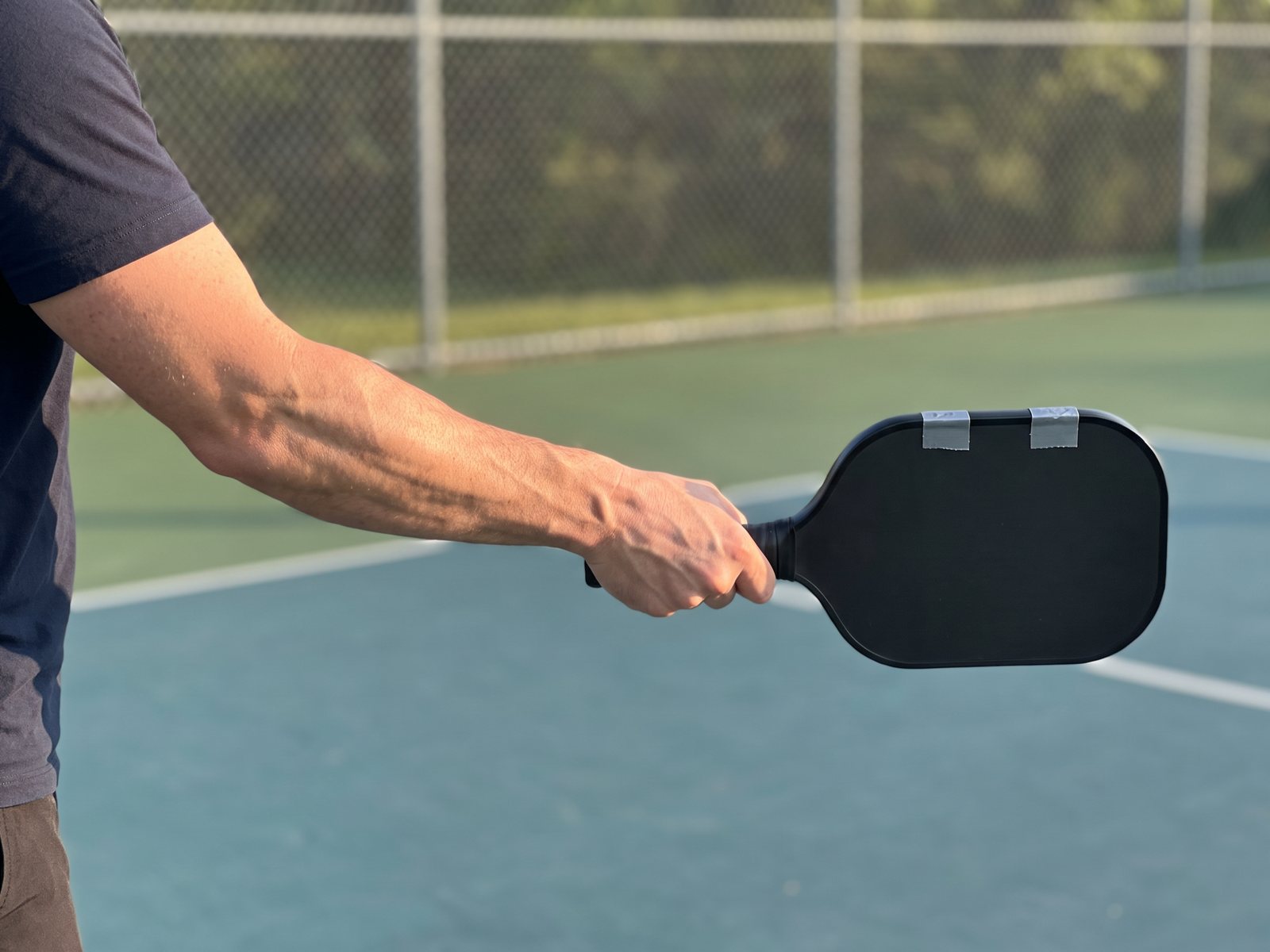
- One hand. A paddle is held in one hand. Tools you hold with both hands train a different job.
- Weight at the end of a lever. A paddle's weight sits out past your hand, so your wrist holds a lever, not a load. The lead strips taught me that the hard way.
- The wrist in every direction. Up and down, side to side, and turning over, because that turn is the backhand roll.
- Shoulder rotation. Serves, overheads and every reach behind you.
- Light enough to last. Three games is hundreds of light reps, not one hard squeeze, so it has to start light and go up in small steps.
- It fits our corner. We already share 8 by 10 feet of garage.
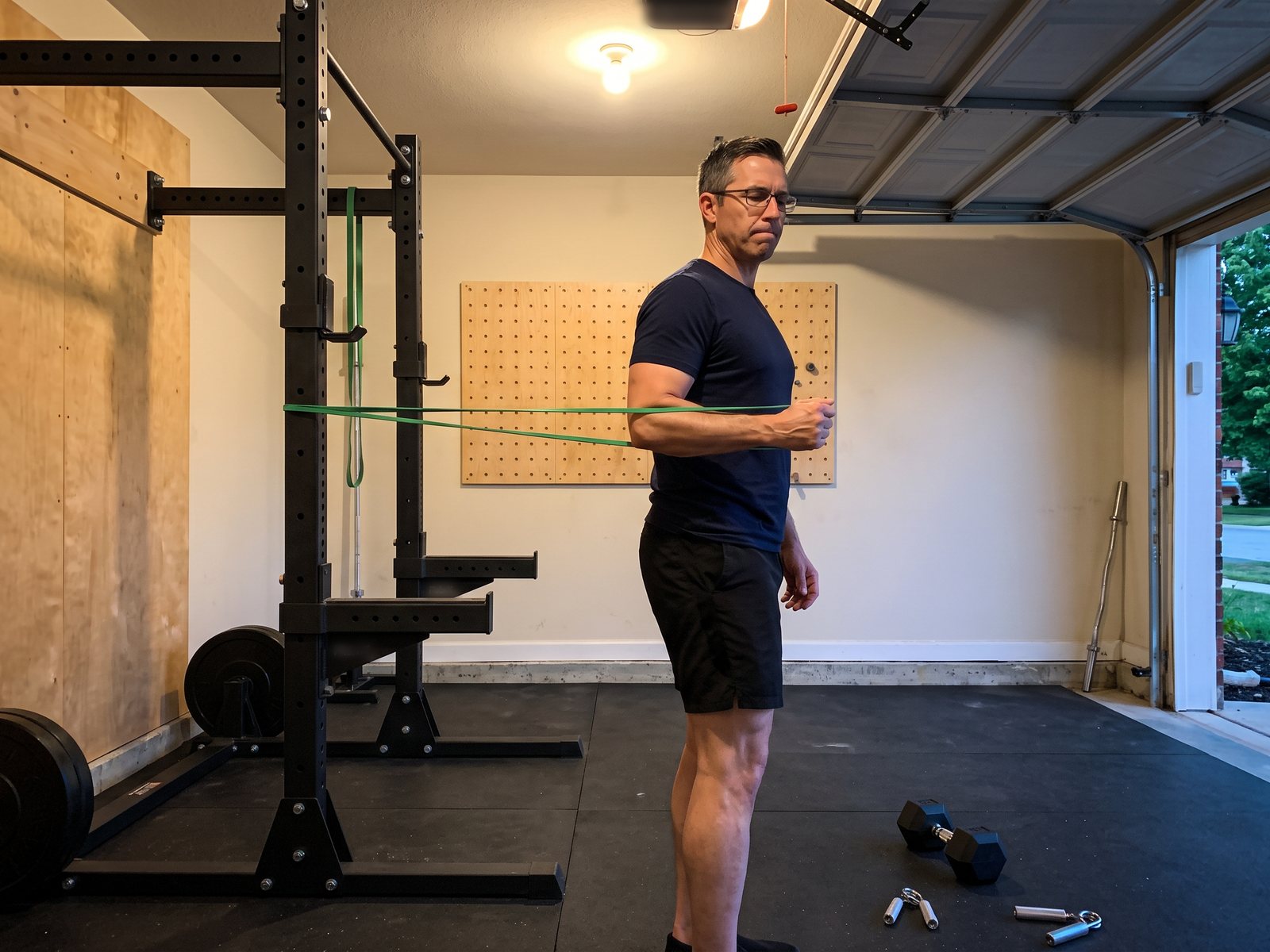
Then I ran everything we owned or could buy against it. The hand gripper is one hand and nothing else on the list. Light dumbbell wrist curls put the weight in your palm instead of at the end of a lever, so they fail test two. A resistance band covers test four, and TheraBand's three band kit costs under $20. It wins on rotator cuff work for the money, and it does nothing for the wrist.
My plate loaded steel mace is the best thing I own for my shoulders. It is 40 inches long and built for two hands, so it fails test one. A wrist roller, $109.95 for IronMind's before you buy the loading pin, works both hands at once and fails the same test.
A fixed steel Indian club passes the first four. Retrospec sells a 5 pound one for $19.99 and a 10 for $34.99. If you never want to go heavier than one weight, buy one and stop reading here. The catch is test five. Every step up is another club.
The closest thing to a training study I could find was not about pickleball at all. In a 2026 randomized trial, 27 elite wrestlers in Turkey were split into two groups, and 13 of them added three 15 minute mace sessions a week for 12 weeks. Grip in the mace group rose about 5 percent in each hand while the other group barely moved, and their shoulder rotation strength improved too. Those were wrestlers swinging a mace weighted at a fifth of their bodyweight. Not paddle players, and not a club. It is still the best evidence I found that weight at the end of a handle trains the grip and the shoulder.
Her Ten Minutes Before Sunday
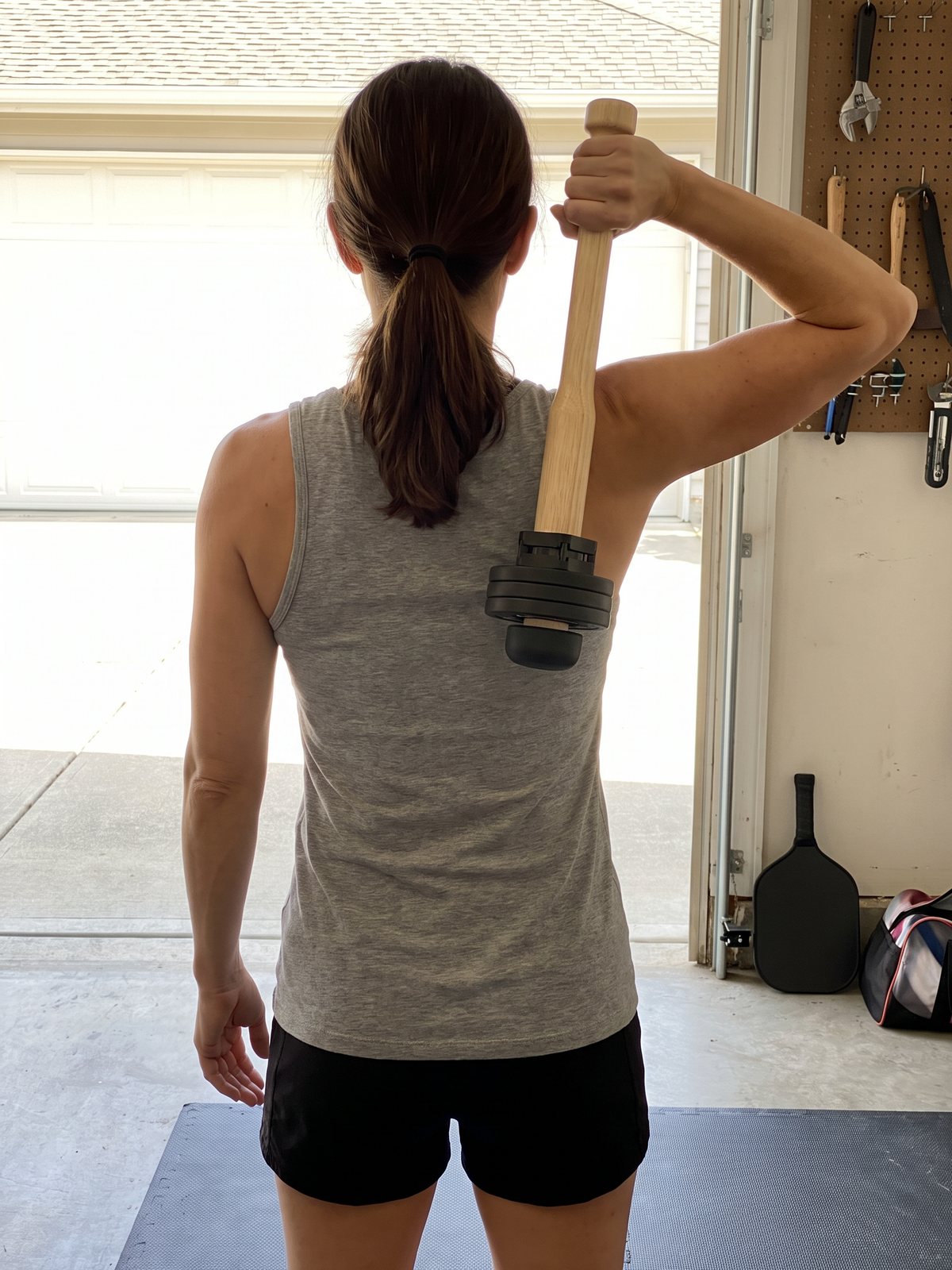
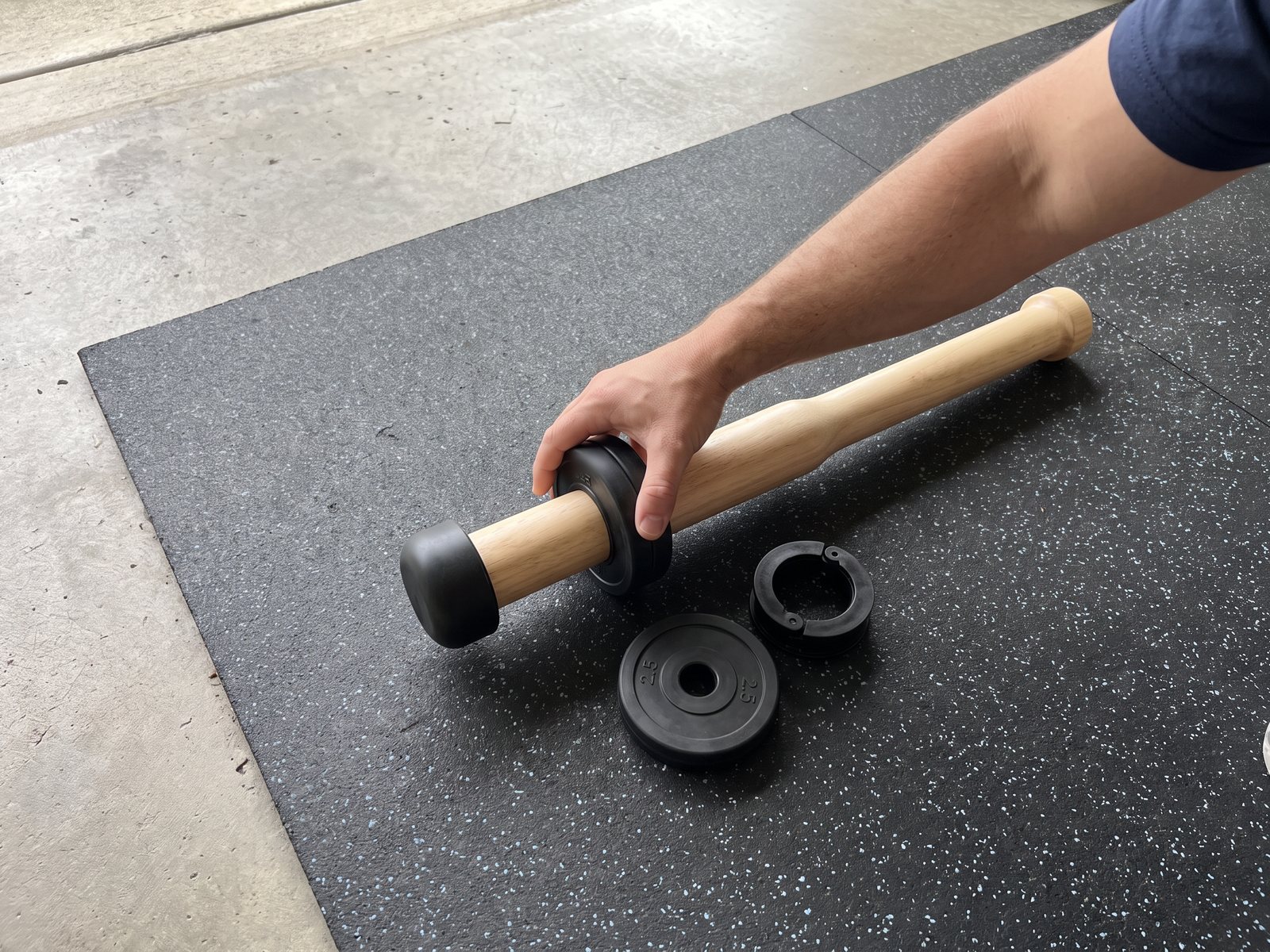
Her club is the Kensui EZ-CLUB V2 PRO. It is a natural wood handle about 50 centimeters long, with a sleeve at the far end that takes standard 2 inch Olympic plates, held on by one black collar. The single PRO costs $49. She runs it with one 2.5 pound plate from the small pile that lives with my neck helmet.
Against the six tests it passes all six. One hand, yes. Weight at the end of a lever, yes, and only there. The wrist in every direction, yes. Shoulder rotation, yes. Light to start and 2.5 pounds at a time, on plates we already owned. And at 50 centimeters it stands on its plate in the corner next to the rack. The Monday after I read the study, I borrowed it.
The Verdict
Kensui EZ-CLUB V2 PRO
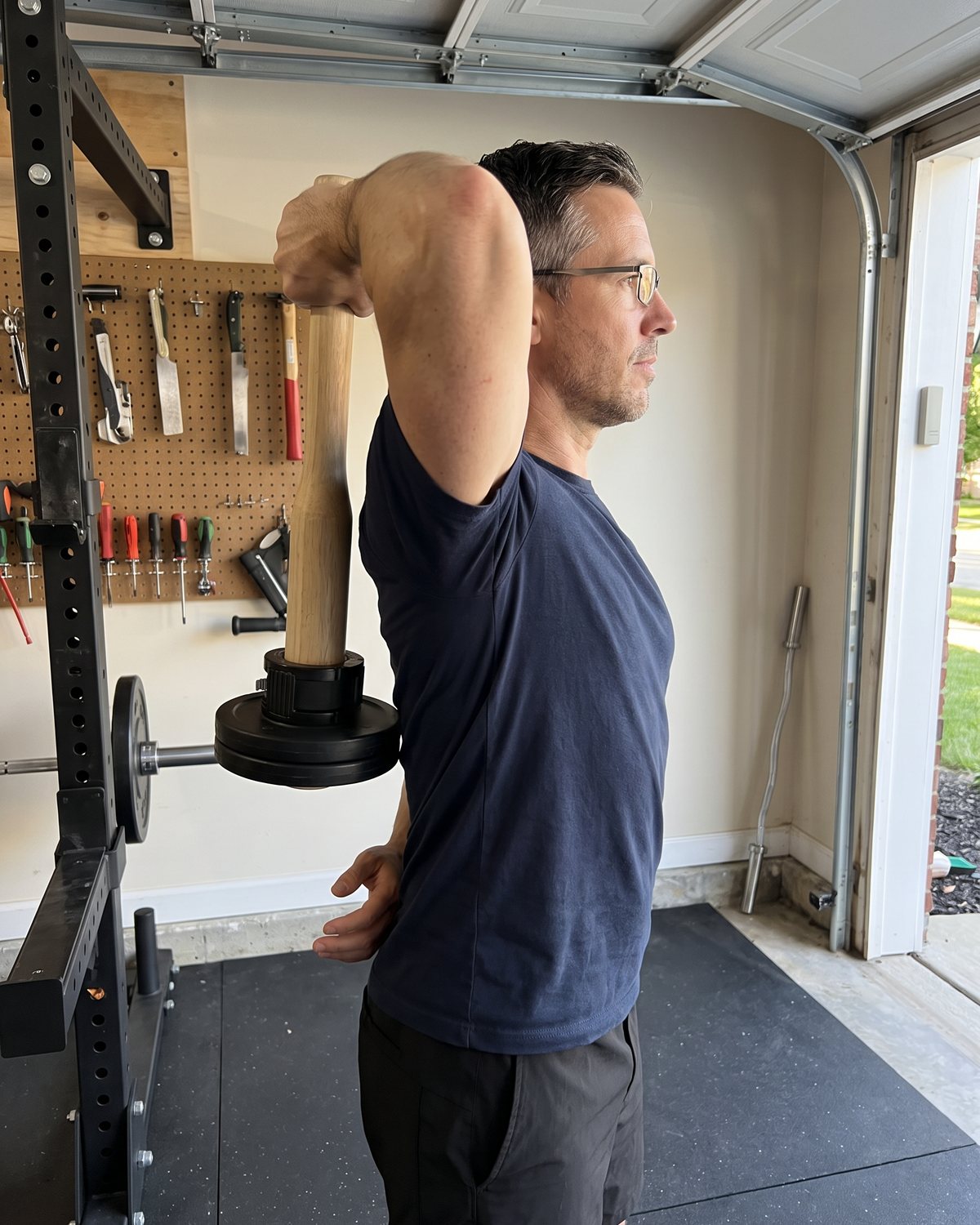
- One hand and the weight at the far end of a 50 centimeter handle, the same job a paddle gives your wrist.
- Tip it, turn it and drop it behind the shoulder: the wrist in every direction and the shoulder's rotation.
- Standard 2 inch plates, 2.5 pounds at a time, so it starts light and goes up in small steps.
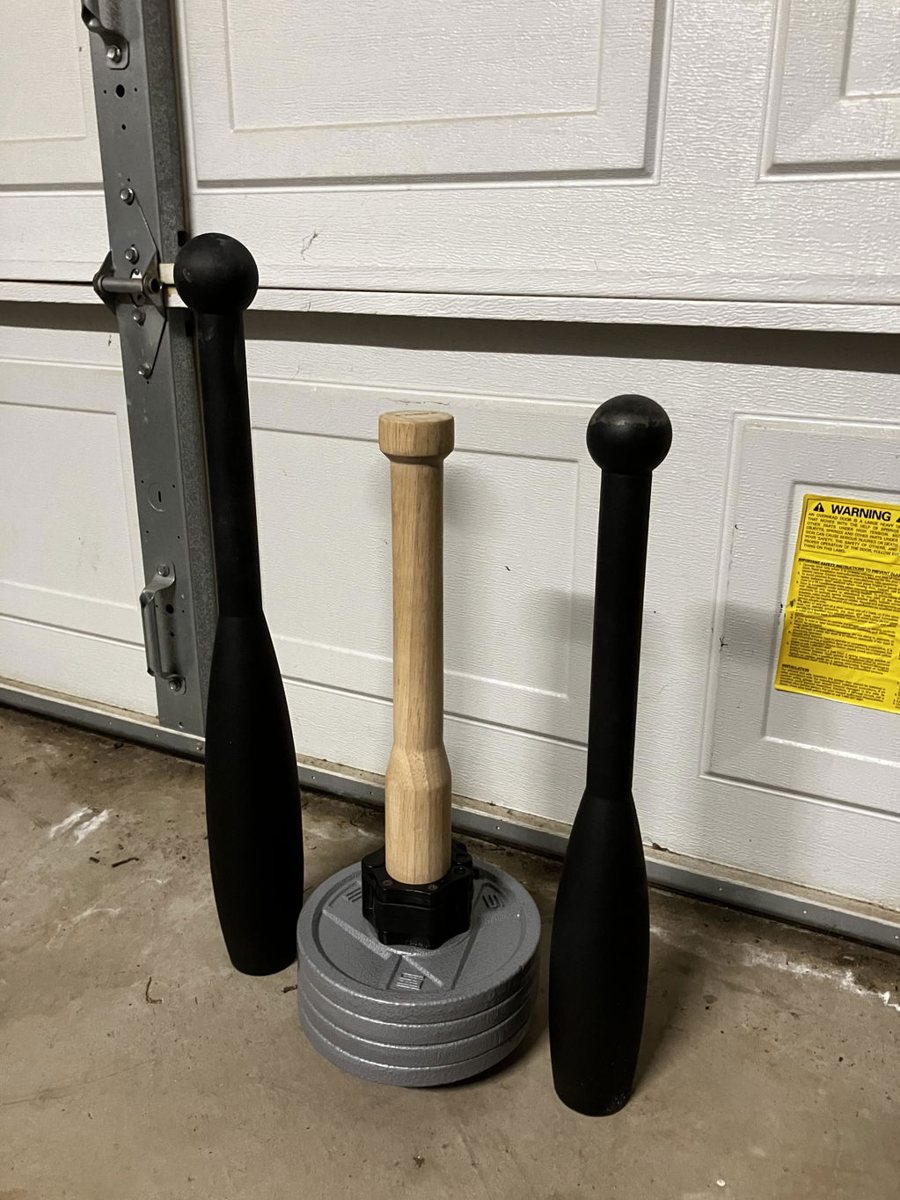
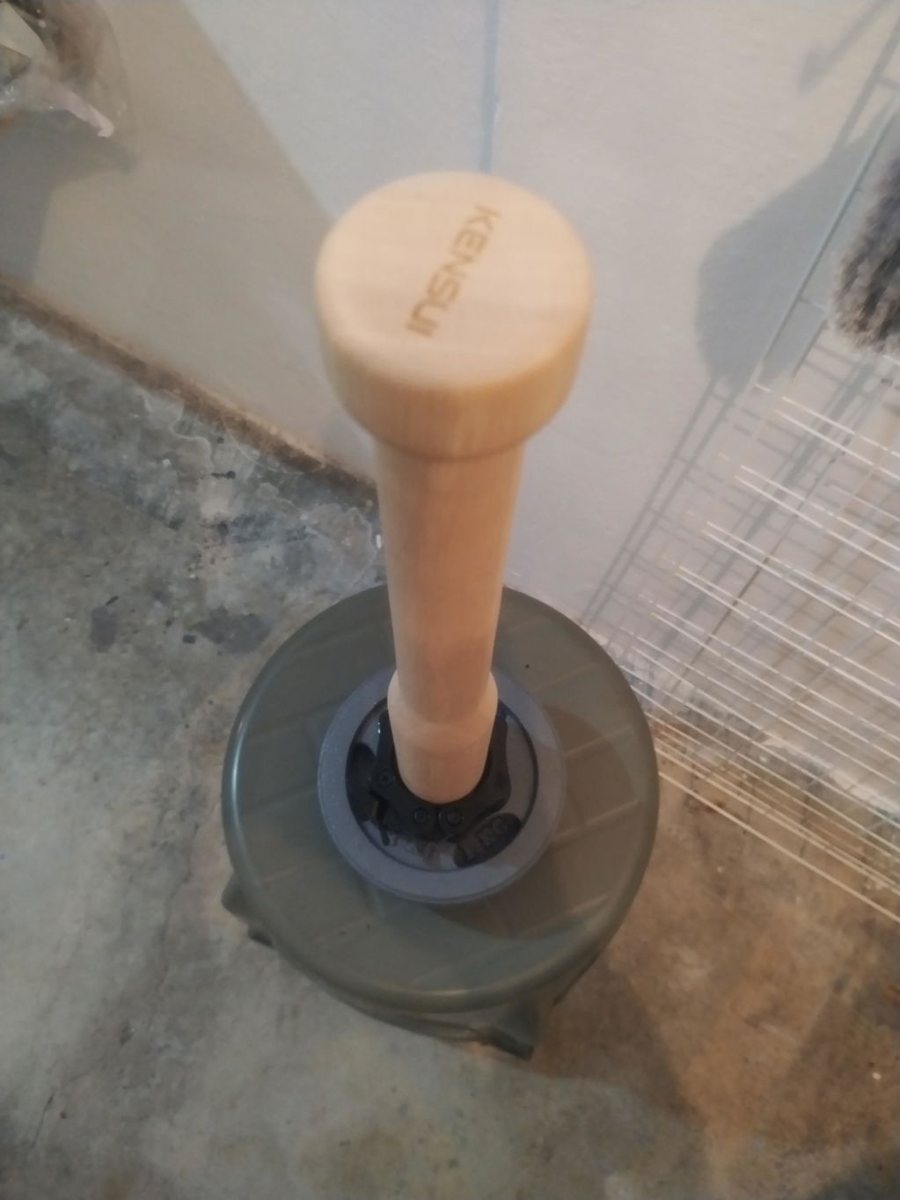
Her ten minutes, exactly
- Tip downs. Arm by her side, club pointing forward like a paddle held out. She lets the far end tip slowly toward the floor, then lifts it back to level. Ten each hand.
- Turnovers. Elbow at her side, bent to a right angle, club straight up. She turns her palm down until the club lies out to the side, then all the way over the other way. Ten each hand. This is the backhand roll, slowed down.
- Shoulder drops. Club over her head, she lets it drop behind her shoulder blade and lifts it back, the way it hangs in the photo above. Eight each arm.
Two rounds, both arms, and then the club goes back on its plate and we drive to the courts.
$49 for the wood PRO single · Money back within 100 days
Six Sundays Doing Her Routine
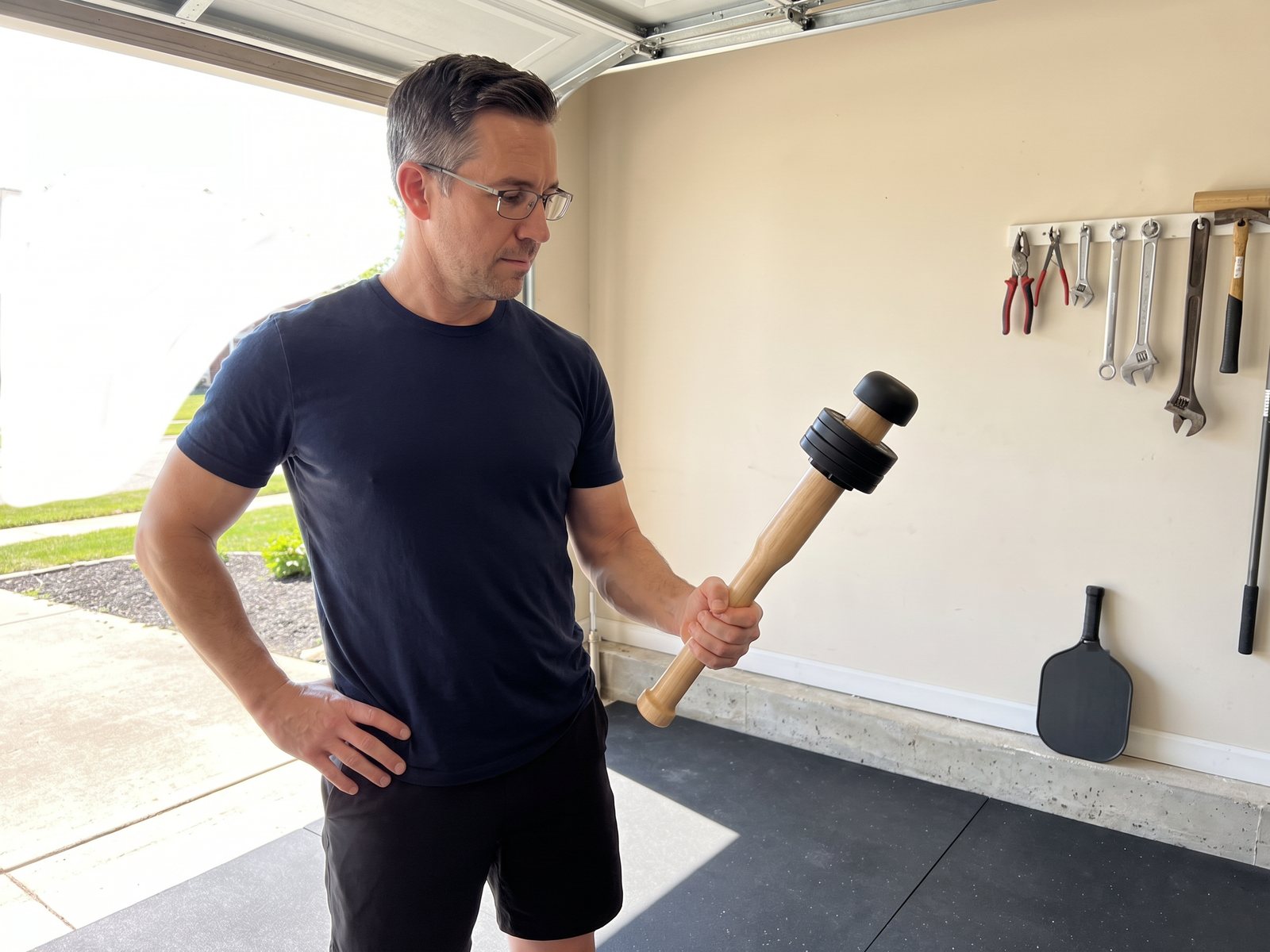
I used hers for a week. Then I bought my own, because on Sunday mornings we both want it at the same time. I started on one 2.5 pound plate. The first set of turnovers burned more than any set of wrist curls I have done, because the plate sits at the far end of the handle. By the fourth Sunday the turnovers were on a 5.
Here is the honest result. Of the last six Sundays, I have won two. She still wins more, because she plays better. Her drops are softer, she moves her feet, and she took lessons before I did. What changed for me is smaller and easier to see. At six all in game three my hand no longer needs shaking out, and my backhand roll still turns over the ball.
The club is not why she wins. It is part of why her arm lasts three games, and these days mine does too.
Owners who use it the way we do say much the same.
"It's a little shorter than others on the market, so I find it's particularly suited for single hand swinging."
Nathaniel C., verified buyer
"I like that any added weight is at the end of the club which makes the exercises more functionally challenging... The adjustability make the club fantastic for wrist and forearm exercises as well."
Jeffrey F., verified buyer
"Great for advanced wrist and shoulder rotational exercises at low weights."
Amanda D., verified buyer
Three things to know before you order. The one collar that comes with it can slip: owners report it near 30 pounds, and Kensui's own page says to add a second collar past 60. At our 2.5 and 5 pound loads it has never moved. It takes 2 inch Olympic plates only, so 1 inch plates will not fit. And a plate is wider than the head of a fixed club, so on the shoulder drop a big one can brush your back. Small plates are the point anyway.
Kensui does not publish an empty weight for either version, so I cannot give you one. The 4.50 rating comes from a review pool Kensui shares with its EZ-MACE, so read it as a family score rather than a club score.
| Kensui EZ-CLUB V2 PRO | Fixed steel club (Retrospec) | Hand gripper | Resistance band | |
|---|---|---|---|---|
| Price | $49 | $19.99 for 5 lb, $34.99 for 10 lb | $34.95 | $17.71 to $19.19 for a kit |
| One hand | Yes | Yes | Yes | Yes |
| Weight at the end of a lever | Yes | Yes | No | No |
| Wrist in every direction | Yes | Yes | Squeeze only | No |
| Going heavier | Add a 2.5 lb plate | Buy the next club | Buy the next gripper | The next band |
| Wins on | All six tests | Price, at one weight | Squeeze strength per dollar | Rotator cuff work per dollar |
| Learn More |
Prices read on each seller's own site on October 7, 2026: Retrospec, IronMind, TheraBand through Performance Health, and Kensui.
Before You Buy
Wood or steel?
The PRO is the $49 wood club in this story. The MAX is $99 in steel and 55 centimeters long. At 2.5 to 5 pounds, we both use the wood.
Do I need plates?
Yes. It takes standard 2 inch Olympic plates and comes with none. A pair of 2.5s covers the first month.
How light can I start?
With nothing on it. Learn the three moves with the bare club, move slowly, and add a plate only when ten slow reps are easy.
100 Days To Decide
Kensui's product page promises your money back within 100 days. Its written returns policy is stricter and asks for items unused and in their original packaging, so read it first. A single club is under the $100 free shipping line, so expect to pay shipping.
Sunday Starts In The Garage Now
One hand, the weight at the end, the wrist in every direction. $49 for the wood PRO single. The drops are still up to you.
Get the EZ-CLUB$49 · Money back within 100 days · 4.50 stars from 420 reviews, shared with the EZ-MACE
Sources. McMillan P, Lake LP, Burkhart A, Reddy E, Hale IC, Grawe BM. The Epidemiology of Pickleball Injuries Presenting to US Emergency Departments. Sports Health, 2026, vol. 18, no. 4, pages 749 to 755, published online July 13, 2025. PMID 40653665. Full text.
Squali B, Caplan BE, Cole BJ. Common Pickleball Injuries and Prevention. Orthopaedic Nursing, 2026, vol. 45, no. 4, pages 221 to 229. PMID 42561394.
Hanks J, Myers B. Risk of Upper Extremity Injury in Recreational Pickleball Players. Journal of Functional Morphology and Kinesiology, 2025, vol. 10, no. 3, article 247. PMID 40700183.
Akaras E, et al. The effect of mace training on strength, flexibility, and stability in elite wrestlers: a randomized controlled trial. BMC Sports Science, Medicine and Rehabilitation, 2026, vol. 18, article 138. PMID 41566515.
Prices checked October 7, 2026 on each seller's own site: joola.com (Perseus 3S, overgrips), us.sixzeropickleball.com (lead strips), chickennpickle.com (private lessons listed at $50 to $60 an hour, the receipt uses $60), bauerfeind.us (Sports Wrist Strap, list price), ironmind-store.com (Captains of Crush Sport, One Wicked Wrist Roller), retrospec.com, performancehealth.com (TheraBand kit) and kensui.com. Owner quotes, the 4.50 rating and the 420 reviews are from the EZ-CLUB product page the same day.
