This MIT Engineer Refused To Pay $668 For Dumbbells And Built His Own. They Sell For $49.

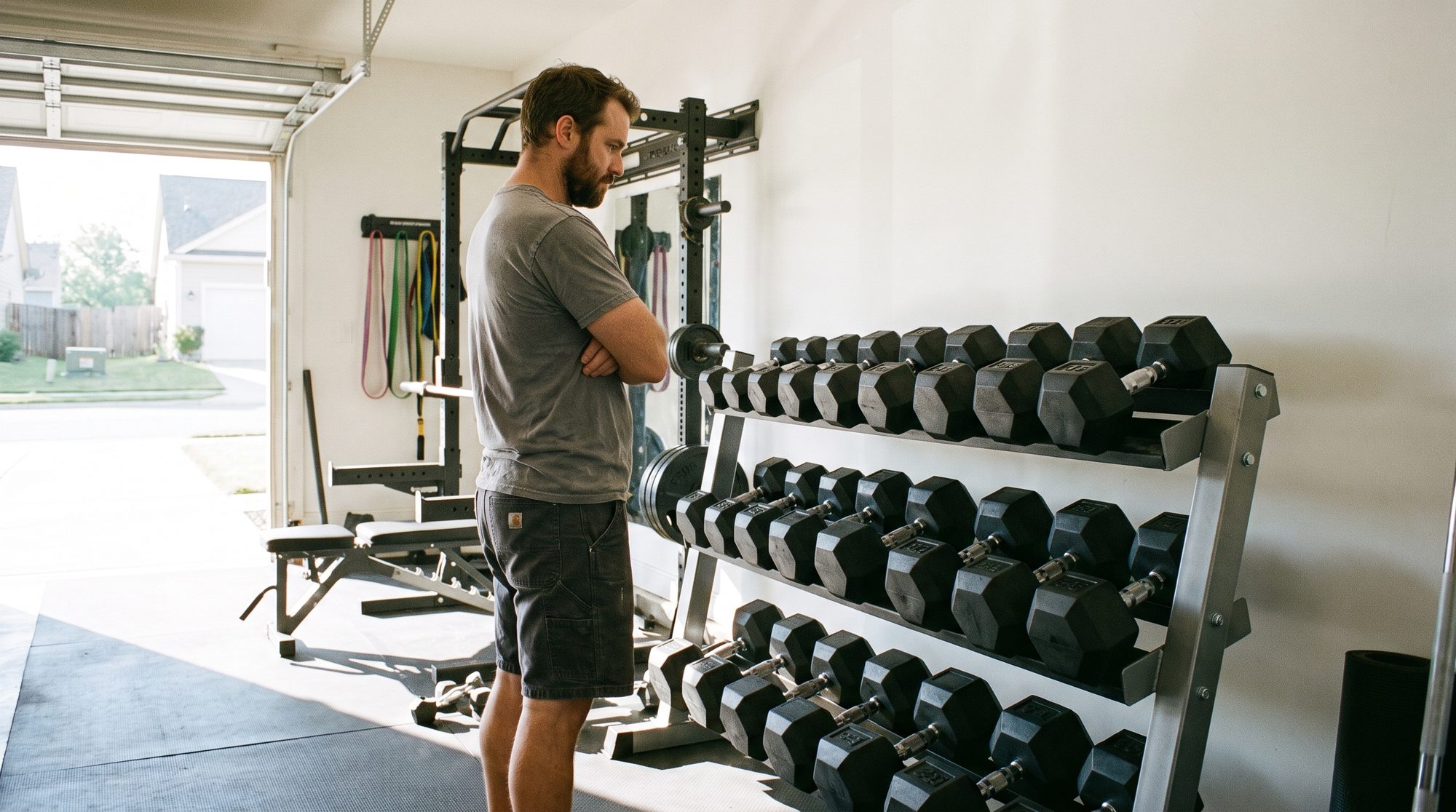
Adjustable dumbbells are sold as the thing that ends the dumbbell problem. Price out the whole ladder on any manufacturer's own website and a different design shows up, one where the first purchase was never meant to be the last.
The Set That Costs Two Different Prices
Open PowerBlock's own store and look at the Elite USA 90, which is one of the most respected adjustable dumbbells you can buy. It is listed three times. Set up to 50 lb per hand it is $469. Set up to 70 lb it is $668. Set up to 90 lb it is $867.
That is the same product photographed three ways. What separates the rungs is not engineering, it is how many plates come in the box, and the company will happily sell you the difference later. The Stage 2 kit that takes a 50 lb set to 70 lb is $199. The Stage 3 kit that takes it from 70 lb to 90 lb is another $199.
Run that path and the arithmetic gets uncomfortable. You buy in at $469, you outgrow it, you pay $199, you outgrow that, you pay $199 again. You have now spent $867 to own the 90 lb set that was sitting there for $867 on the day you started. The ladder charges you nothing extra for climbing it slowly, which is another way of saying the ladder was always the product.
Nothing here is a scam. Selector hardware is genuinely expensive to make, and every one of those prices is printed in public. It is just worth naming the shape of it, because almost nobody prices the third purchase before they make the first one.
The Ceiling Nobody Reads
The other half of the problem is where these things stop. BowFlex's SelectTech 552 is the best selling adjustable dumbbell in the world and it lists at $479, currently discounted to $379. It goes to 52.5 lb per hand and then it is finished. Not slow, not harder. Finished.
For a beginner that ceiling is years away and completely irrelevant. For anyone who rows, presses or goose-steps a dumbbell around for reps, 52.5 lb arrives faster than the warranty runs out. BowFlex is also unusually honest in its own documentation, which notes that individual settings may vary from their stated values because of manufacturing tolerance.
| Plate-loaded handle | Selectorized | Fixed set | |
|---|---|---|---|
| What you pay | $49 a pair | $379 to $867 | Four figures with a rack |
| Ceiling per hand | 70 lb | 52.5 lb to 90 lb | Whatever you bought |
| Cost to go heavier | More plates | $199 per stage kit | Buy the next pair |
| Smallest jump | Your smallest plate | 2.5 lb | 5 lb |
| Time to change weight | About 20 seconds | Seconds, one dial | None, grab the next |
| Needs plates already | Yes, this is the catch | No | No |
| Learn More |
The Man Who Stepped Off The Ladder
Remy Mock holds two engineering degrees from MIT and spent years as a digital nomad, moving between countries with whatever training gear fit in a bag. Dumbbells do not fit in a bag, and hotel gyms are not built for anyone trying to get seriously strong. He worked around it with a dip belt, hanging ordinary gym plates off a chain at his waist.
That is where the idea starts, and it is a boring idea rather than a clever one. Plates are everywhere. They are stamped with honest numbers, they never wear out, and in most homes with any gym equipment at all, somebody already bought them. The only thing missing was something else to hang them on.
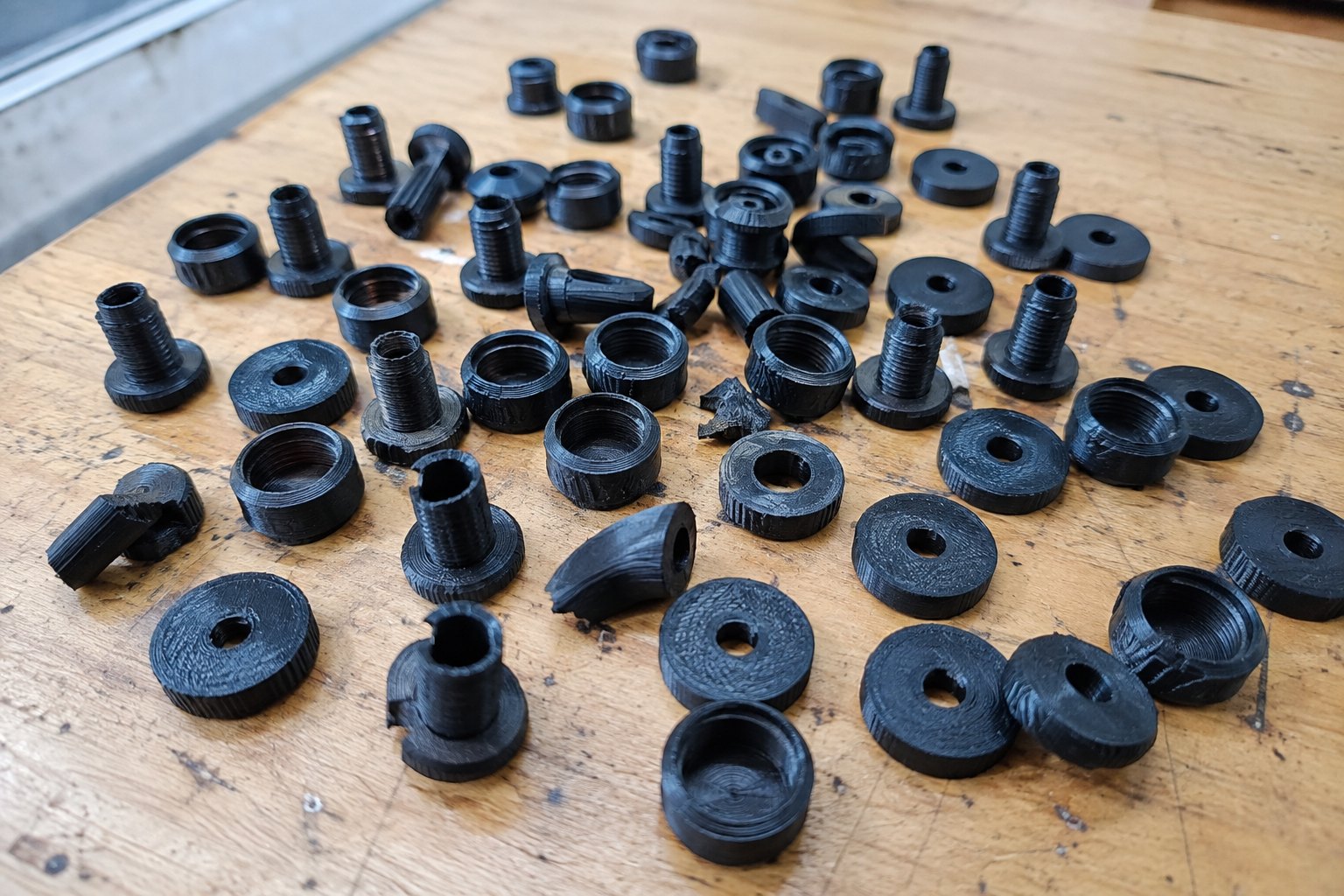
He is not a product designer, so the workshop had to teach him the job. Hundreds of designs went through a desktop 3D printer, which is the one part of this that works for a person with no factory. A printer hands you a part overnight for the cost of the filament. It will not tell you which part is right, and that only comes from making the wrong ones.
The company that grew out of it took the name Kensui, which means pull-ups in Japanese. His stated rule for the whole product line is worth quoting because it explains the design better than any spec sheet.
“We often make things out of nylon, aluminum or wood that other companies make with steel. We believe steel is overkill for many items.”
Remy Mock, speaking to calisthenics.com, January 2026
What $49 Actually Buys
Two handles. That is the whole product, and it is the reason the price looks wrong.
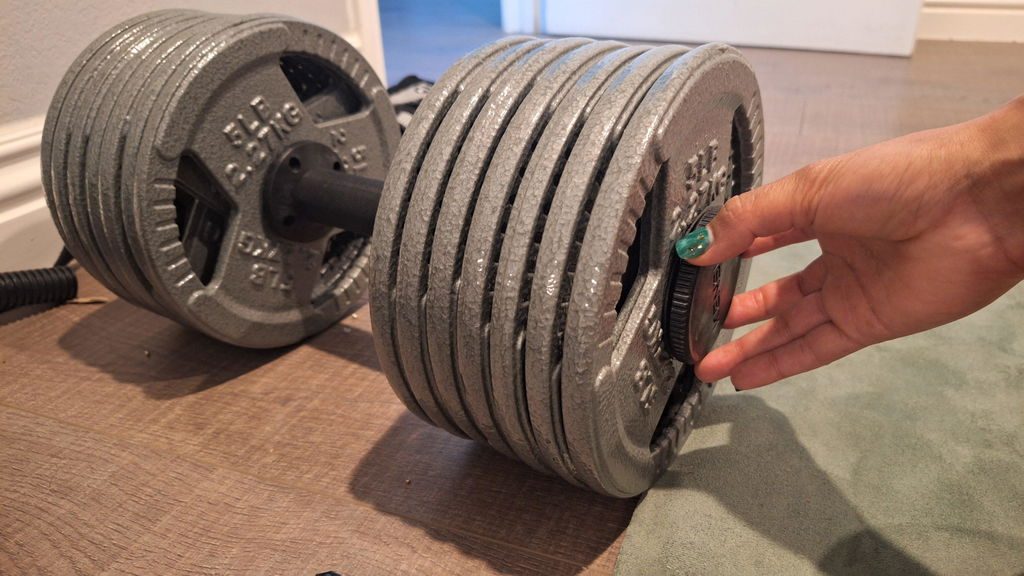
Most adjustable dumbbells are heavy before you load them, because the mechanism is the product and the mechanism is where the money and the mass go. You pay several hundred dollars for five to ten pounds of selector hardware you never asked for. The AdaptaBELL goes the other way: a knurled body, a screw thread at each end, and a collar that spins down against the plates. Bare, the pair weighs about two pounds.

Both plate standards fit the same handle, 28 mm standard and 50 mm Olympic, so whatever is already on your floor works and there is nothing to reorder. The ends are flat rather than overhung, which matters more than it sounds: on a traditional spin-lock bar the sleeve sticks out past the last plate and digs into your forearm on curls and presses.
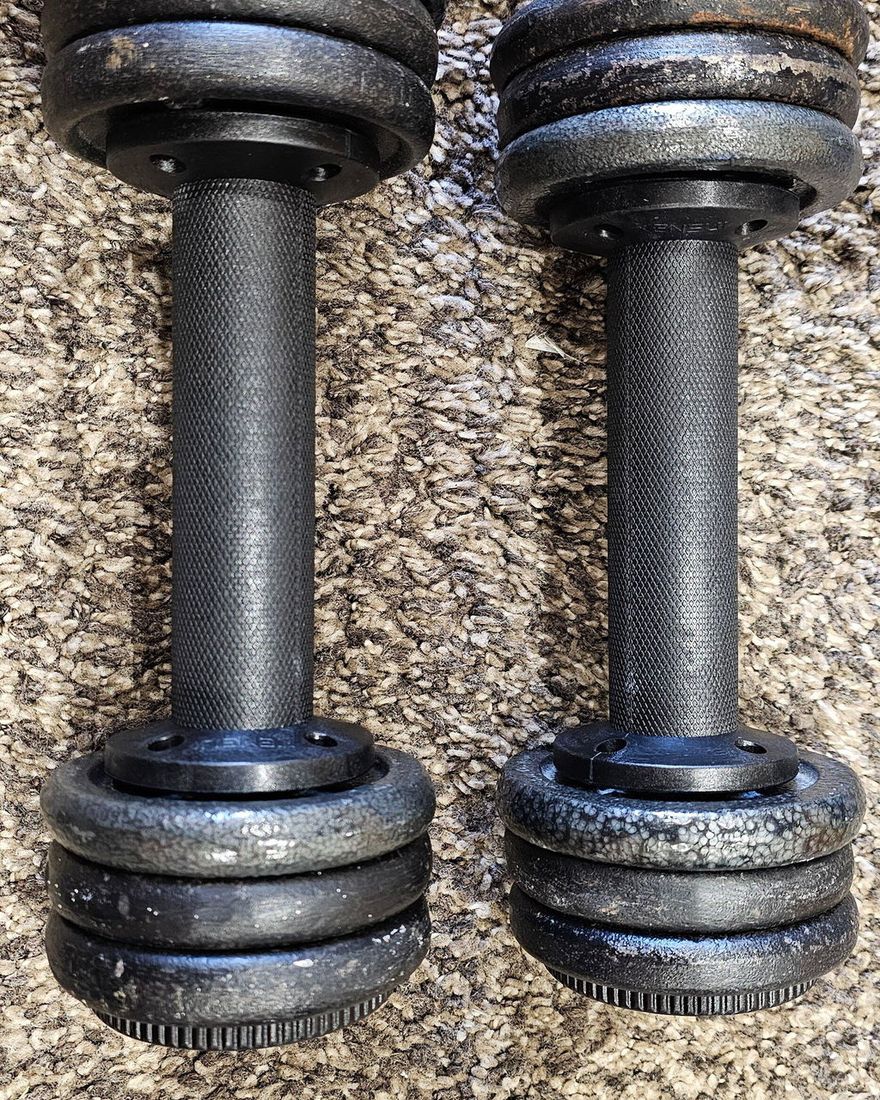
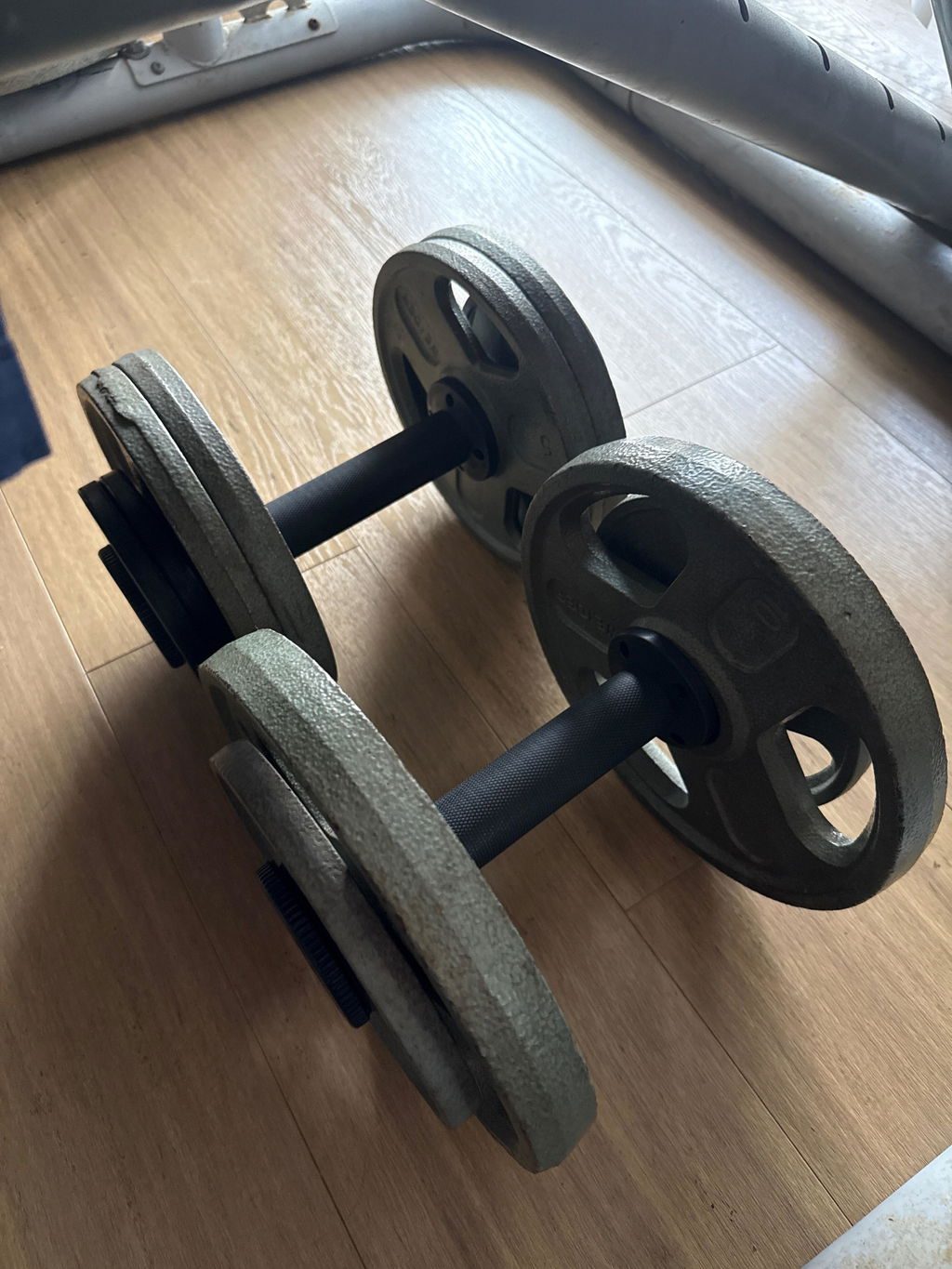
The pictures owners post are the argument in miniature. Almost none of them show new equipment. They show a $49 pair of handles wearing plates that have clearly been in the family for a decade.
$49 a pair, 140 lb across the pair, fits 28 mm and 50 mm plates. Rated 4.49 from 622 reviews. The MAX at $149 doubles the ceiling to 300 lb but is out of stock at the time of writing.
Get the AdaptaBELLWhat Other People Found
The handles have been on sale long enough to stop being a founder's story. Garage Gym Reviews put them through its own testing and landed on value rather than novelty, and GQ ran them in a home gym roundup.


Owner reviews cluster around the same two things, and neither of them is performance. One is money. The other is floor space.
“My wife and I have a home gym and buying DBs in 5 pound increments is incredibly expensive. These are easy to setup easy to switch out a plate or two and fit in very nicely with our existing equipment.”
Clinton J., verified buyer, PRO

The complaints cluster too, and two of them are worth taking seriously before you spend anything. Your smallest plate is your smallest jump, so a lifter who wants 2.5 lb steps on a press progression should buy the BowFlex, which wins that outright. And if you own no plates at all, $49 buys two handles with nothing to put on them, which makes a selectorized set the better purchase rather than the expensive one. A handful of owners also report tightening the collars hard enough to need a jar opener to get them loose again.
The Math On Your Own Floor
Add up what is already in the room before you price anything new. If there is a barbell in the garage, there are plates on it, and those plates are the expensive part of any dumbbell you will ever own. A pair of handles turns them into a second piece of equipment for the price of a takeaway.
If the room is empty, buy the selectorized set and enjoy it. If it is not, the ladder starts to look less like a product line and more like a subscription you were quoted once and billed for three times.
