Neck Training • 9 Min Read
Every Type of Neck Trainer, Ranked by What Actually Works
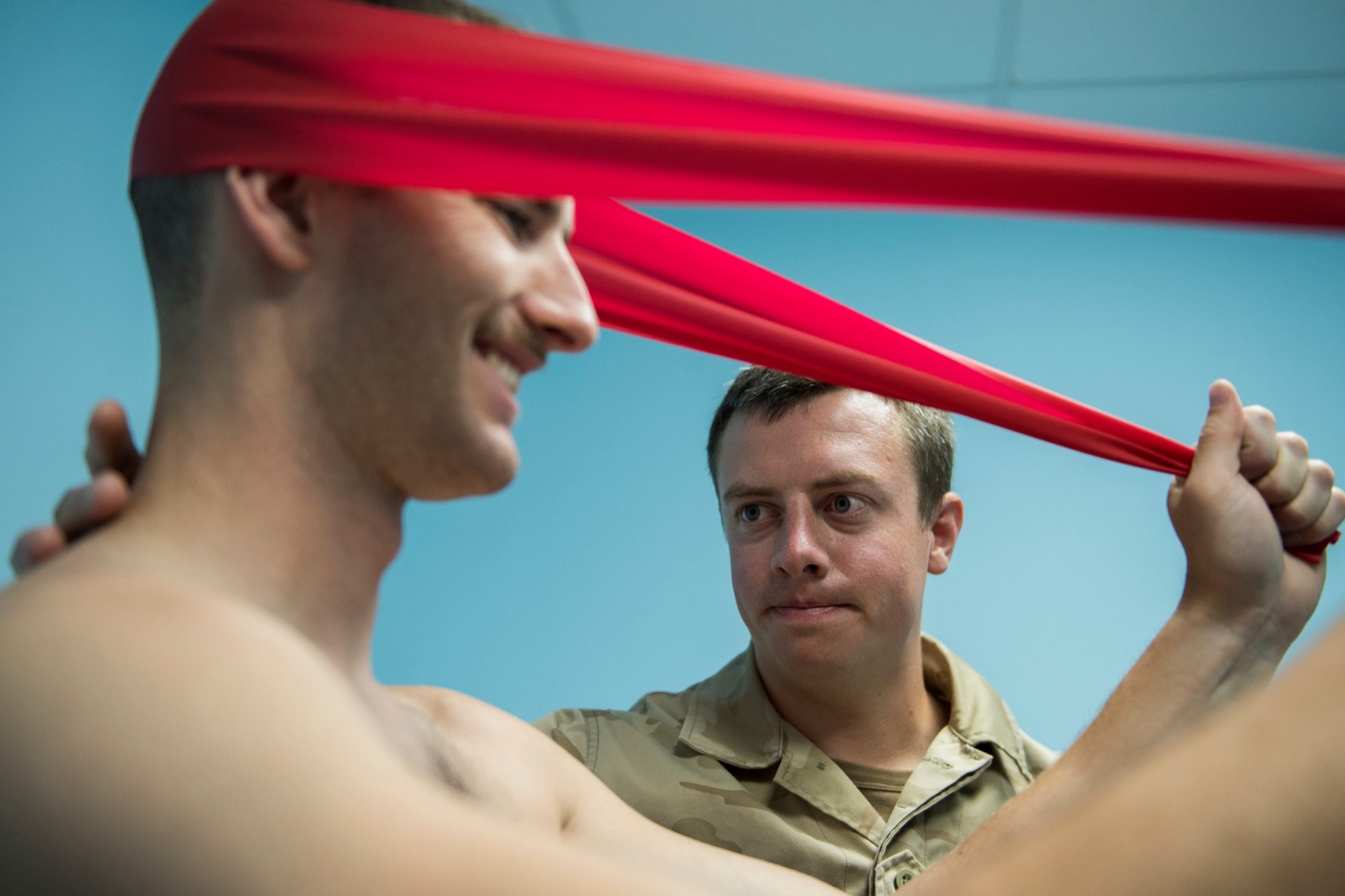
There are ten ways to put resistance on a neck, from a free wrestler's bridge to a $540 machine. We scored every format on the same five things and the price told us almost nothing about the order.

Most gear guides rank brands. That is the wrong question for the neck, because the brand is not the variable. A $35 harness and a $120 harness train the neck the same way and fail the same way. What separates a neck trainer that works from one that does nothing is the format: how the load gets onto your head, whether you can add to it, and which directions it lets you move.
So this ranks the ten formats we could find, with real products as the price stake for each. The free ones are in it. So is the one hospitals see the results of. The biggest format finished second, a $499 device finished third, and the winner costs $199 and weighs two pounds.
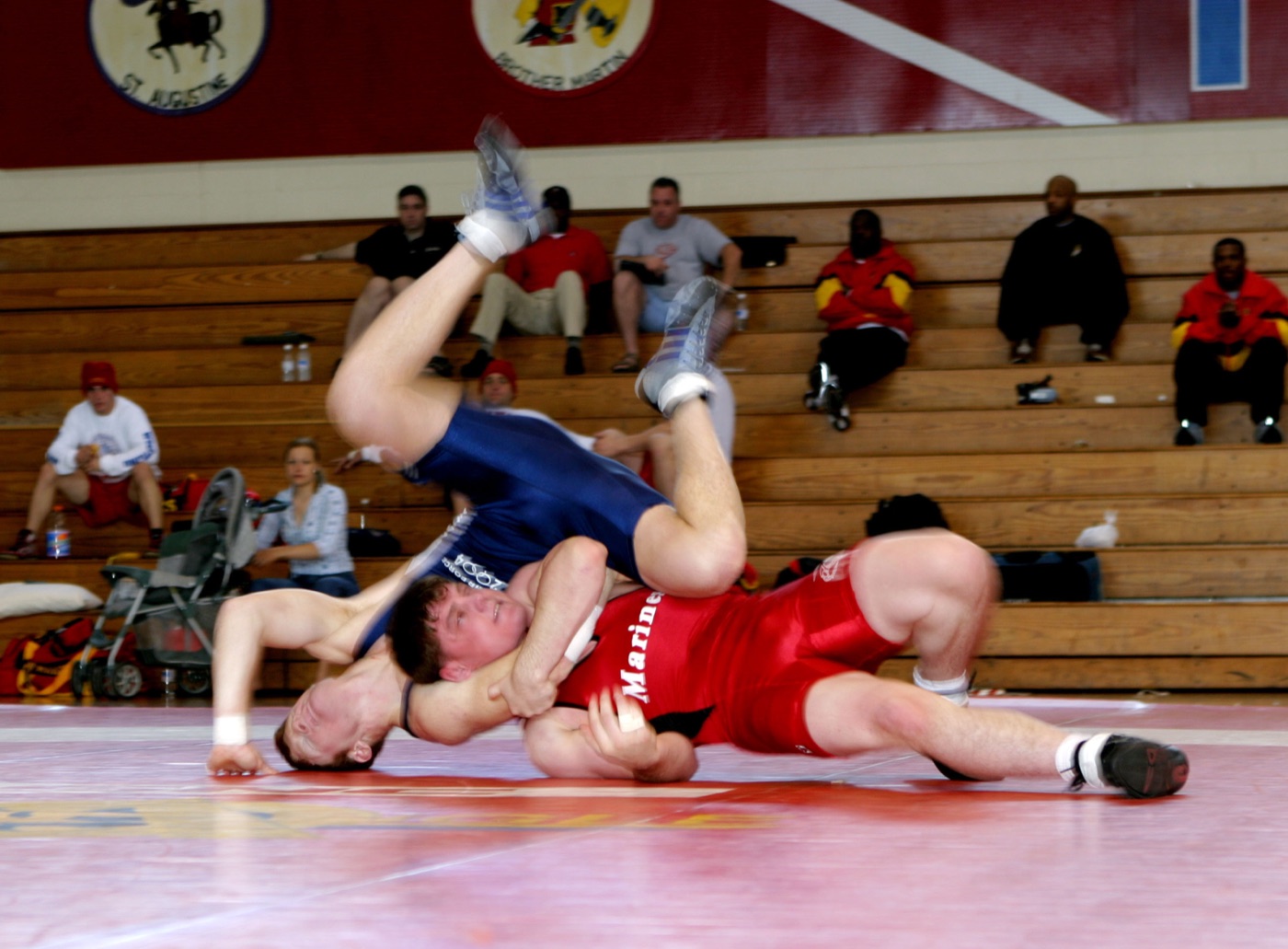
How We Scored Each Format
Five criteria, 18 points total, scored the same way for every format. The weights are deliberately uneven, because the one thing the research is clear on is that necks grow the way every other muscle grows, under a load that goes up over time. Conley and colleagues put lifters through twelve weeks of direct neck extension work and measured a 13% rise in neck extensor size. The group that squatted and pressed without direct neck work grew nothing there (Eur J Appl Physiol, 1997). A format you cannot progress stops working in about a month.
| Criterion | Points | What earns them |
|---|---|---|
| Load | 0 to 6 | A known weight, in small steps, with headroom for years. Bands and bodyweight score low here because there is no number to beat next week. |
| Directions | 0 to 4 | One point each for flexion (chin to chest), extension (looking up), lateral (ear to shoulder, both sides) and rotation. |
| Safety | 0 to 4 | No compression of the cervical spine, no loads that swing or slip, no position you cannot bail from. |
| Cost | 0 to 2 | Two points under $250 all in, one point under $700, none above. |
| Space | 0 to 2 | Two points if it lives in a drawer or a gym bag, one for a corner, none for a footprint. |

Tiers come from the raw totals: S is 17 to 18, A is 13 to 16, B is 11 to 12, C is 9 to 10, D is 7 to 8. Nothing scored under seven, so there is no E or F row. Prices are what each brand's own site charged on September 10, 2026.
The Board

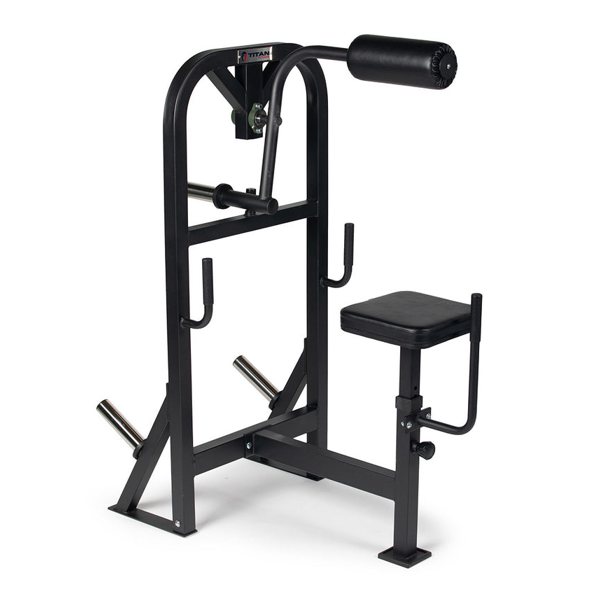 15Four-way neck machine$149.97 to $539.97 · Titan
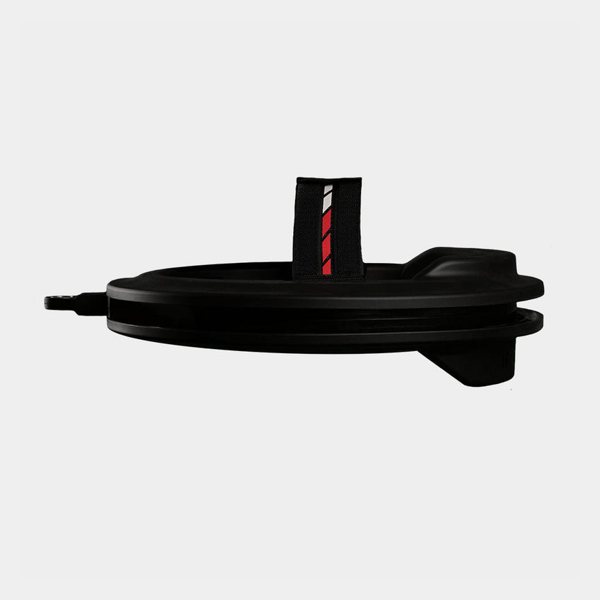 13Rotating halo$299 to $499 · Iron Neck
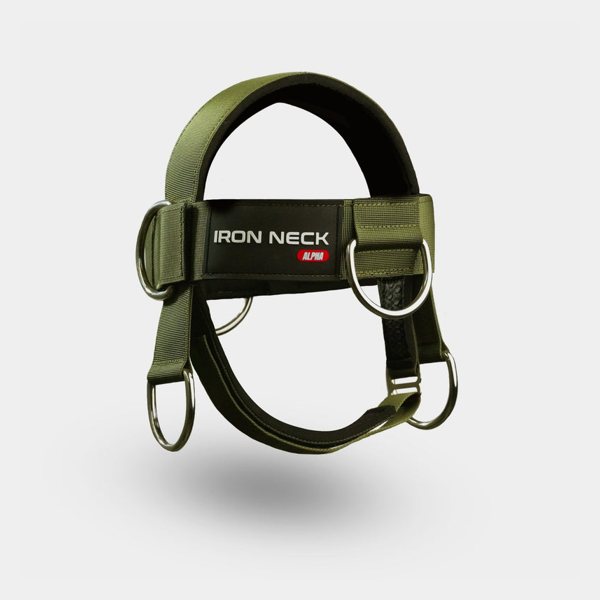 12Chain head harness$35 to $119.95
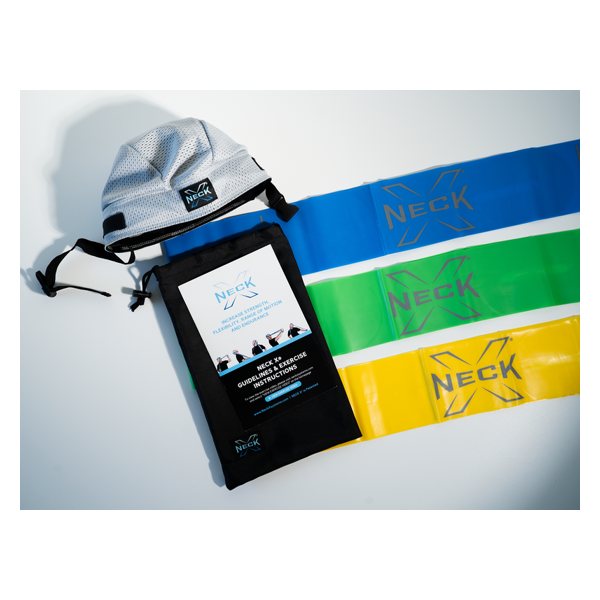 12Band harness kit$79.98 to $99.95
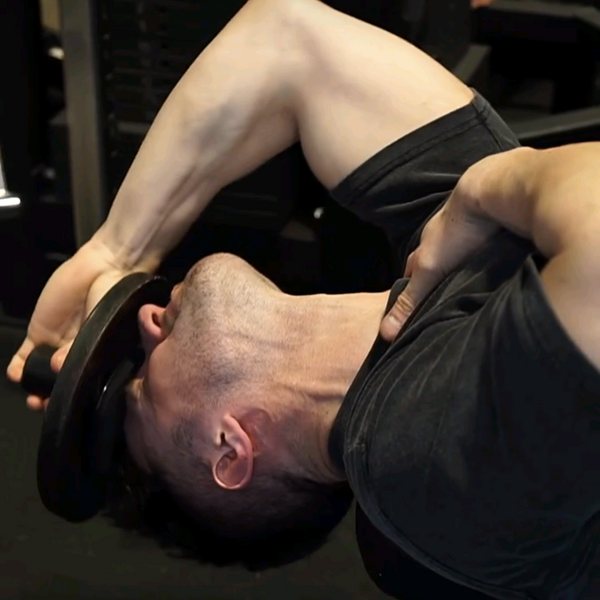 12Plate on the forehead$0 to $25
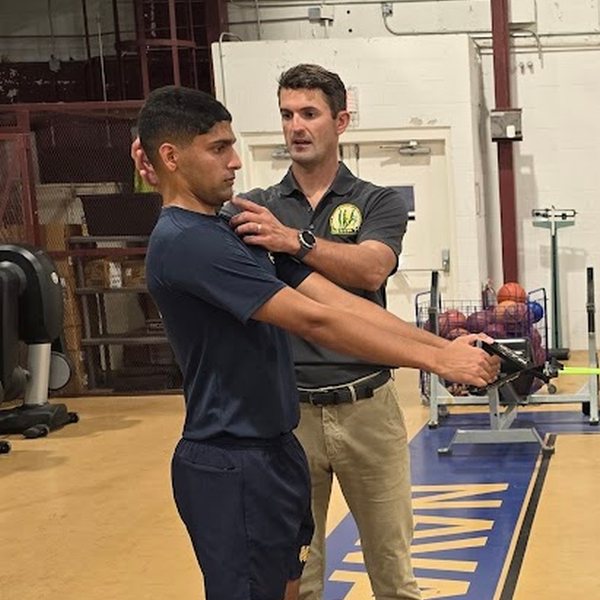 11Manual resistance$0
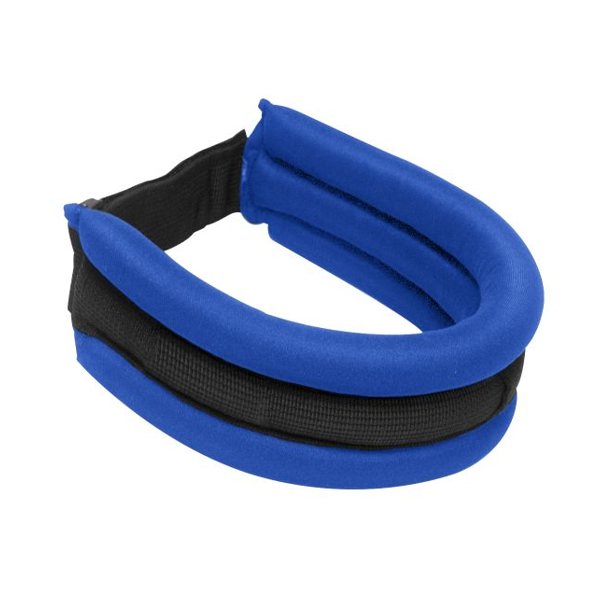 10Weighted head wrap$16.99 · Ringside
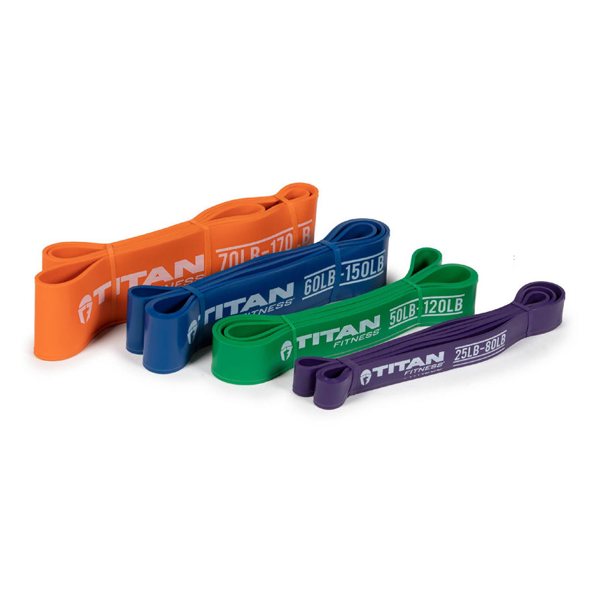 9Loop band on a rack$17
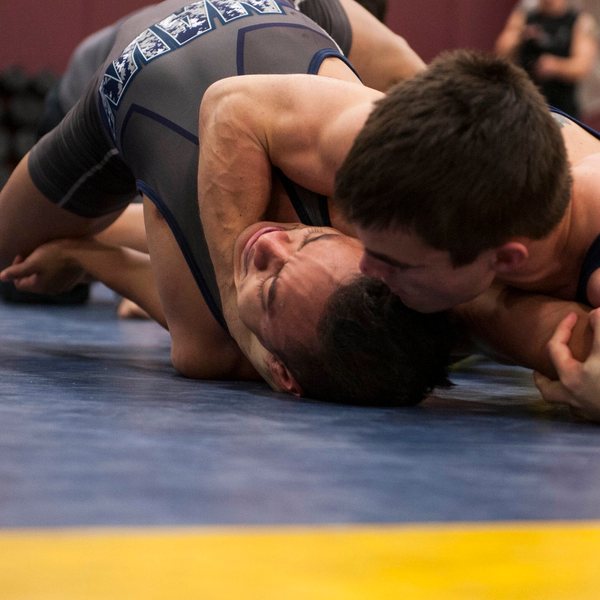 7Wrestler's bridge$0
Score out of 18 in the corner of each chip. Price is the range across the products named in that format's entry below, on the brand's own site, September 10, 2026.
Tap any tile for its score breakdown.
15% off with code SMGNECKVIP at checkout.
15% reader discount, applied automatically at checkout.
15% off with code SMGNECKOCT at checkout, through October 10.

Every Format, Scored
1. Plate-loaded helmet
A rigid frame sits on the head like a helmet, with a short sleeve on each side that takes a standard 2-inch Olympic plate. The load is centred on the skull, so you can curl it lying face up, extend it lying face down, lift it ear to shoulder lying on your side, and rotate against it. Every one of those is a known weight, and the next step is whatever plate you own next. The Kensui EZ-HELM at $199 is the reference product for the format and the one we scored. It took the full 18.
Load 6 · Directions 4 · Safety 4 · Cost 2 · Space 2
2. Four-way neck machine
The gym standard. You sit, press your head into a pad, and move a stack or a plate arm one direction at a time, then turn the seat for the next. The load is exact, the increments are small and the movement is guided, which is why every serious wrestling and football room has one. It lost points only where it cannot help it. Titan's standalone plate-loaded machine is $539.97 and its rack-mount version is $149.97 but only fits a Titan rack, and either way you give up a bench-sized footprint. If your gym has one, use it.
Load 6 · Directions 4 · Safety 4 · Cost 1 · Space 0
3. Rotating halo
A padded ring clamps around the head and anchors to a band or cable in front of you. You hold the neck still against the pull and turn through it, the one format here built around rotation and the isometric work team physios like. The Iron Neck 3.0 is $299 today, down from $349, and the 3.0 Pro is $499, down from $599. The Pro adds a friction dial, and that dial is the whole difference. Resistance is a band, so you tune it by stepping back rather than adding a number, and it is the priciest thing here that fits in a bag.
Load 3 · Directions 4 · Safety 4 · Cost 0 · Space 2
4. Chain head harness
The boxer's classic: straps over the head, a chain under the chin, plates on the chain. It is real weight in real increments, which is why it beats every band on the board. The catch is geometry. Because the load hangs below your face, the harness only trains extension and a little flexion, the plates swing at the bottom of every rep, and past about 45 pounds the straps start to walk. DMoose sells one for $35, Iron Neck's Alpha is $47, Neck Flex's MMB Pro is $119.95 with a band thrown in, and none of them fixes the directions problem.
Load 5 · Directions 1 · Safety 2 · Cost 2 · Space 2
5. Band harness kit
A cap or harness with loops, plus resistance bands you anchor to a door or a rack. NECK X sells the cap and bands for $89.99, Neck Flex's Halo kit is $99.95, and Functioneck's harness is $79.98 with bands sold separately. Bands cover every direction, and they are the safest thing here to hand a beginner. The weakness is the first column: a band's resistance changes through every inch of the rep and there is no number to write down, so progress is a feeling rather than a fact.
Load 1 · Directions 4 · Safety 3 · Cost 2 · Space 2

6. Plate on the forehead
Lie on a bench, fold a towel over your forehead, balance a plate on it and curl your chin to your chest. Flip over for extension, roll onto your side for lateral. Real weight, costing nothing you do not already own. The Strong Neck sells a $25 silicone pad to stop the plate sliding, which is the format's whole problem: your hands are busy holding a plate on your face, and you can only balance so much.
Load 4 · Directions 3 · Safety 1 · Cost 2 · Space 2
7. Manual resistance
Your own hand, or a partner's, pushing against your head as you move through the range. Every direction, no gear, and a partner who knows what they are doing can make it brutal. What it cannot do is tell you whether this week was heavier than last, and a partner who is tired or stronger than your neck is the injury risk. The best free option here, and the one you outgrow soonest.
Load 1 · Directions 4 · Safety 2 · Cost 2 · Space 2
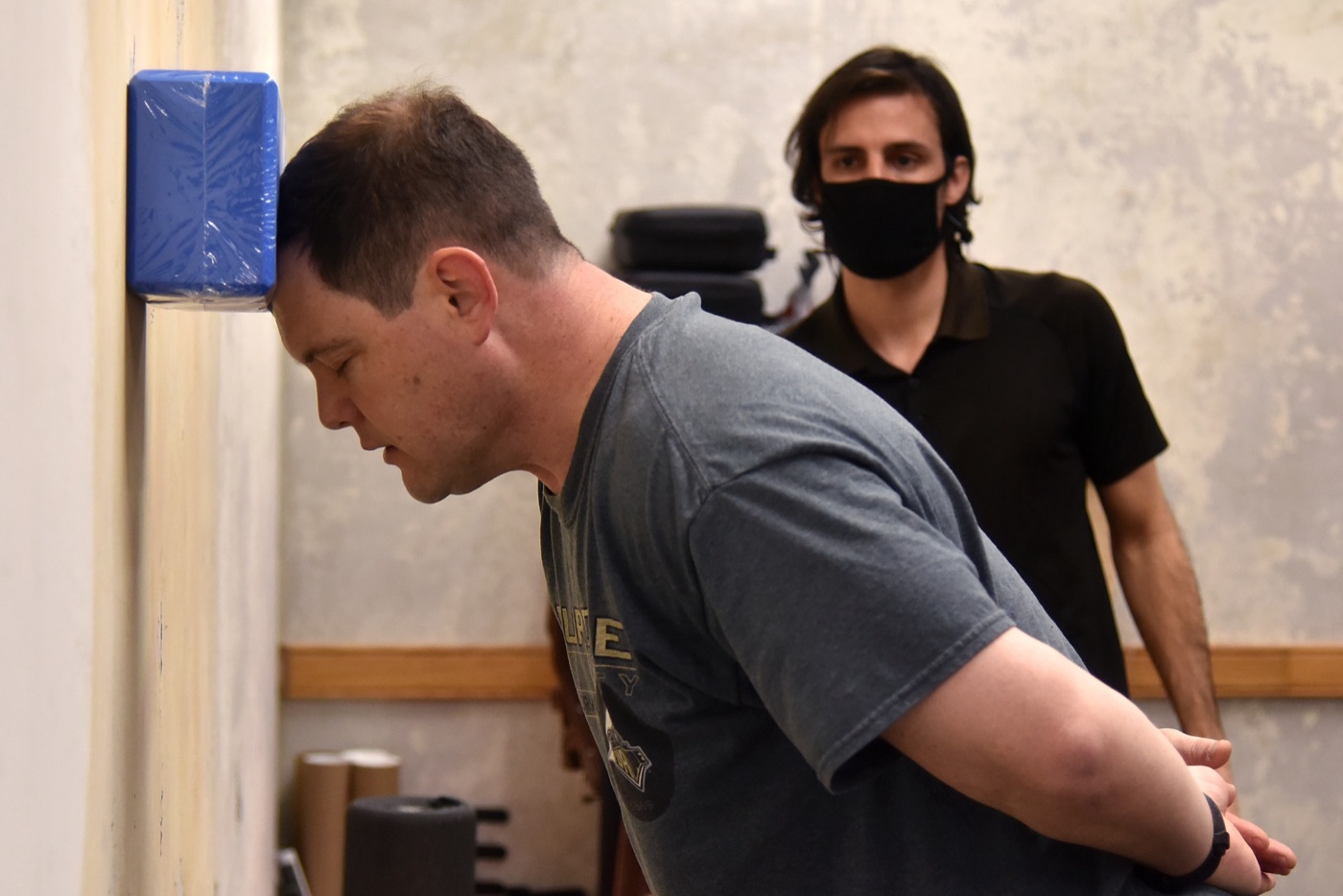
8. Weighted head wrap
A padded band with weight sewn into it. Ringside's is 5 pounds for $16.99. Comfortable, safe, and 5 pounds forever. A wrap can warm the neck up, but no version of it gets heavier, so it fails the criterion that matters most.
Load 0 · Directions 2 · Safety 4 · Cost 2 · Space 2
9. Loop band on a rack
The band kit without the harness: hook a loop band to a rack, put the other end around the back of your head, and push. A single Rogue Monster band is $17, free if you already own one, and it works in a hotel gym. It also slides off the skull under any real tension, only pulls in the direction the anchor happens to be, and has no number on it. Fine for a week away, not a programme.
Load 1 · Directions 2 · Safety 2 · Cost 2 · Space 2
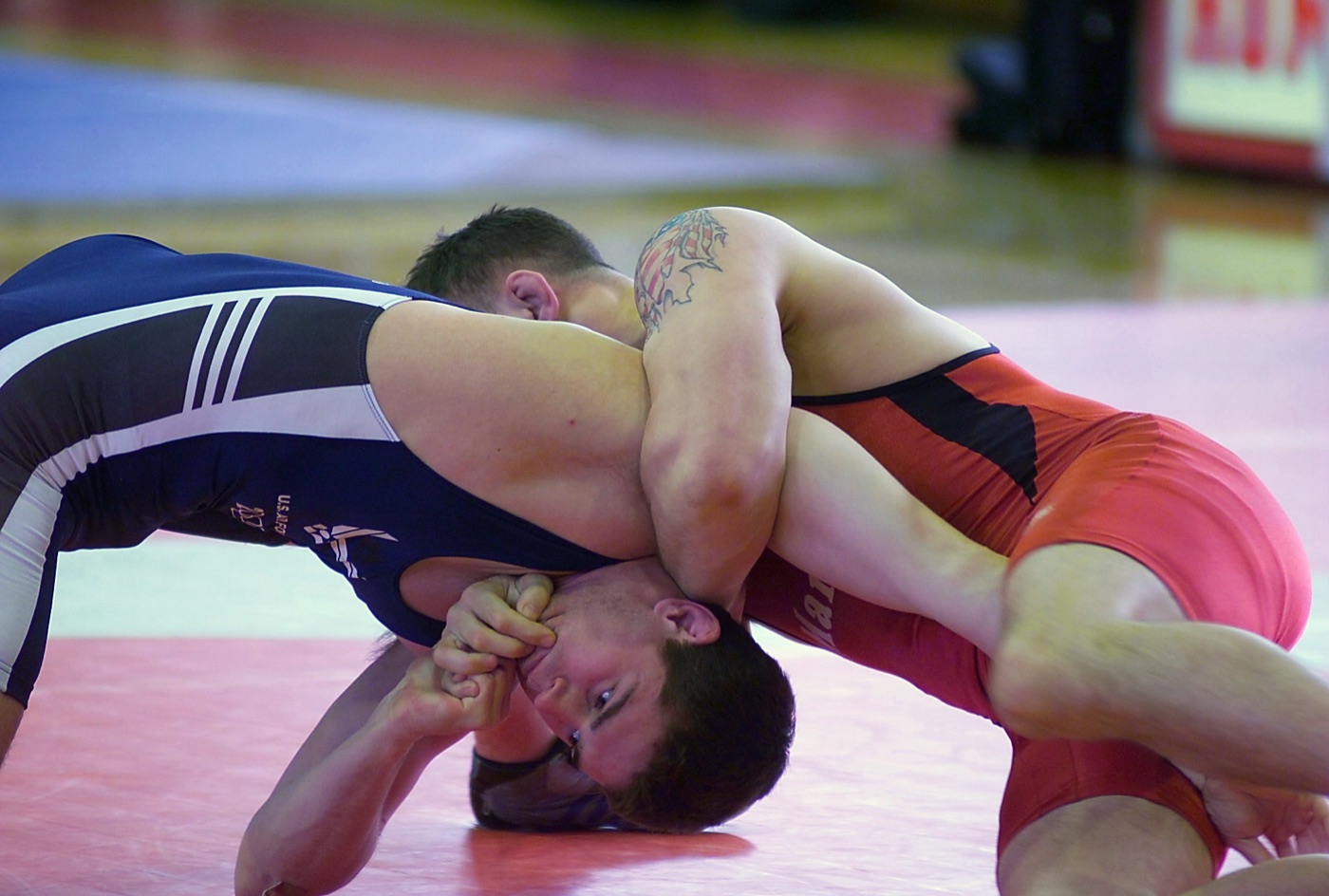
10. Wrestler's bridge
Arch onto the crown of your head and rock. The oldest neck exercise in the book, free, and the only format here that loads the cervical spine in compression rather than the muscles in tension. Bodyweight is a real load, so it beats the bands on that column alone. It scores zero on safety, and that is the column it cannot buy back.
Load 2 · Directions 1 · Safety 0 · Cost 2 · Space 2
Six formats let you add a known weight. Only one of them does it in all four directions for under $250.
The Winner: The Plate-Loaded Helmet
The EZ-HELM is the product behind the only format that cleared every column. Two-pound nylon and fibreglass frame, an aluminium buckle under the chin, and two 3.5-inch sleeves that take any 2-inch Olympic plate up to 100 pounds total. The plates sit at ear height, so the weight is on the neck rather than swinging under the chin, and you get the four movements a machine gives you without the machine.

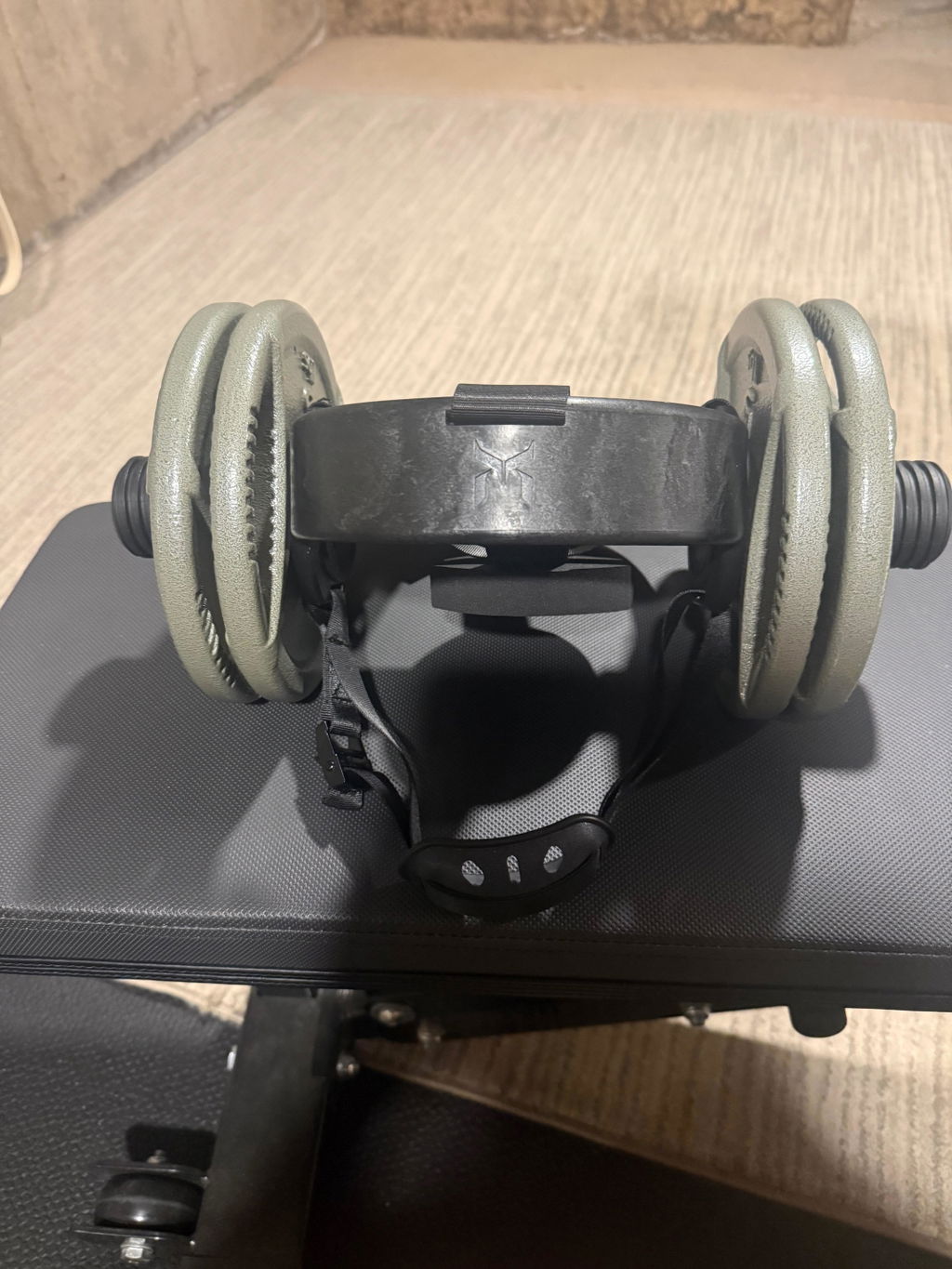

- Loads in the steps your plates come in, from a bare frame to 100 pounds, which is more headroom than a chain harness stays on the head for.
- Flexion, extension, both lateral sides and rotation, standing, lying or in a plank, with the same piece.
- Fits in a gym bag with the plates off. A 1-inch adapter is sold separately for standard plates.
One honest concession: the side padding is not adjustable, and two of the 134 reviews mention some wobble on side-to-side reps. Both point at the chin strap as the fix, which is also the buckle everyone notices first.
Bought this after having returned the iron neck 360 device and I prefer the kensui much more. The iron neck feels like it's more for rehab but the kensui is really easy to load up and basically do neck crunches from every angle.Timothy B., verified buyer, 5 stars
Much better than the 4 way machine at gyms since it offers better freedom of movement. Easy to load and neck strap does not choke me.Lou K., verified buyer, 5 stars
Feels a bit cheap and it's not possible to adjust the size on the side yet it's possible on the front, make it wobble with side movements.C.C., verified buyer, 3 stars

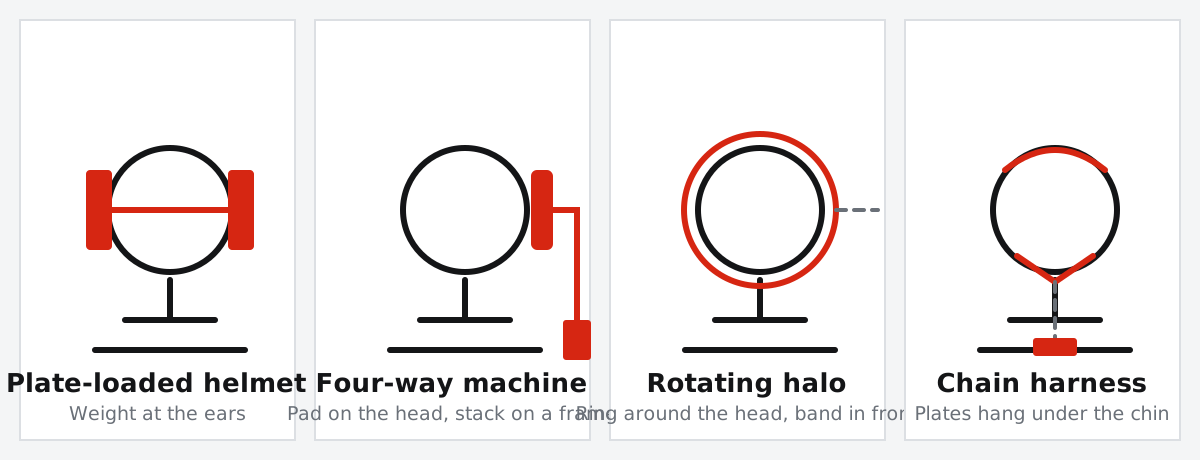
Helmet, Machine, Halo, Harness
The four formats that scored 12 or better, side by side. The frame in the top row is the whole trick: two sleeves at ear height, so the plates sit where the neck is strongest.

| Plate-loaded helmet | Four-way machine | Rotating halo | Chain harness | |
|---|---|---|---|---|
| Price | $199 | $149.97 to $539.97 | $299 to $499 | $35 to $119.95 |
| Load | Olympic plates to 100 lb | Stack or plates | Band tension, friction dial on Pro | Plates on a chain |
| Directions | All four | All four, one at a time | All four plus rotation | Extension, some flexion |
| Where the weight sits | At the ears | On a pad | Around the head | Under the chin |
| Footprint | Gym bag | A bench and a wall | Gym bag plus an anchor | Gym bag |
| Learn More |
Which Format Is Right for You
- You train in a gym that has a four-way machine. Use it. Nothing here beats it on load and it is already paid for.
- You train at home or travel, and you own plates. The plate-loaded helmet. It is the machine's four movements in two pounds of gear.
- Your sport is about rotation and impact. The halo earns its A. Budget $299 and know that the $499 dial is the only upgrade.
- You have $0 and a bench. Plate on the forehead for flexion and extension, manual resistance for the rest, and a plan to move on within two months.
- You are coming back from a neck injury. None of these before a clinician says so. Bands first when they do.

One number worth keeping in mind. Collins and colleagues followed 6,704 high school athletes and found every extra pound of neck strength was associated with 5% lower odds of concussion (J Prim Prev, 2014). One study, on teenagers, and a correlation. It is also why the format you can keep adding weight to is the one worth owning.
Frequently Asked Questions
- Is direct neck training safe?
- Loading the muscles in tension, the way every format above the bridge does, is how physios rehab necks. Loading the spine in compression is the part to avoid, and that is the bridge's problem, not the neck's.
- How heavy should I start?
- Lighter than you think. Five pounds a side on a helmet, or the lightest band, for 15 to 20 slow reps in each direction. Add weight when 20 feels easy, not before.
- How often?
- Two or three short sessions a week. The neck recovers like any other muscle and gets sore like one the first fortnight.
- Do I need plates for the helmet?
- Yes, 2-inch Olympic plates, which most home gyms already have. A 1-inch adapter is sold separately for standard plates.
- What does the guarantee cover?
- The EZ-HELM ships with a 100-day trial. Train with it, and if it is not for you, send it back.

The Only Format That Cleared Every Column
Real weight, all four directions, in a bag. That is the whole argument, and the reason a $199 helmet finished above a $540 machine.
Get the EZ-HELM15% off with code SMGNECKVIP at checkout.
15% reader discount, applied automatically at checkout.
15% off with code SMGNECKOCT at checkout, through October 10.
100-day trial · 4.75 stars from 134 reviews · In stock
