Weighted Vest Training vs. Traditional Lifting: A Science-Based Comparison
Can a weighted vest replace the gym? We looked at the research to find out.


The Plateau Problem Nobody Talks About
You've been consistent. You show up, you do the work, and for a while, it worked. Strength went up. Muscles grew. Everything clicked.
Then it didn't.
Progress slowed. Maybe it stopped completely. And now you're wondering if the thing that got you here is actually the thing holding you back.
Here's what nobody really talks about: traditional strength training is proven. Nobody's arguing that. But it's got blind spots. It doesn't always carry over to how you move in real life. It keeps you tethered to a gym. And if you're doing calisthenics or bodyweight work, there's a hard ceiling you hit once unweighted reps just aren't challenging anymore.
So the question worth asking is simple: for your actual goals, is traditional lifting enough? Or does weighted vest training fill gaps that barbells can't?
Let's look at what the research says. Not the hype. Not the social media clips. The actual evidence.
Where Barbells and Dumbbells Still Win
Let's give credit where it's due. Traditional strength training has earned its reputation.
Progressive overload is about as simple as it gets. You add weight to the bar. You do more reps. You track a number and that number goes up. There's a reason this approach has been the backbone of strength development for decades.
Isolation work is another genuine advantage. If your shoulders are lagging or your hamstrings need attention, you can target them directly with specific exercises. Try doing that with bodyweight alone. It's tough.
And when it comes to raw load potential, nothing beats a barbell. If your goal is to squat 400 pounds, you need a squat rack and a barbell. That's just the reality.
The programming is well-documented too. Decades of research, thousands of coaches, structured periodization models that actually work. You're not guessing.
But here's where it gets honest.
Traditional lifting needs a gym. Or at minimum, a significant equipment investment. Movement patterns tend to be narrow, locked into fixed planes of motion that don't always reflect how your body works outside the gym. And if you're training calisthenics (chasing a muscle-up, working toward a freestanding handstand push-up, or trying to add reps to your pull-up max), the leg press and the cable machine aren't going to get you there.
That doesn't make barbells wrong. It means they're not the complete picture.
Beyond the Walking Trend
Here's where most articles on this topic get it wrong. They treat weighted vests like a walking accessory. Something you throw on for a stroll around the neighborhood to burn a few extra calories.
That's fine if that's your thing. But it misses the real story.
For serious trainees, a weighted vest is a progressive overload tool for bodyweight movement. And that changes everything.

Pull-Ups and Dips
This is the primary use case, and it's not close. If you've been doing calisthenics and you've hit 15 or 20 clean pull-ups, you know the problem. More reps build endurance, not strength. A vest lets you add load in small increments, the same way you'd add plates to a barbell. Suddenly your pull-ups are a strength exercise again.

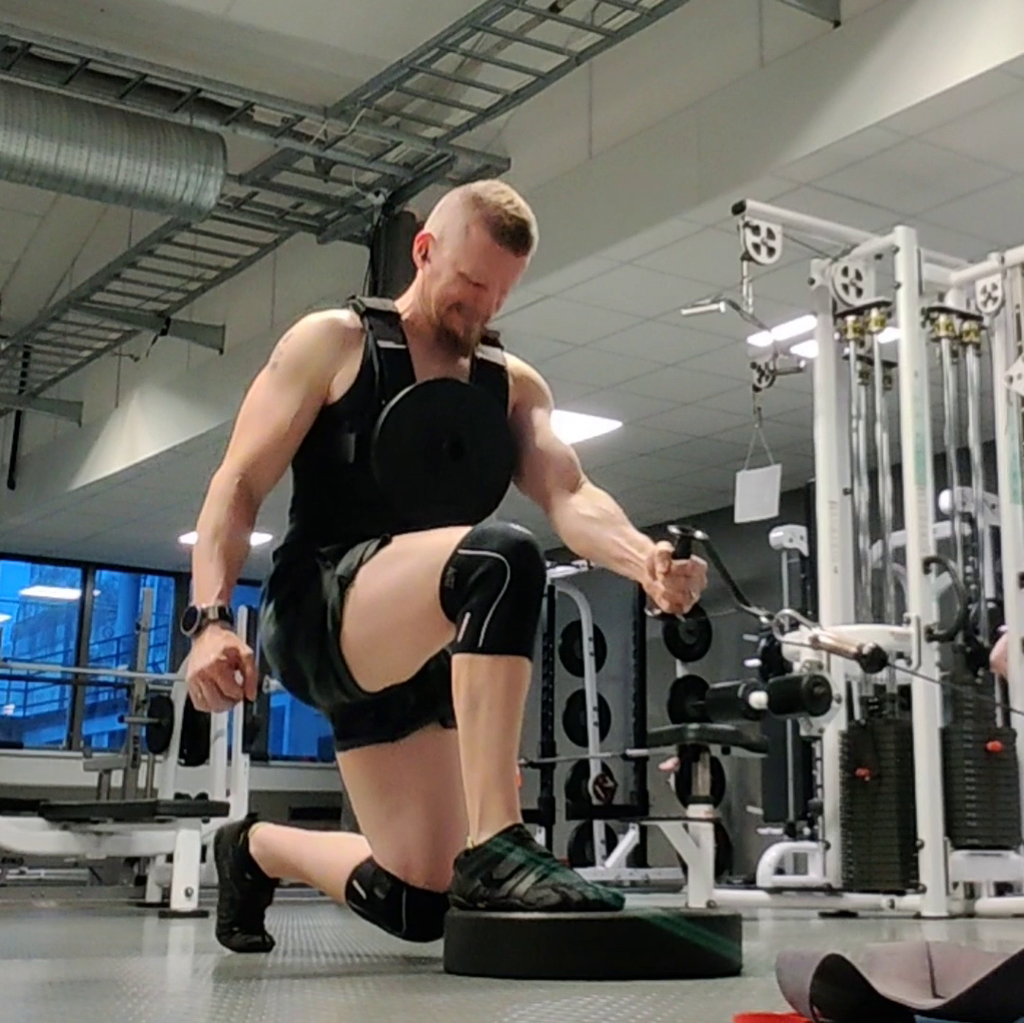
Built for Pull-Ups, Dips, and Progressive Overload
The Kensui EZ-VEST V2 uses Olympic plates and holds up to 300 lbs. Low-profile design that won't shift or bounce mid-rep.

Push-Up Progressions
From standard push-ups to deficit push-ups to archer push-ups, a vest scales the difficulty at every level without changing the movement pattern. You're still doing the same exercise. It just got harder. And unlike band resistance or tempo manipulation, the added load is consistent through the full range of motion.

Squats and Lunges
Loaded movement patterns that build functional leg strength. Not locked into a machine. Your stabilizers are working, your balance is working, your core is firing to keep you upright. This is how your legs actually function in the real world: under load, in motion, with nothing stabilizing you except your own body.

Conditioning Circuits
A study from the U.S. Army Research Institute of Environmental Medicine found that calorie burn increased as vest weight went up.[1] This wasn't a small bump. Heavier vests produced meaningfully greater metabolic demand across the board. It's not theory. It's measured data.
The advantages stack up. Functional strength that actually transfers to how you move in real life. Better relative strength (the metric calisthenics athletes care about more than anything). A clear progressive overload path for bodyweight training that doesn't require a gym membership. And the ability to train anywhere: home, park, garage, hotel room.

Now, the common pushback.
"I already lift weights." Great. A vest doesn't replace that. It complements it. Add vest work on your bodyweight days and you've got a hybrid approach that covers gaps neither method handles alone.
"Weighted vests aren't challenging enough." That depends entirely on the vest. Adjustable systems let you start light and add weight as you progress, the same principle that makes barbell training work. A 40 or 50 pound vest on a set of pull-ups will humble most people.
"They're only for cardio." The exercise list above handles that one.
The Honest Comparison
Let's put them side by side. No spin, just what each approach actually delivers.
| Category | Traditional Lifting | Weighted Vest |
|---|---|---|
| Maximum Strength Ceiling | Wins | Limited by vest capacity |
| Functional Carryover | Fixed planes of motion | Wins |
| Convenience & Freedom | Requires gym or home setup | Wins |
| Progressive Overload Simplicity | Wins | Needs adjustable system |
| Calisthenics Progression | Doesn't map to movements | Wins |
| Relative Strength | Can decrease if weight rises | Wins |
Maximum strength ceiling. Traditional lifting wins here. If your goal is absolute strength (the heaviest weight you can move regardless of bodyweight), barbells and dumbbells give you a higher ceiling. A vest is limited by how much weight it can hold and how much load your bodyweight movements can accommodate. For pure max strength, the gym wins.
Functional carryover. Weighted vest training wins. When you train with a vest, you're moving your own body through space with added resistance. That's closer to how strength shows up in real life: carrying groceries up three flights, climbing stairs two at a time, keeping up with your kids at the park, performing on the field when it matters.
A clinical trial (NCT00158119) compared weighted vest exercise to traditional resistance training in older adults and found that participants in the vest-based group showed improvements in functional movement measures like timed chair stands and walking speed.[2] While this study focused on an older population, the underlying principle holds: training with added load on your body builds strength that carries over to real-world movement. Traditional lifting builds strength in fixed planes. Vest training builds strength in motion.
Convenience and location freedom. Weighted vest wins, and it's not really close. A vest fits in a closet. You can train in your backyard, at a park, in a hotel room, in your garage. No membership. No commute. No waiting for equipment. For anyone whose biggest training obstacle is logistics, this matters a lot.

Progressive overload simplicity. Traditional lifting wins. Add a plate. Done. With a vest, you need an adjustable system and a plan for how you'll increase load over time. It's doable (and honestly not that complicated with a plate-loaded system), but it takes a bit more intentionality.
Calisthenics progression. Weighted vest wins decisively. If you're training pull-ups, dips, push-ups, or pistol squats, a vest is the most direct path to continued strength gains. Traditional gym equipment doesn't map to these movements. A vest loads the exact movement you're trying to improve.
Relative strength. Weighted vest wins. Relative strength is your strength compared to your bodyweight. It's what determines whether you can do a muscle-up, how fast you move, how you perform in sports. If you're a 180-pound athlete who can do a weighted pull-up with 50 extra pounds, your relative strength is exceptional. Vest training develops this directly because you're loading your own bodyweight movements, not an external barbell. Traditional lifting improves absolute strength but can actually decrease relative strength if bodyweight goes up faster than performance.
The Answer Depends on One Thing
So which one is better?
Honest answer: it depends on what you're training for.
If you're at a commercial gym five days a week chasing maximum hypertrophy, traditional strength training is hard to beat. It's built for that. The equipment, the programming, the progression model. It all supports that goal.
If you train at home, do calisthenics, or care about functional strength that actually shows up outside the gym, weighted vest training closes gaps that traditional methods just can't reach.
But here's what most people miss: you probably don't have to choose.
The highest-performing approach for most people is combining both. Use barbells and dumbbells for what they're best at (heavy compound lifts, isolation work). Use a vest for what it's best at (bodyweight progressive overload, functional movement, training flexibility). The two aren't competing. They're complementary.

And if you're only going to pick one entry point into the hybrid model? Adding a weighted vest to your existing routine is the easier on-ramp. You don't need to change your program. You just add load to the movements you're already doing.
Is This for You?
Weighted vest training isn't for everyone. But for certain people, it's the missing piece. See if you recognize yourself.
Home gym athletes. You've built a solid setup and you're not paying for a gym membership. A weighted vest turns your pull-up bar, dip station, and floor space into a complete progressive overload system. You get stronger without buying more equipment. Think weighted pull-ups in your garage, loaded push-ups in your living room, vest squats in your backyard. That's a full upper and lower body program with one piece of gear.
Busy professionals. You don't have 90 minutes for a gym session plus the commute. A vest lets you get a serious training stimulus in 30 minutes, at home or in a park. No driving. No locker room. Just training. Throw it on before work for a quick circuit, or use it during a lunch break. The barrier to entry is basically zero.

Calisthenics athletes. You've maxed out bodyweight reps and you know that more volume isn't building strength anymore. Weighted pull-ups, dips, and push-ups are the most direct path forward without switching to barbells entirely. You keep training the movements you care about. They just get heavier.
Military and tactical fitness. Loaded movement is the job. A vest builds the kind of strength and endurance that transfers directly to rucking, obstacle courses, and operational demands. You train the way you perform. There's a reason vest training shows up in special operations prep programs.
Combat sports. Relative strength matters more than how much you can bench. A vest develops power at your fighting weight through sport-specific movement patterns, not isolated muscle groups. Explosive push-ups, weighted sprawls, loaded shadow work. Strength that shows up in the ring, not just on a lift total.
If any of that sounds like you, a vest probably belongs in your training.
4.9 / 5 Stars From 1,490+ Reviews
Trusted by athletes, coaches, and home gym owners worldwide


The EZ-VEST V2 is the weighted vest featured throughout this guide, and it is the tool that makes this kind of progressive overload possible.
Ready to Add Weighted Vest Training to Your Program?
The Kensui EZ-VEST V2 is built for progressive overload across strength training, walking, rucking, pull-ups, dips, and squats.
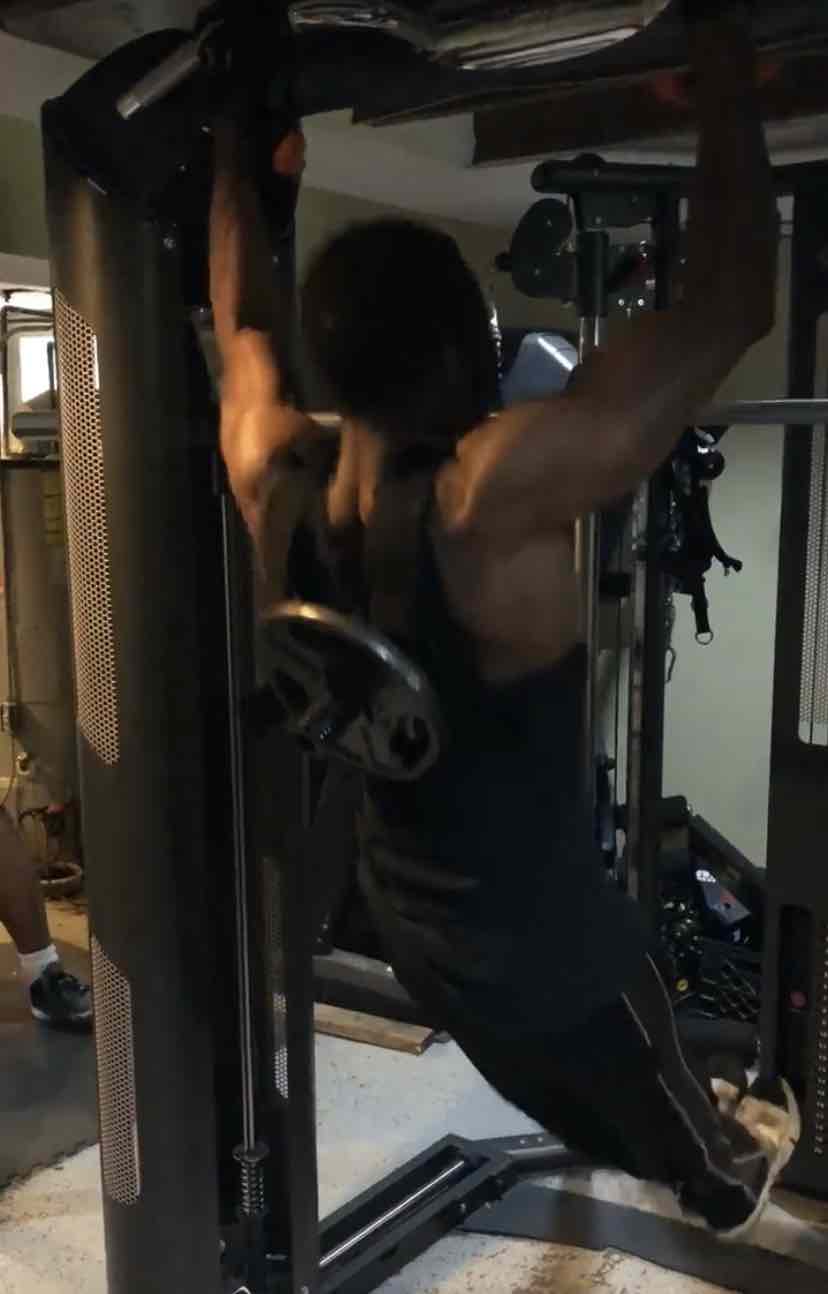

- Holds up to 300 lbs with Olympic plates
- Low-profile fit for pull-ups and dips
- Built for strength, not just cardio
- Grows with you as you progress
Or check out our training guides →
Sources
- U.S. Army Research Institute of Environmental Medicine. Study on caloric expenditure during weighted vest exercise. Findings showed that metabolic demand increased proportionally with vest load across multiple exercise modalities. USARIEM Research
- NIH INVEST Trial (Incorporating Nutrition, Vests, Education and Strength Training). A randomized clinical trial (ClinicalTrials.gov ID: NCT00158119) comparing weighted vest exercise to traditional resistance training. The study measured functional outcomes including timed chair stands, walking speed, and physical function in older adults. Results showed the vest-based exercise group maintained or improved functional movement scores.
- ClinicalTrials.gov NCT00158119. Full trial registration and results for the weighted vest exercise vs. strength training comparison. View trial details
