Lower Leg · Evidence Review
Shin Splints Are Not an Overuse Problem. They're a Strength Problem.
Rest, ice, and fewer miles treat the pain. None of them change what your lower leg can actually handle.

Rest, ice, and fewer miles treat the pain. None of them change what your lower leg can actually handle.
Shin splints follow a script. Pain shows up a few weeks into a training block. You back off the mileage, you ice, maybe you buy new shoes. Weeks later it fades, you build back up, and somewhere around the same mileage it comes back.
The script is not wrong. It is incomplete.
The clinical name is medial tibial stress syndrome, or MTSS. In 2012 a team led by Maarten Moen ran a randomized trial on 74 athletes who had it.[1] Every athlete followed a graded running program. One group added calf stretching and strengthening. Another added a sports compression stocking.
No group won.
The compression stocking group averaged 102 days. None of the differences between the three groups reached statistical significance. Best case in that trial, athletes needed roughly three and a half months to get back to eighteen minutes of hard running.
That is the real cost of the standard approach. Not the pain. The calendar.
The word "overuse" sounds like a verdict on your behavior. It works better as a fraction.
On top sits the load you push through your lower leg. Underneath sits the capacity that leg has to absorb it. Pain shows up when the top number outgrows the bottom one.
Rest only works on the top number. Cut your mileage and load drops, the ratio improves, and symptoms settle. Nothing about lying still moves the bottom number, because capacity gets built, not rested into existence.
So you come back to running with the same tissue you left with, and the same ratio waiting at the same mileage.
Shin splints have more than one cause. Any article claiming a single villain is selling you something.
A 2015 meta-analysis in the British Journal of Sports Medicine pooled the risk-factor research across runners and military personnel.[2] Four things reached significance: higher BMI, greater navicular drop (how far the arch collapses under load), greater ankle plantarflexion range, and greater hip external rotation range. Other reviews add female sex, a previous episode of MTSS, and fewer years of running experience. Training surface, footwear, and how fast you ramp your mileage all belong on the list too.
That same meta-analysis reported that ankle dorsiflexion range was clearly not a risk factor for MTSS. Being stiff at the ankle does not predict shin splints, and stretching is not the lever here.
Strength is not the whole story. It is the half of the story that rest cannot touch.
In 2021, Joshua Mattock and colleagues published a case-control study in the Journal of Foot and Ankle Research.[3] They compared 20 lower limbs from long-distance runners with MTSS against 20 matched healthy limbs, and measured the tibialis anterior two different ways.
Size first. Muscle thickness came out at 25.1 mm in the shin splint group against 24.2 mm in the controls. Cross-sectional area landed at 672.8 mm² against 686.9 mm². Neither gap was significant. The muscles were the same size.
Then force. Dorsiflexion strength in the symptomatic limbs averaged 33.5 percent of body weight. Healthy limbs averaged 42 percent. That difference was statistically significant and the effect was large.
Same muscle, roughly a fifth less force out of it.
This was a snapshot in time. The researchers state plainly that a cross-sectional design cannot tell us whether weak dorsiflexors helped cause the shin splints or resulted from them. Both readings are still on the table.
Every gym is full of calf raises. Almost nobody loads the other side of the shin.
The tibialis anterior runs down the outside of your shin bone. Its job is to lift your foot. On every stride it holds your toes up while the leg swings through, then lowers the foot to the ground under control instead of letting it slap down.
It works on every step you take. It gets trained on almost none of them.
Now look at what the treatment trials have actually tested. Moen's 2012 exercise arm added calf stretching and strengthening, which targets the back of the lower leg. A 2025 randomized study by Aynollah Naderi and colleagues added a fuller lower-leg package: calf stretching, plantarflexor and invertor strengthening, short-foot work, and foam rolling.[4] Pain showed no significant difference against the control group, and neither did symptom severity.
Both trials strengthened the back and the inside of the lower leg. Neither progressively loaded the front. That is a gap in the research, not a proven cure. No published trial has asked what happens when you load dorsiflexion the way you would load any other muscle you wanted stronger. Until somebody runs that study, treat this as a reasonable bet rather than a settled answer.
Two ideas get mixed up constantly, so it is worth pulling them apart.
Dorsiflexion range is how far your knee can travel over your toes. Dorsiflexion strength is how hard you can pull your foot up. The 2015 meta-analysis says range does not predict shin splints.
Range is how far the joint travels. Strength is how hard it pulls. Only one of the two showed up in the risk-factor data, and it is not the one people stretch.
Range still matters somewhere else. A 2014 study in the Journal of Athletic Training tested 40 physically active adults and found that those with more weight-bearing ankle dorsiflexion reached greater knee flexion and greater ankle travel during overhead squats and single-leg squats.[5]
So your ankle sets a ceiling on your squat depth. It just is not the thing making your shins hurt. Two separate problems, two separate fixes.
Say you buy the argument and you want the front of your shin stronger. You hit a practical wall almost immediately.
Toe raises against a wall work for about two weeks. After that your bodyweight stops being a stimulus and you have nowhere left to go. Bands are worse, because they hand you the least tension where the muscle is longest and the most where it is already short.
Getting stronger takes progressive load. Small jumps, added on a schedule, over months. For dorsiflexion that means putting real weight on your foot and then adding to it.

That is a hardware problem, and it is most of the reason people never train this.
Kensui's EZ-BOOT MAX V2 is a plate-loaded boot that straps onto your foot. Worth being straight about what it is: Kensui sells it as an adjustable ankle weight and lists leg curls, donkey kicks, and leg raises among its uses. Loading dorsiflexion is one job it can do, not the only one it was built for.
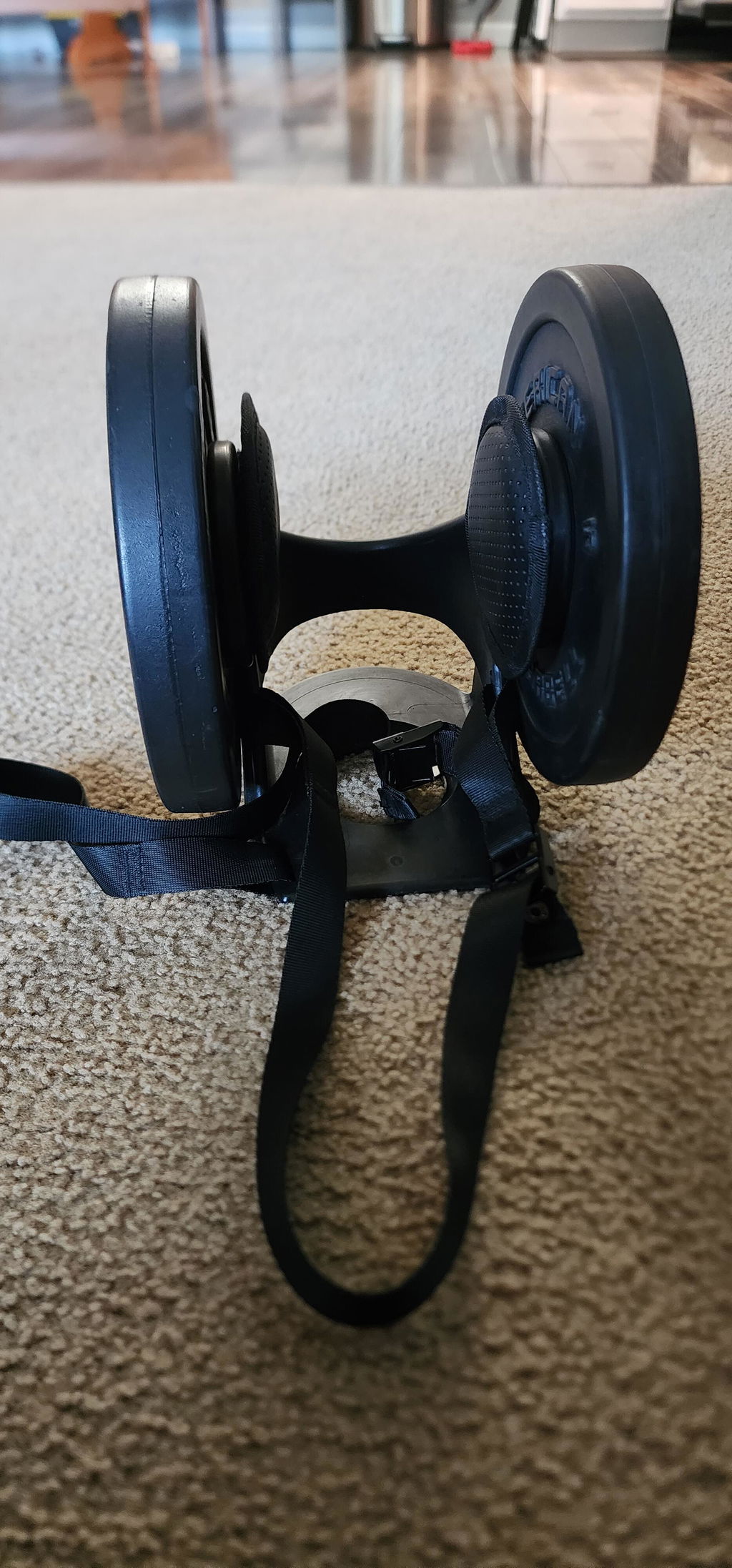


What makes it work for progression is the plate post. The sleeves take 2-inch Olympic plates, so your jumps can be as small as the lightest plate you own. Kensui sells 1-inch adapters separately if your plates are the standard size. Loaded, the boot is rated to hold more than 200 lbs.
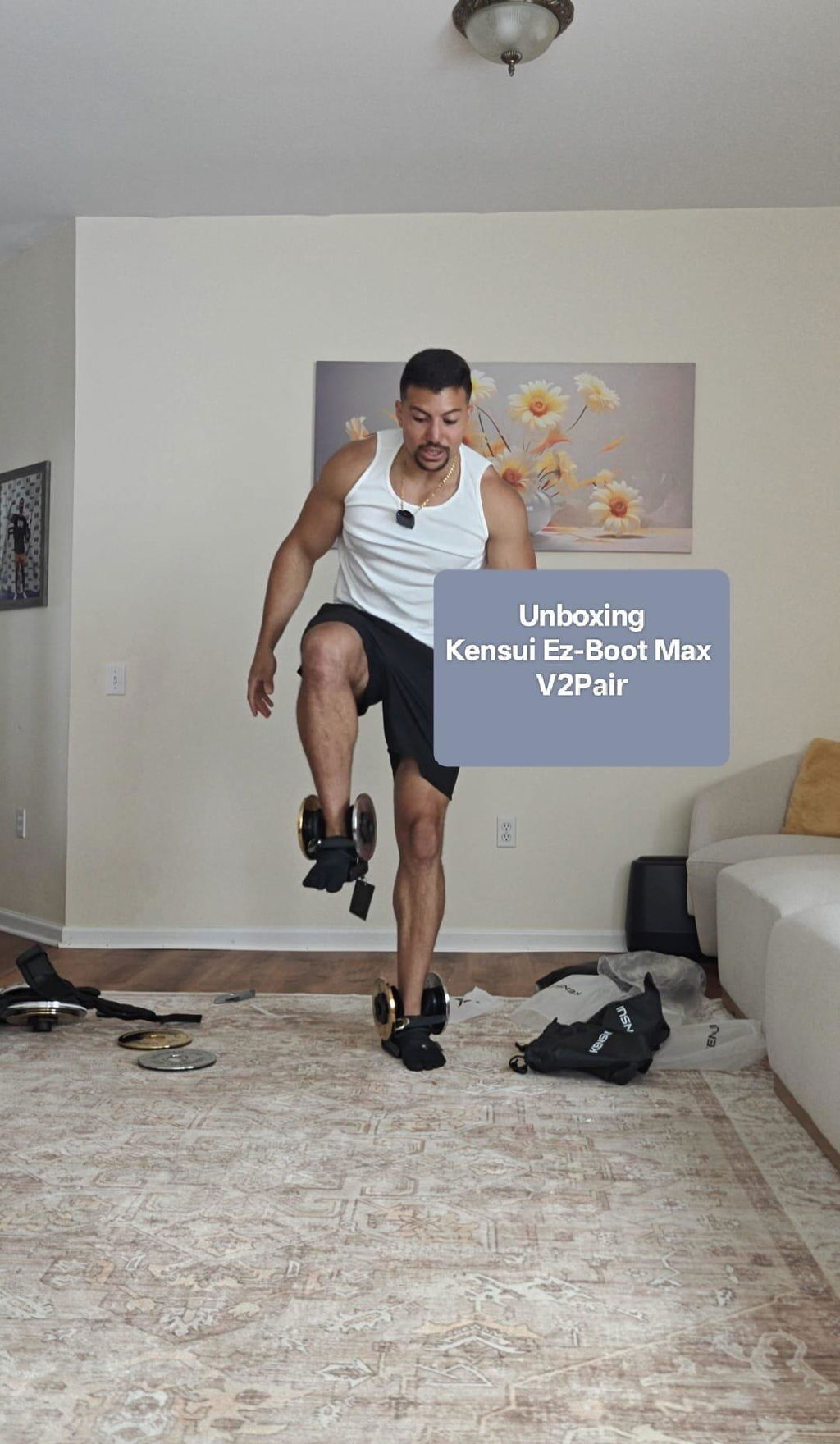


Backing off your mileage lowers what you ask of your shins. It does nothing to raise what they can take. Loading the front of the lower leg is the side of that ratio only training moves.
Get the EZ-BOOT$99 single · $179 pair · Loads with 2-inch Olympic plates

Product prices and specifications were checked against kensui.com on July 28, 2026 and can change. This article is general training information and is not medical advice.

New training studies broken down in plain English, gear we actually tested, and what it all changes about your week in the gym.
By signing up you agree to receive email from Science Meets Gym. No spam, and you can unsubscribe at any time.
