BIOMECHANICS · 6 MIN READ
Long Arms Cost You The Bench And Pay You Back On The Deadlift
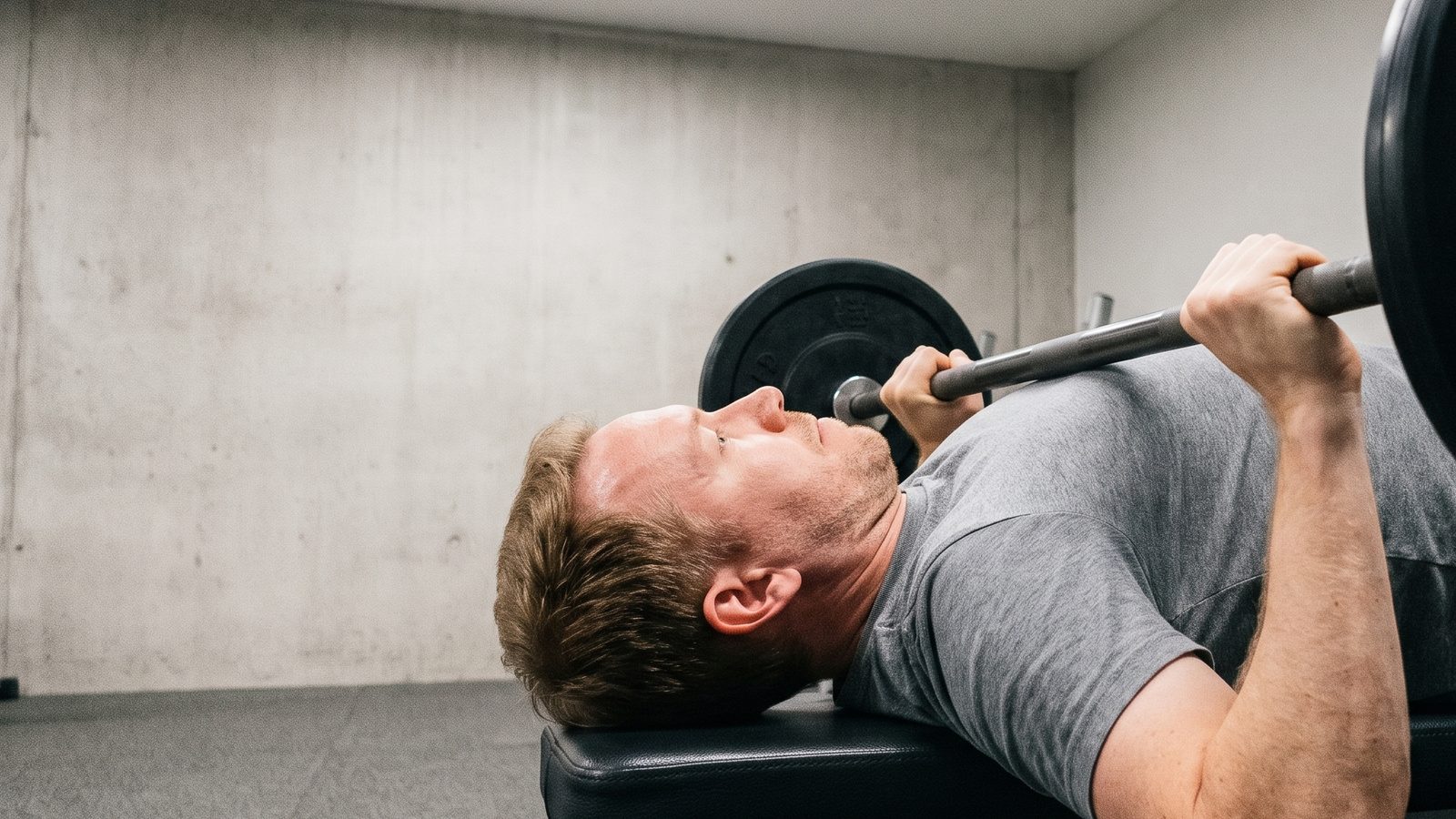
In 59 competitive powerlifters, a long reach went with a stronger deadlift and did nothing measurable to the bench press. The effect is real, and here is how big it is.

The Claim
You have watched this happen in every gym. Two lifters press the same barbell for the same five reps. One is short and thick through the chest. The other is tall, with arms that hang past his pockets. They rack the bar and write down the same number.
The argument is that they did not do the same amount of work. The tall one did more.
That part is not an opinion. Work is force times distance. If the bar travels farther, moving the same load costs more energy. And the bar does travel farther for a longer arm, because the gap between a chest and a locked out elbow is set by the length of the bones in between.
Researchers have measured that gap. In 27 resistance trained lifters, the barbell moved 0.41 metres during a one rep max bench press, with a spread of about 4 centimetres either side of the average.[1] Take two of those lifters one standard deviation apart, at 0.37 and 0.45 metres, and give them both 100 kilos for five sets of five. The longer armed lifter pushes the bar 2 metres farther across the session and does about 22 percent more mechanical work for an identical line in the logbook.
So far the reel is right. The open question is whether that extra work shows up as a weaker lift.
What The Research Actually Found
The cleanest look comes from a drug tested provincial powerlifting championship in Quebec. Researchers measured 59 male classic powerlifters before they competed, across every IPF weight class, then compared their proportions with what they actually lifted on the platform.[2]
One measurement carries this story: reach divided by height. Put your arms out to the sides and measure fingertip to fingertip, then divide by your height. Above 1.0 means your arms are long for your frame.
The result split cleanly by lift. A higher reach to height ratio went with a stronger deadlift, at r = 0.27 for the raw weight and r = 0.37 once the lift was scored against body weight. Both were statistically significant. The same ratio did nothing for the bench press. Against raw bench the correlation was r = 0.00. Against body weight it was r = -0.14 and not significant. Only as a share of the lifter's three lift total did it turn negative enough to count, at r = -0.24.
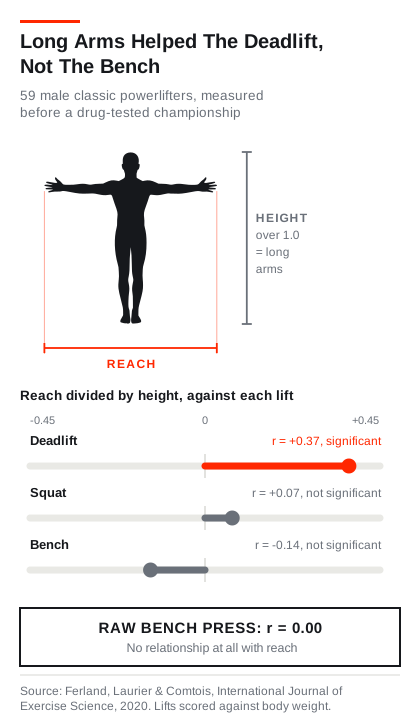
Read that twice, because it is the reverse of how the story usually gets told. In this sample, long arms measurably helped the deadlift. They did not measurably hurt the bench.
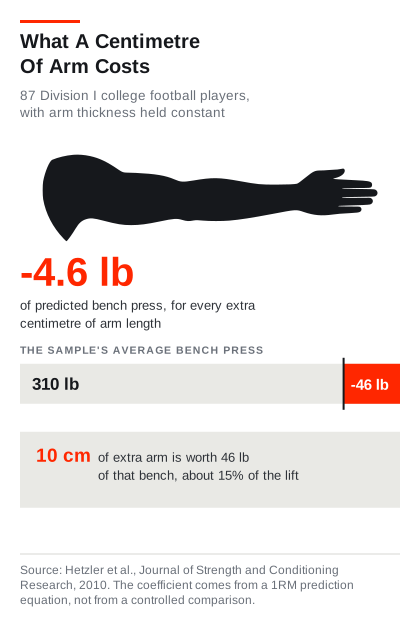
One study does put a number on the pressing penalty. In 87 Division I college football players, adding arm length and arm girth to a bench press prediction equation made it more accurate. The weight on arm length came out at -4.60 pounds per centimetre, with arm circumference held constant.[3] Among men with similarly thick arms, every extra centimetre of arm was worth roughly 4.6 fewer pounds of predicted max. That is a real effect. It is also a coefficient inside a prediction formula, not a measured cause.
The pulling side has been measured with instruments as well. A linear position transducer on 23 resistance trained lifters recorded how far the bar actually moved and how much work each lift took. Taller bodies with longer legs moved the bar farther and did more work per lift, with correlations running from 0.54 to 0.68.[4] Arm length pulled the other way on the clock. Among the women in that study, longer arms went with a shorter lift time.
The mechanism in the reel is real, and it has been seen on a transducer.
What It Looks Like In Practice
You cannot change your arms. You can change how far the bar travels and where the load sits relative to your joints, and both of those are yours to set on any given set.
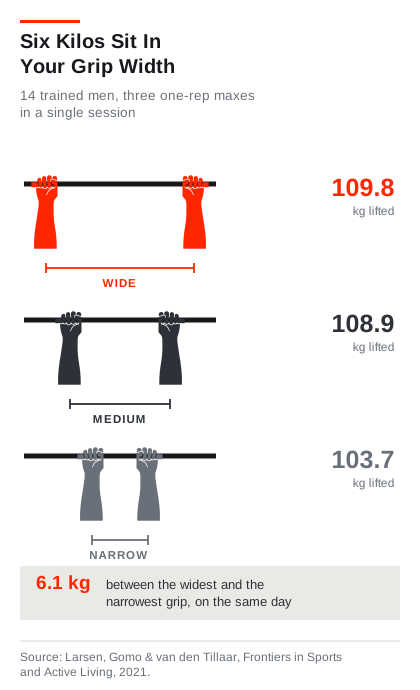
Grip width is the biggest lever on the bench. Fourteen trained men worked up to a one rep max at three grip widths in the same session. They pressed 109.8 kilos wide, 108.9 medium and 103.7 narrow.[5] That is about 6 kilos between the widest and the narrowest grip, on the same chest, on the same day. A wider grip shortens the bar path and moves the sticking point onto different muscles.
Three things worth doing with that:
- Pick the widest grip your shoulders tolerate when the goal is a maximum, and a narrower one when the goal is triceps. They are two different exercises wearing the same name.
- Judge your bench against your own last month, not against the lifter on the next bench. If his arms are 8 centimetres shorter, he is doing a shorter rep at the same number on the bar.
- If your arms are long for your height, look at what your deadlift is doing. That is the lift these proportions actually favoured, and it is the one most likely to be under trained relative to what your frame can do.