The Most Underrated Back Exercise Nobody Does Correctly
Most lifters row with one grip and stall. The science of hand position explains why, and one small handle turns a single bar into three back exercises.


Why Most People Plateau With Rows
You row every back day. Same setup, same grip, same bar. For a while your back got thicker and stronger. Then it just stopped.
Maybe the weight stalled. Your lower back might give out before your lats ever feel the work. Or your wrists ache so much that you quietly dread the exercise.
Here is the part nobody mentions. The problem is rarely effort. Most people train rows plenty hard. The real issue is that they only ever train one version of the row.
Your back is not one muscle. It is lats, traps, rhomboids, rear delts, and the thick column of muscle along your spine. A single grip, pulled the same way every week, hammers the same slice of that map and leaves the rest behind.
Signs You've Hit a Rowing Plateau
Before you blame your effort, run through this list. If two or more sound like you, your grip is the limiter, not your work rate.
- The same weight has sat on the bar for months
- Your lower back gives out before your lats feel anything
- Your wrists or elbows ache during and after rows
- Your lats never get sore, no matter how much volume you add
- Your upper back still looks flat even though you row every week
The Fix Is Your Grip
Good news. The change that breaks the plateau is small, and it costs you nothing in effort. It is your hands.
Rotate your grip on the bar and the muscle doing the work moves with it. Same bar, the same weight, a different back exercise. The full mechanism comes a little further down. First, look at the three positions your hands can take, and what each one trains.
Neutral
Pronated
Supinated
Here is the catch. Switching grips on a bare barbell is clumsy. Your hands slip off the sleeve, the bar digs into your palms, and the angle feels wrong before the set even starts. That awkward setup is the exact problem one small handle was built to fix.
Meet the Kensui Landmine Row Handle
This is the tool that gives you all three grips on the bar you already own. One piece of steel clamps onto a standard or Olympic sleeve and turns a plain barbell into a neutral, wide, and close rowing station.
Seeing it now makes the rest of this guide land harder. You are not reading about training in general anymore. Every point from here maps to something this handle lets you do. Keep going and you will get the science behind why it works, then a full back day built around it.

- Rated to 500 lb
- Fits any standard or Olympic bar
- No tools to attach
- 4.83 from 72 reviews
- $49
- Three grips in one tool. Neutral, wide, and close hand positions, so you train your whole back without changing stations.
- Fits any standard or Olympic barbell. It slides onto the sleeve and locks down with a knob. No special bar required.
- Padded, non-slip grips. Hold heavy loads without the bar biting into your hands.
- High-grade steel, rated to 500 lb. Built to take every plate you can pull.
Take a Look Before You Read On
The rest of this guide covers the science and a full back workout. If you would rather see the handle first, it is one tap away.
Get the Landmine Row HandleThat is the what. Next comes the why, starting with what actually changes inside your body the moment you rotate your hands.
The Science of Grip Position
Pick up the handle and your hand can sit one of three ways. Your palms can face each other, point down, or point up. Each one looks like a tiny change. Inside your body, it is not tiny at all.
Three things shift the moment you rotate your hands.[1]
Shoulder rotation. Your upper arm turns in the socket, which changes which back muscles are lined up to pull hardest.
Elbow path. Palms down flares your elbows out wide. Palms up tucks them close to your sides. The road your elbow travels decides how much your upper back works versus your lats.
Line of pull. The angle the load travels against your torso changes which fibers actually do the lifting.
One bar. The same weight. A different back workout. That is the whole idea behind rowing with more than one grip, and it is the reason a rotating handle beats a fixed one.
The Three Grips, Side by Side
You met the three positions earlier. Here they are again with the exact muscles each one hits hardest, so you can match the grip to the goal.
| Grip | Hand Position | Primary Muscles |
|---|---|---|
| Neutral | Palms face in | Mid-back + lats |
| Pronated | Palms face down | Traps + rear delts |
| Supinated | Palms face up | Lats + biceps |
How Wide You Row Changes the Target
Grip is one lever. Elbow angle is the other. Flare your elbows out wide and the work shifts to your upper back, your traps, and your rear delts. Tuck them in close and your lats take over through a longer stretch and a bigger range.
The Strength-Curve Advantage
Here is the part that makes the landmine row feel different the first time you try it.
Think about a barbell row. The bar hangs straight down from gravity, so the hardest point comes at the top, right when you squeeze it into your stomach. That top position is also where your body is weakest and where your lower back is most exposed.[3]
The landmine row flips that.
Because the bar pivots from a fixed point on the floor, the resistance follows an arc. It is heaviest at the bottom, where your back sits in its strongest position. The load lightens as you pull toward the top, exactly where a straight-bar row would grind to a stop.
Now your strength and the load line up. You get the most resistance where you can handle the most, and less where you are weak. That is why the movement feels smooth and powerful instead of forced. It is also kinder to your lower back, because the floor pivot carries part of the load instead of letting it hang off your spine.

What Each Grip Trains
Now put the science to work. Research on row grips shows the emphasis shifts as you rotate your hands, so each position earns a spot in your week.[2]
Neutral Grip: Mid-Back and Lats
Palms face each other. This is the most joint-friendly option and the easiest on your wrists. Your elbows track close, your shoulders sit in a strong position, and the load spreads across your mid-back and lats. If you only learn one grip, start here.

Pronated Grip: Traps and Rear Delts
Palms face down. An overhand grip pushes your elbows out wide and moves the work to your upper back, your rear delts, and your traps. This is the position that builds the thick, capped look across the top of your back.
Supinated Grip: Lats and Biceps
Palms face up. An underhand grip tucks your elbows tight and pulls through a longer range. Your lats stretch and squeeze harder, and your biceps come along for the ride. Expect to feel this one the next day.
A Word on Wrists and Elbows
Comfort is the thing most rows ignore. A fixed barbell locks your wrists into a single angle, rep after rep. A handle that lets you rotate your grip means you can train hard without the elbow and wrist strain that makes people quit rowing in the first place.
Build a Full Back Workout With One Attachment
You do not need five machines to build a complete back. One bar, one handle, and three grips will cover it. Here is a sample back day that hits every angle, from your traps down to your lats.
1. Pronated Wide Rows
4 sets · 8 to 10 repsStart overhand and wide while you are fresh. This loads your upper back, traps, and rear delts, the muscles that handle the most weight.
2. Neutral Rows
3 sets · 10 to 12 repsSwitch to the neutral grip and row through your mid-back and lats. Keep the reps controlled and the stretch full at the bottom.
3. Supinated Close Rows
3 sets · 12 to 15 repsFinish underhand and close. Higher reps here flood the lats and biceps and leave your back worked from top to bottom.
Three movements. One piece of gear. A complete back trained in about twenty minutes, all from the same spot on the floor.

The Exercise Ronnie Coleman Went Heavy On
This is not a beginner machine, and it is not a watered down row.
Eight-time Mr. Olympia Ronnie Coleman built one of the greatest backs in the history of the sport. One of his signature movements was the heavy T-bar row, the same anchored-bar pull as a landmine row, stacked with plate after plate.
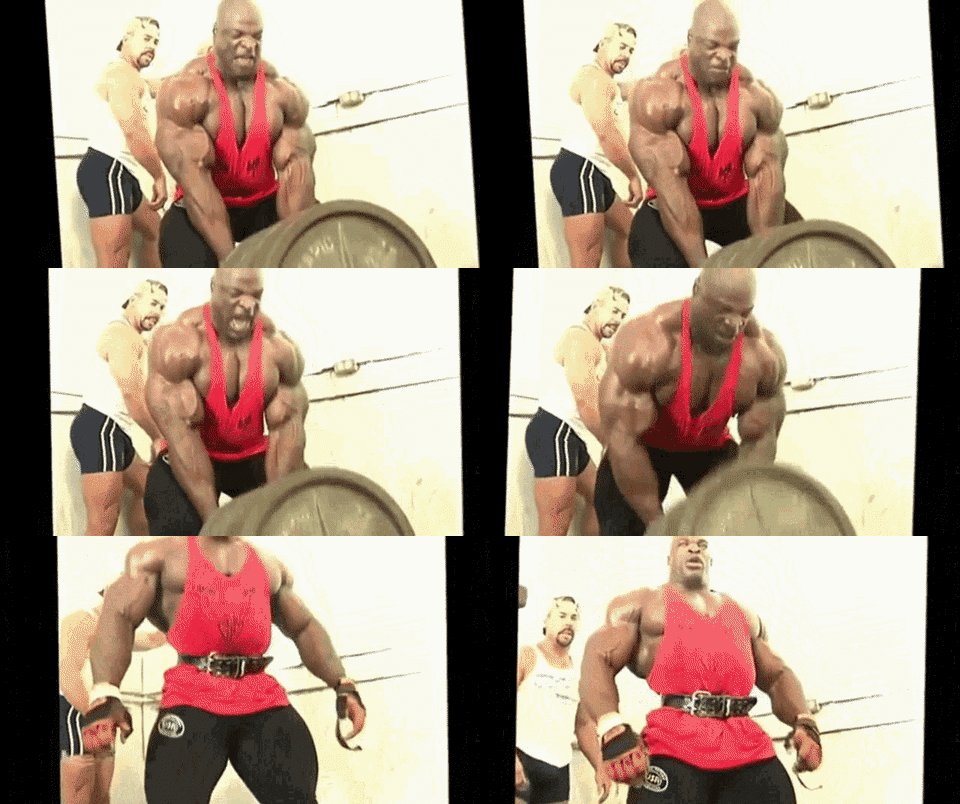
You do not need his work ethic or his mountain of plates to get the benefit. The pulling pattern that one of the most decorated bodybuilders alive chose to go heavy on is available to you with the right handle and the right grips.
Landmine Row vs Barbell Row
The barbell row is a great exercise, and you do not have to give it up. Set the two side by side, though, and the landmine row wins on the things lifters complain about most.
| Category | Barbell Row | Landmine Row |
|---|---|---|
| Strength-curve match | Hardest at the top, your weak point | Heaviest at the bottom |
| Lower-back load | Hangs off your spine | Floor pivot shares the load |
| Wrist & elbow comfort | Locked into one angle | Rotate to any grip |
| Grip variety | One fixed grip | Three from one handle |
| Home-gym friendly | Needs open floor | Anchors in any corner |
| Found in every gym | Yes, everyone knows it | Quick to set up once |
Honest takeaway. The barbell row is everywhere and easy to start. The landmine row is easier on your body and gives you more ways to train, which is why it belongs in your week even if you keep the barbell too.
Questions Lifters Ask
What muscles do landmine rows work?
Your whole back. Landmine rows train the lats, traps, rhomboids, and rear delts, with your biceps and forearms helping out. Which area does the most work comes down to your grip. Neutral leans on the mid-back and lats, overhand shifts it to the traps and rear delts, and underhand loads the lats and biceps.
Are landmine rows better than barbell rows?
On the things lifters complain about most, yes. The landmine row loads you heaviest where you are strongest, keeps the weight off your lower back, and lets you rotate your grip. A barbell row is still a solid lift, so plenty of people run both. The full side-by-side is in the table above.
Can beginners do landmine rows?
Yes, and it is one of the easier rows to learn. The floor pivot and the strength-curve match keep the movement smooth, and it asks less of your lower back than a bent-over barbell row. Start with the neutral grip and a light plate, keep your back flat, and pull the handle to your ribs.
I already do barbell rows. Why switch?
You do not have to. Add landmine rows on your back day and you cover the angles a barbell row misses, with less strain on your wrists and lower back. Plenty of strong lifters run both.
Do I need a special bar or a landmine attachment?
No. The handle slides onto any standard or Olympic barbell sleeve and locks with a knob. Wedge the other end of the bar into a corner or a landmine post and you are ready to pull.
Will it fit my setup at home?
If you own a barbell and have a spare corner, yes. It takes up almost no floor space, which is why home and garage lifters reach for it.
Is this just a T-bar row?
It is the same family. A T-bar row and a landmine row both pivot a loaded bar from one end. The difference is that this handle gives you neutral, wide, and close grips that a fixed T-bar station cannot.
How much weight can it hold?
The handle is high-grade steel rated to 500 lb. That is more than almost anyone will ever row, so the bar will give out long before the handle does.
The Tool Built to Do It Right
You have seen why the landmine row works. The load sits heaviest where you are strongest, the grip you choose decides the target, and the floor pivot keeps the strain off your lower back. Doing all of that consistently takes one piece of gear that clamps to the bar you already own. That is the whole reason the Kensui Landmine Row Handle exists.
Turn Your Barbell Into a Three-Grip Back Machine
The Kensui Landmine Row Handle is $49 and works with the bar you already own. Heavier where you are strong, easier on your joints, three back workouts in one.

- Three grips: neutral, wide, and close
- Fits any standard or Olympic barbell
- High-grade steel, rated to 500 lb
- 4.83 stars from 72 reviews
Or read more training guides →
Sources
- Back muscle activation by grip and forearm orientation. Electromyographic analysis of back muscle activation during the lat pull-down, comparing grip variations and forearm orientation. The data show that hand position and forearm rotation change which back muscles are recruited. Journal of Functional Morphology and Kinesiology (2025)
- Grip position in the row. Effect of different grip positions and shoulder-abduction angle on muscle strength and activation during the seated cable row. Grip choice measurably shifts activation across the lats, traps, posterior deltoid, and biceps. International Journal of Strength and Conditioning
- Fenwick CMJ, Brown SHM, McGill SM (2009). Comparison of different rowing exercises: trunk muscle activation and lumbar spine motion, load, and stiffness. Journal of Strength and Conditioning Research. The standing bent-over row produced the largest lumbar spine load of the rows tested. PubMed: 19620925