Why More Lifters Are Hanging a Rope From Their Pull-Up Bar
Pull-ups built your back and arms. The thick-rope grip and climbing stimulus they leave out is the gap most lifters never close.


The Pulling Stimulus Almost Nobody Trains
Pull-ups, lat pulldowns, rows. If you train your back, that is probably the whole list.
Each one is a proven movement. Each one also shares the same quiet limit. Your hands wrap a fixed bar that never moves, in the same groove, rep after rep.
There is a different kind of pulling that hardly anyone trains. Crushing grip. Anti-rotation. Climbing mechanics. Holding tension on something that shifts in your hands while you move.
Climbers and gymnasts train it every session. You see the result in forearms that look carved from rope and a grip that does not quit. For years, the only way to build it was a permanent climbing rope and a tall ceiling to hang it from.
That part just changed. More lifters are hanging a thick rope from the pull-up bar they already own. Here is why, and what the rope does that the bar cannot.
Pull-Ups Aren't the Whole Story
The pull-up earns its reputation. It builds the lats, the upper back, and the arms better than almost anything. None of that is up for debate.
What a bar cannot do is challenge your hands. Your grip wraps the same fixed steel on every rep. The bar holds still. Your hand position is locked in place. The path is predictable from the first rep to the last.
That makes a bar easy to adapt to. Your body learns the exact pattern and stops being surprised by it. Surprise is a big part of what forces new strength.
So you get very good at one narrow task. Pulling your chin over a bar that does not move. Real-world pulling rarely looks that clean. Ropes swing. Loads shift. Grip gets tested instead of assumed.
Why Climbers Have Ridiculous Grip Strength
Watch a climber hang from a thick rope. The forearms do the talking.
A rope is thick and round, so the fingers never fully close around it. That forces a deep, crushing grip the entire time you hang. A thin bar lets your hand lock into a hook and rest there. A rope makes the hand work every second.
The rope also moves. It twists and sways, so your body fires small stabilizer muscles to stay square. Your core braces against the rotation without you thinking about it. That is anti-rotation training, built into every rep.
Then there is the nervous system. Holding a moving target takes more focus than gripping a fixed bar, so your body has to recruit more muscle at once to stay in control. Grip strength itself is one of the most studied markers of total-body strength and long-term health.[1] Thick, round handles raise the demand on the forearms even further than a standard bar.[2]
More demand on the grip, the trunk, and the nervous system is exactly why climbing builds the kind of strength that carries over.

Rope Training Is Almost Impossible for Most People
Here is the catch. Real rope training has always been hard to actually do.
A climbing rope needs height. Most run 15 feet or longer and hang from a ceiling beam or a tall rig. Your spare room does not have that. Your garage does not have that either.
Mounting one is its own project. You need an anchor point that can take your full bodyweight swinging on it, plus the hardware and the know-how to install it safely. Renters can forget the idea entirely.
The other option is a gym with a rope station, and most gyms do not have one. So the stimulus that builds climber-grade grip stays locked behind a setup almost nobody has.
The Portable Rope Solution
The fix is simpler than a ceiling install. You do not need a tall rope or a free wall. What you actually want is the thick-rope grip, not the 15 feet of height.
The Kensui EZ-ROPE is a thick training rope that loops onto any pull-up bar in seconds. Doorway bar, garage rig, power rack, or an outdoor bar at the park. It hangs from the same bar you already pull on.
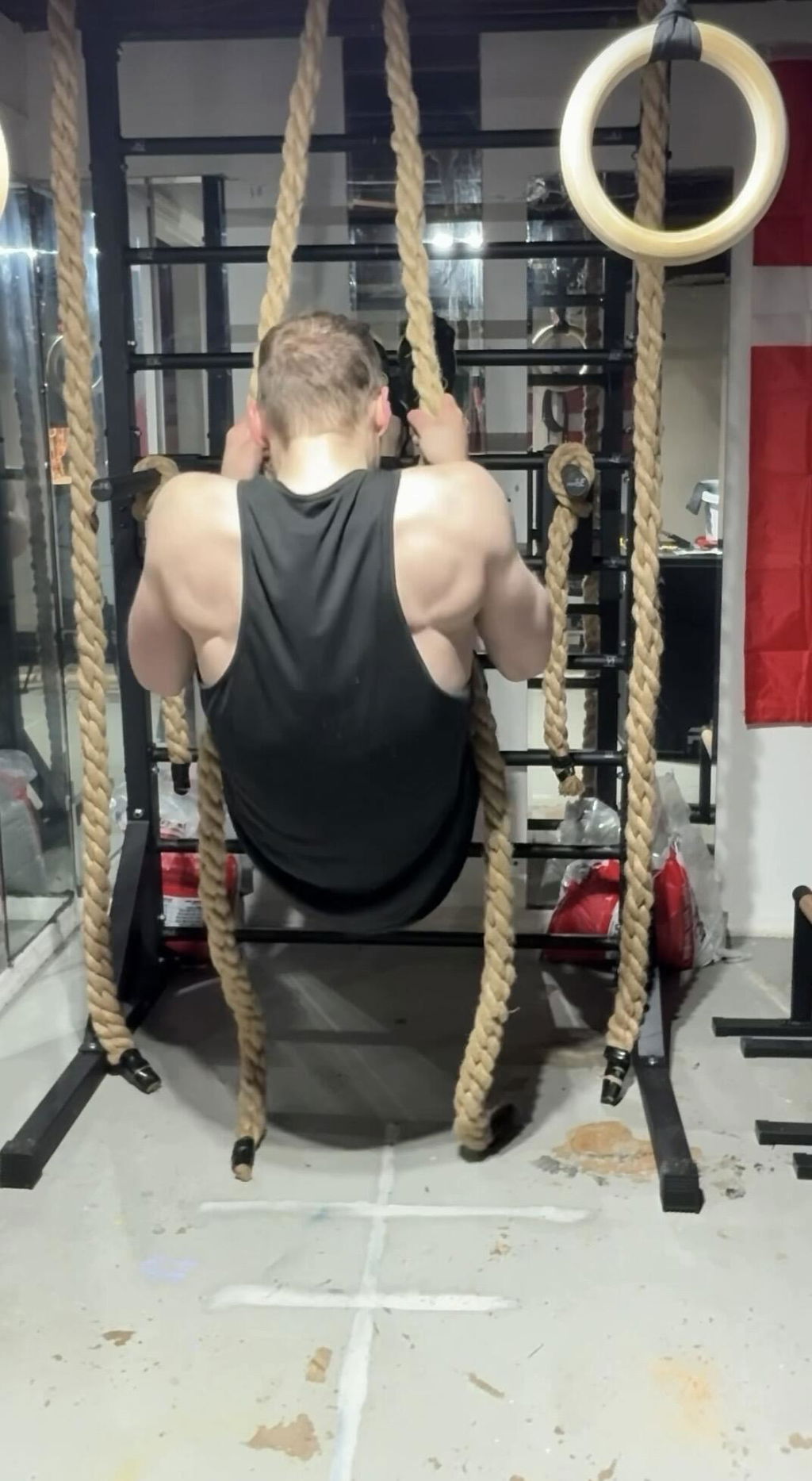

Because it loops on and off, it stores in a drawer and travels in a bag. The same handwoven jute that makes climbing ropes brutal on the grip is right there in your hands, with no ceiling required.

Get the Climbing-Rope Grip Without the Climbing Rope
The EZ-ROPE loops onto any pull-up bar in seconds. Two thicknesses, two lengths, starting at $29.
Get the EZ-ROPEThe Stimulus Difference
Same bar. A completely different demand on your body. This is what changes the moment a rope is in your hands instead of steel.

Four things shift at once the second you swap the bar for a rope:
CNS Activation
A moving rope makes your nervous system recruit more muscle to hold position and stay in control.
Grip Strength
The thick, round surface forces a crushing grip your fingers cannot simply hook around and rest.
Core Engagement
Your trunk braces against the rope's twist and sway on every single rep, with no setup needed.
Joint Friendly
Your hands are free to rotate naturally, instead of staying locked in one spot on a fixed bar.
Exercises You Can Do
One rope turns a single bar into a full grip and pulling station. A few of the ways lifters use it:
Rope Pull-Ups and Dead Hangs
Grip the rope instead of the bar and every pull-up gets harder, because your hands fight to hold on the whole way up. Dead hangs on their own will humble your grip in a hurry.

Rope Rows
Set your feet, lean back, and row toward the rope. The angle hammers the upper back while your grip holds a thick, shifting target the entire set.

Front Lever Work and Partial Climbs
The rope handles the hard stuff too. Train front lever holds, partial climbs, and long grip holds straight from the bar in your home gym.

From there it scales. Grip holds, single-arm hangs, towel-style pulls, and short climb pulls. Same rope, a dozen ways to train the part of pulling the bar leaves out.
EZ-ROPE vs a Permanent Climbing Rope
If rope training is the goal, here is how a portable rope stacks up against a traditional ceiling-mounted climbing rope.
| Category | Permanent Climbing Rope | Kensui EZ-ROPE |
|---|---|---|
| Setup | Anchor, hardware, install | Loops on in seconds |
| Ceiling Height Needed | 15 ft or more | None, hangs from your bar |
| Works While Renting | Usually not | Yes |
| Stores and Travels | Stays mounted | Packs in a bag |
| Thick-Rope Grip Stimulus | Yes | Yes |
| Price to Start | Rope plus install costs | From $29 |
A permanent rope is a fine tool if you have the ceiling and the wall for it. Most people do not. The EZ-ROPE gives the same grip stimulus and skips the build.
4.5 / 5 Stars From 134 Reviews
Verified buyers across the US, UK, Canada, and beyond

"A great tool for building strength that radiates from your grip, wrists, forearms, shoulders and back. It made me realize I had work to do in areas not possible without a rope."
Which Version Should You Buy?
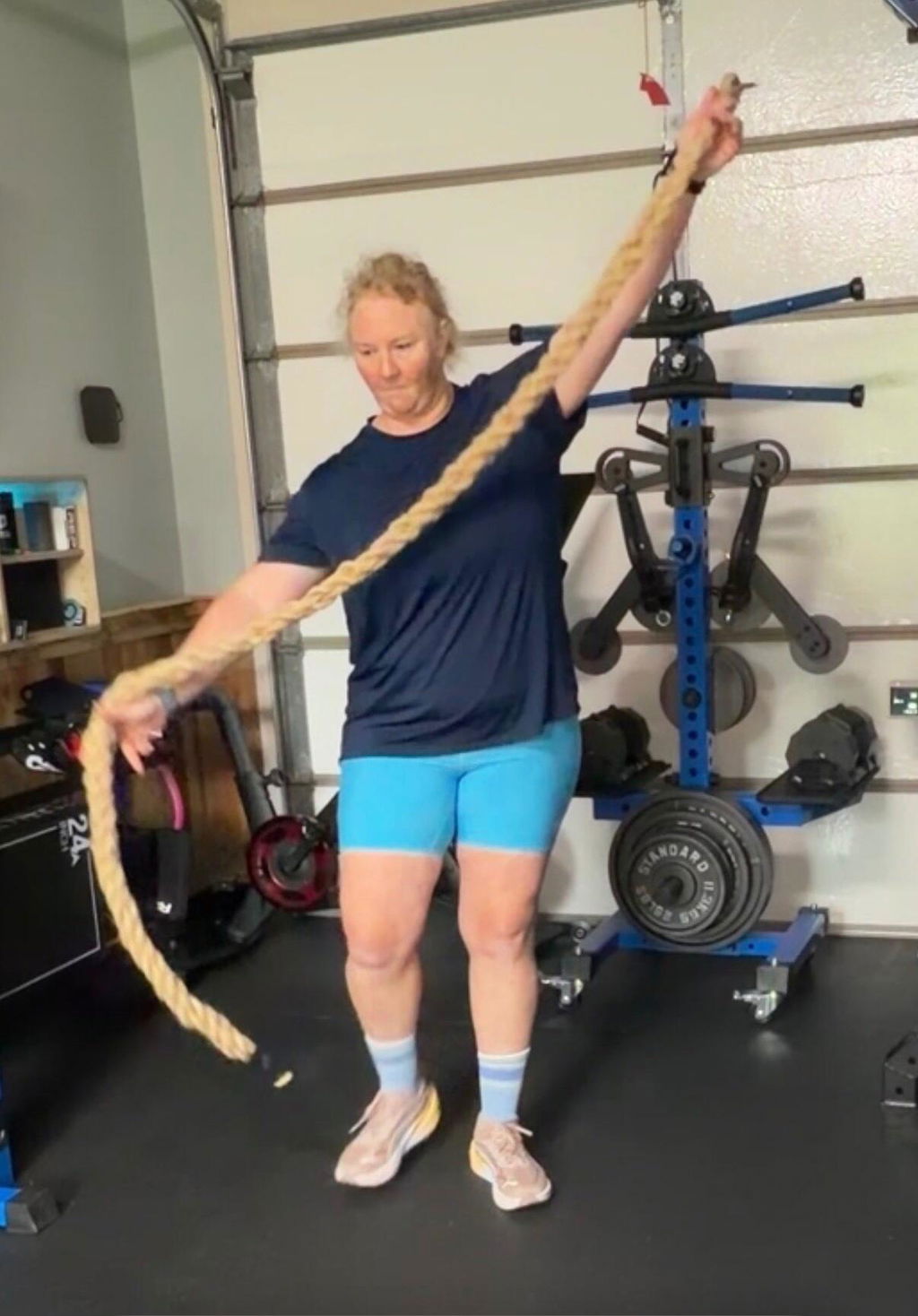
The EZ-ROPE comes in two thicknesses and two lengths. Here is the quick way to choose the right one.
| Version | Feel | Best For | Price |
|---|---|---|---|
| 38mm · 20" | Easier to hold | Grip holds, dead hangs, smaller hands | $29 |
| 38mm · 80" | Friendlier grip, full length | Rope pull-ups and rows with room to move | $49 |
| 50mm · 20" | Full thickness, compact | Brutal grip work in a small space | $39 |
| 50mm · 80" | Full climbing-rope challenge | The closest feel to a real rope climb | $59 |
New to thick-rope training? The 38mm is friendlier on the hands while your grip catches up. Want the full climbing-rope challenge? Go 50mm. The 80 inch lengths leave more room for climbs and rows.
Turn Any Pull-Up Bar Into a Rope-Training Station
Pick your thickness and length. The EZ-ROPE ships ready to loop on and train today.
Get the EZ-ROPECommon Questions
Will it hold my weight?
Yes. The EZ-ROPE is handwoven from thick, abrasion-resistant jute and built to take repeated, loaded training against a bar. As with any rope, check that your pull-up bar itself is rated for your bodyweight before you hang.
Does it fit my pull-up bar?
It loops onto almost any standard setup. Doorway bars, wall and ceiling mounts, power racks, even a barbell sitting in a rack. Both thicknesses use the same simple cinch loop.
How much ceiling height do I need?
None of the tall-ceiling kind. The rope hangs from the bar you already use, so a normal room or garage works fine. Pick the 20 inch length for tight spaces, or the 80 inch length for climbs and rows.
Which thickness is right for a beginner?
Start with the 38mm. It is easier to hold while your grip catches up. Move to the 50mm when you want the full climbing-rope challenge and a deeper crush on the forearms.
Your Pull-Up Bar Can Do More Than Pull-Ups
If you already own a pull-up bar, you already own the hard part. The EZ-ROPE adds an entirely different training stimulus to the setup you already have.

- Loops onto any pull-up bar in seconds
- Thick handwoven jute, built to last
- Two thicknesses, two lengths
- 4.5 / 5 from 134 reviews
Or read more training science →
Sources
- Leong DP, et al. Prognostic value of grip strength: findings from the Prospective Urban Rural Epidemiology (PURE) study. The Lancet, 2015. Grip strength was a strong predictor of all-cause mortality and overall strength. View on PubMed
- Thick-grip training research. Studies on thick-bar and thick-handle training and their effect on forearm and grip muscle activation versus standard bars. View research on PubMed
